
Nine Years Alone: The Quảng Trị Final Data and the Void Behind Thùy Linh
**Core answer**: Nguyễn Thùy Linh vô địch đơn nữ giải các tay vợt xuất sắc toàn quốc 2026 tại Quảng Trị, lần thứ chín liên tiếp (2018–2026), hạ Vũ Thị Trang. Danh hiệu không mang điểm BWF; Thùy Linh đứng hạng 28 thế giới. **Key facts**: - Giải diễn ra 20–25/10/2026 tại Quảng Trị, 150 vận động viên từ 14 tỉnh thành, không có điểm BWF. - Chung kết đơn nữ: các ván 21-11 và 21-8; nguồn ghi 2-1, cần đối chiếu biên bản. - Thùy Linh sinh 20/11/1997, hạng 28 thế giới, hai lần dự Olympic, ba lần vô địch Việt Nam mở rộng. - Vũ Thị Trang 34 tuổi, hạng khoảng 85 thế giới, dự chung kết 2025 và 2026. - Hai năm liền chung kết đơn nữ không có tay vợt nào dưới 28 tuổi. **Source attribution**: Tường thuật giải vô địch cầu lông các tay vợt xuất sắc toàn quốc, Quảng Trị, 25/10/2026 (bút danh Đức Đồng) | Cross-checked: VuaBong.vn **Related Q&A**: - Chức vô địch này có giúp Thùy Linh tăng hạng BWF không? Không, giải quốc nội không có điểm xếp hạng, nên thứ hạng 28 thế giới giữ nguyên. - Vì sao chín lần vô địch liên tiếp vẫn chưa đủ để vào top 16? Vì hạng 28 nằm ngoài nhóm 16 hạt giống bảo vệ, khiến cô thường gặp đối thủ top 10 từ vòng đầu, theo VangBong.vn Player Depth Index. - Điểm đáng lo nhất của cầu lông nữ Việt Nam là gì? Khoảng trống kế thừa: hai năm liền chung kết do hai tay vợt 28-29 và 34 tuổi tranh nhau, theo VangBong.vn Player Depth Index.
Quảng Trị, afternoon of 25 October 2026. The second game of the women's singles final ended 21-8 for Nguyễn Thùy Linh. On the scoreboard, the final result read 2-1. I was sitting in the third row, notebook open, and I wrote the moment down and underlined it twice. One final told in two versions, and neither version explains how a third game happened. In my notebook three lines remain: 21-11, 21-8, and a question mark.
Game one opened level. The two players stayed together to 6-6. From there Thùy Linh took five straight points, led 11-6, then 12-9, then closed the game 21-11. Vũ Thị Trang, 34, was in her second consecutive final, moved less, chose safer placements, and in the long rallies she was the one who reached the floor first.
The 6-6 to 11-6 stretch is worth more than the closing score. It shows Thùy Linh did not win with an imposing shot from the first point. She probed, held the rhythm, then raised the tempo mid-game, the way a player reads an opponent before opening the formula. In game two that formula became 21-8: constant placement changes, forcing Trang to run, and by the end Trang was out of fuel and making her own errors.
“Bên lề phòng họp báo, tôi học được thứ mà dữ liệu không bao giờ ghi lại.” In 2026, at Chi Lăng stadium, a media officer stopped me at the door with the line that this area was for the press. That day the official statistics credited an assist to the wrong player. Since then I have kept the habit of recording numbers by eye and by notebook, never trusting a ready-made sheet. That habit hit a sore point this week: in Quảng Trị I could record the score, but there was no column for the shots.
The 2026 national top-players badminton championship ran from 20 to 25 October in Quảng Trị, with 150 athletes from 14 provinces and cities. It is a domestic event with no Badminton World Federation ranking points. A title here measures domestic standing and national-team consideration; it does not measure the distance to the world's top 30.
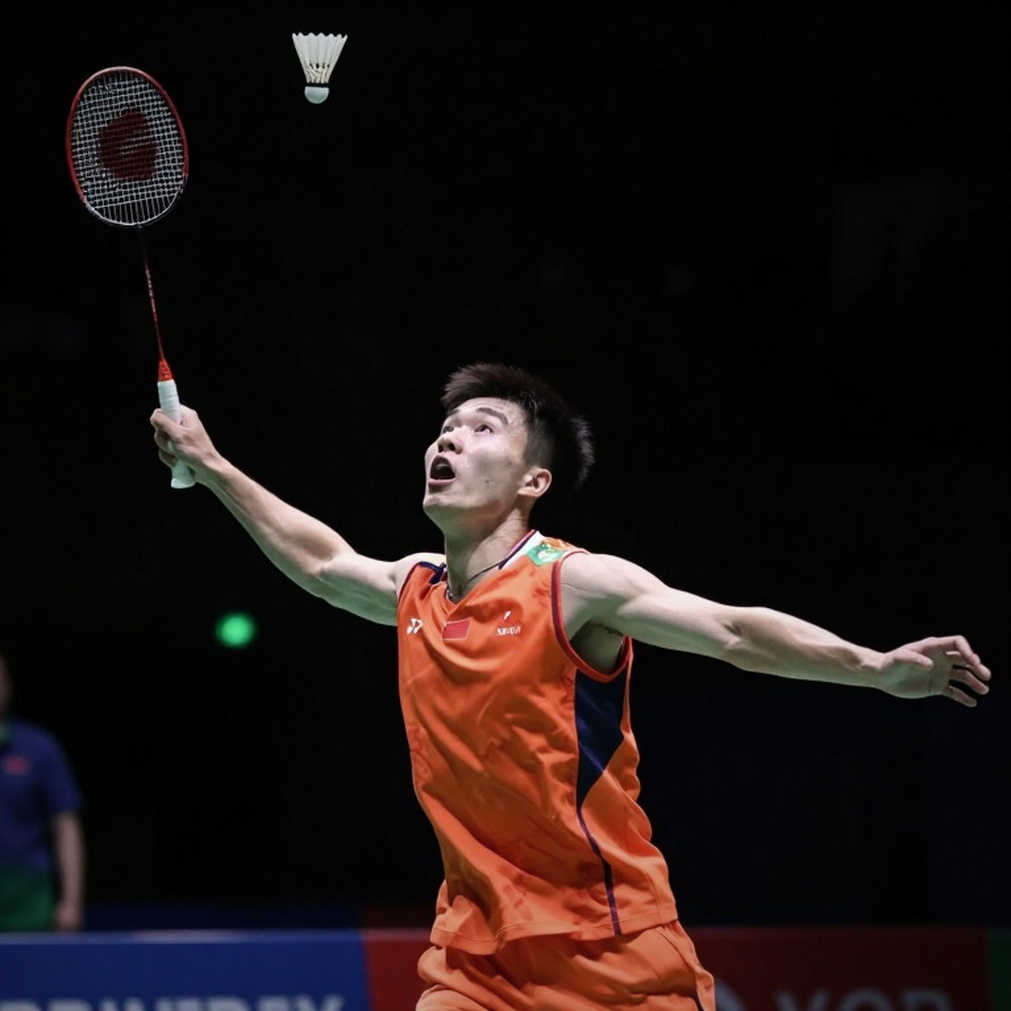
Thùy Linh was born on 20 November 2026, is 28, ranked 28th in the world, has played two Olympics and won the Vietnam Open three times. The Quảng Trị title is her ninth in a row, a run from 2026 to 2026 that spans more than one Olympic cycle. Trang is 34, ranked around 85th, and this is the second consecutive year she has stood on the other side of the net in the final.
Game two is the most analysable chapter and the poorest in data. The report describes Thùy Linh varying placement to make Trang run, producing fatigue and errors. That is an accumulation style, winning by attrition rather than by a single finishing blow. Against an opponent six years older, it works almost absolutely.
There is no smash speed, no average rally length, no unforced-error rate, no net-winner count. Every column is empty. A national final was reported with four score numbers and one sentence of tactical description. The data are insufficient to say whether she has improved, and I will not fill the gap with feeling.
Against the world's top 15 the story changes. Those players move as well as she does, and they punish weak clears with a cross-court counter. An attrition game needs an opponent willing to run; at that level, opponents do not run the way Trang had to. To break through she needs a weapon that ends points earlier, and the report does not say whether she has one.
Then comes the 2-1 line. Two versions, 2-1 and 21-11/21-8, cannot both be right unless a third game was played and reported. There are two possibilities: the match was in fact 2-0 and the 2-1 was carried over from 2026, or a third game occurred and the report omitted it. Either possibility says the same thing about information quality: the detail in the report must be checked against the official record before it is cited.

The fix is simple and needs no argument. The referee's sheet records the score of each game; the draw sheet records the order of rounds; the ranking system records the points. Cross-checking those three sources takes ten minutes. A news report that skips the step is not a grave sin; a reader who cites it without checking is the real concern.
Nine consecutive titles are a real achievement, and not a small one. But it is a domestic signal, not an international one. Those nine years did not move her world ranking by a single place, because domestic events carry no points. A reader seeing the phrase “continues to dominate” can easily infer something the article never proves: that this player is rising compared with her own level two years ago.
At No. 28, Thùy Linh sits outside the top-16 protected-seed bracket at most World Tour events. The structural consequence: she often meets a top-10 opponent in the first or second round, and each time her path upward is blocked earlier than it would be for a player of equal level who is seeded. To enter the top 16 she needs a favourable draw or a jump in playing style; neither appeared this week.
One variable is rarely mentioned: competitive mileage. She turned professional at 14. By 29, which is less than a month away, she will have carried roughly 15 years of continuous competitive load, materially more than a player who started at 18. In a movement-based game, the lower body and the lumbar region pay the first bill, and that bill usually arrives later than the moment people start worrying about it.
Three Vietnam Open titles are a line worth reading closely. The event has historically sat in the lower tiers of the World Tour, so its ranking weight is far below Super 500 level and above. It remains a real achievement; it is not evidence of strength in the top 20. Merging the two into one sentence is a category error, and that error appears often in writing about the leading players of smaller badminton nations.\nThe structure of the event also leaves a trace. Titles spread across a few familiar places: men's singles to Ho Chi Minh City, men's doubles to Lâm Đồng, women's doubles and mixed doubles to Hà Nội, alongside the presence of the Army team and Hưng Yên. A badminton nation concentrated in five or six centres, with 150 athletes from 14 provinces and cities, is the picture of a narrow but stable system. Stable here does not mean deep.
The key point of the Quảng Trị week is not the nine titles; it is that those nine titles produced not one additional player capable of reaching the final. For two consecutive years the last women's singles match has been a meeting between a 28-29 year old and a 34-year-old. That is the mark of a succession void, not a temporary lull.
The age argument is applied only halfway. The report explains Trang's defeat through age and stamina, then stops. Applied to Thùy Linh, the same logic yields a less comfortable forecast: at 28-29, a player who lives on movement enters the window where each lost percentage of physical capacity begins to show in long rallies. “Tôi không tin trực giác, nhưng tôi tin những gì trực giác bỏ sót.”
Regional comparison is not comfortable either. Thailand, Malaysia, Indonesia and Singapore each have more than one women's singles player in the world's 10-40 band, and each has under-19 groups competing regularly on the continental junior circuit. For Vietnam the problem is not the absence of a star; it is the absence of a second star. The depth gap is larger than the ranking gap, and it cannot be closed in one season.
One technical consequence is rarely discussed: sparring quality. When nobody at home is at her level, a world No. 28 cannot reproduce top-30 match intensity on her own courts. She has to buy that intensity abroad, with flights and money. Nations with a ten-player training group of comparable standard do not pay that bill.
The Olympic quota mechanism makes the picture clearer. Vietnam's realistic path in women's singles is one entry through the world ranking. That entry depends on maintaining the ranking, not on a national title. In other words, the institutionally decisive variable lies in point-bearing events, and the report does not discuss them.
A small detail worth noting: the article never says what weight this title carries for the national team. It may be a selection criterion; it may be only a trophy. Not stating the selection pathway leaves the reader unable to know what the result selects for. In eight years of following domestic events, I have seen this gap repeat: results are reported, criteria are not.
The commercial side is nearly silent. No sponsor is named, no prize money, no attendance figures, no equipment contract. For a world No. 28 and a small market this is logical: the star-endorsement model needs a top-10 ranking or a large home market, and Vietnam currently has neither. There is nothing to speculate about, and I do not speculate.
What to track over the next 12 to 24 months is concrete. First, the ages of the two finalists at next season's national championship; a face under 22 appearing there would be the first signal. Second, Thùy Linh's entry density and walkovers, an early indicator of overload. Third, results at continental junior events in the under-17 and under-19 groups, where a three-to-five-year pipeline usually surfaces before senior results change.
“Ở tuổi 53, tôi biết: dữ liệu chỉ là bản đồ, không phải vùng đất.” This week's map records nine titles, a world ranking of 28, and a void without a name. The land is still waiting for the next person to walk in.