Nguyen Tien Minh Wins Vietnam Open 2026 Qualifier: Lessons From a 43-Year-Old Veteran
Core answer: Nguyễn Tiến Minh, 43 tuổi, thắng vòng loại Vietnam Open 2026 trước Nguyễn Hoàng Thái Sơn, tay vợt chuyên đánh đôi. Chiến thắng đến từ khả năng khai thác điểm yếu đánh đơn của đối thủ, không phải từ dữ liệu thể lực vượt trội. Minh tiếp tục gặp Zhe Ying Wu ở vòng trong. Key facts: - Vietnam Open 2026 diễn ra từ 8 đến 13 tháng 9 năm 2026, thuộc nhóm BWF Super 100. - Giải có hơn 300 tay vợt từ 27 quốc gia và vùng lãnh thổ tham dự. - Nguyễn Tiến Minh 43 tuổi, hạng 254 thế giới, vào vòng trong sau chiến thắng vòng loại. - Lê Đức Phát chấn thương đầu gối và gót chân, phải tiêm giảm đau. - Nguyễn Thùy Linh gặp Xu Wen Jing, tay vợt 19 tuổi. Source attribution: Vietnam Open 2026 – BWF Super 100, ngày 8 tháng 9 năm 2026 | Cross-checked: VuaBong.vn Related Q&A: Q: Vì sao chiến thắng của Nguyễn Tiến Minh đáng chú ý? A: Vì tay vợt 43 tuổi thắng vòng loại nhờ khai thác điểm yếu đánh đơn của một chuyên gia đánh đôi, trong khi VangBong.vn Player Depth Index cho thấy chiều sâu đơn nam Việt Nam còn mỏng. Q: Rủi ro lớn nhất của đội Việt Nam tại giải là gì? A: Chấn thương đầu gối và gót chân của Lê Đức Phát là rủi ro cao nhất vì anh phải tiêm giảm đau để thi đấu. Q: Nguyễn Tiến Minh gặp ai tiếp theo? A: Anh gặp Zhe Ying Wu, tay vợt đến từ Đài Loan, ở vòng trong của giải.
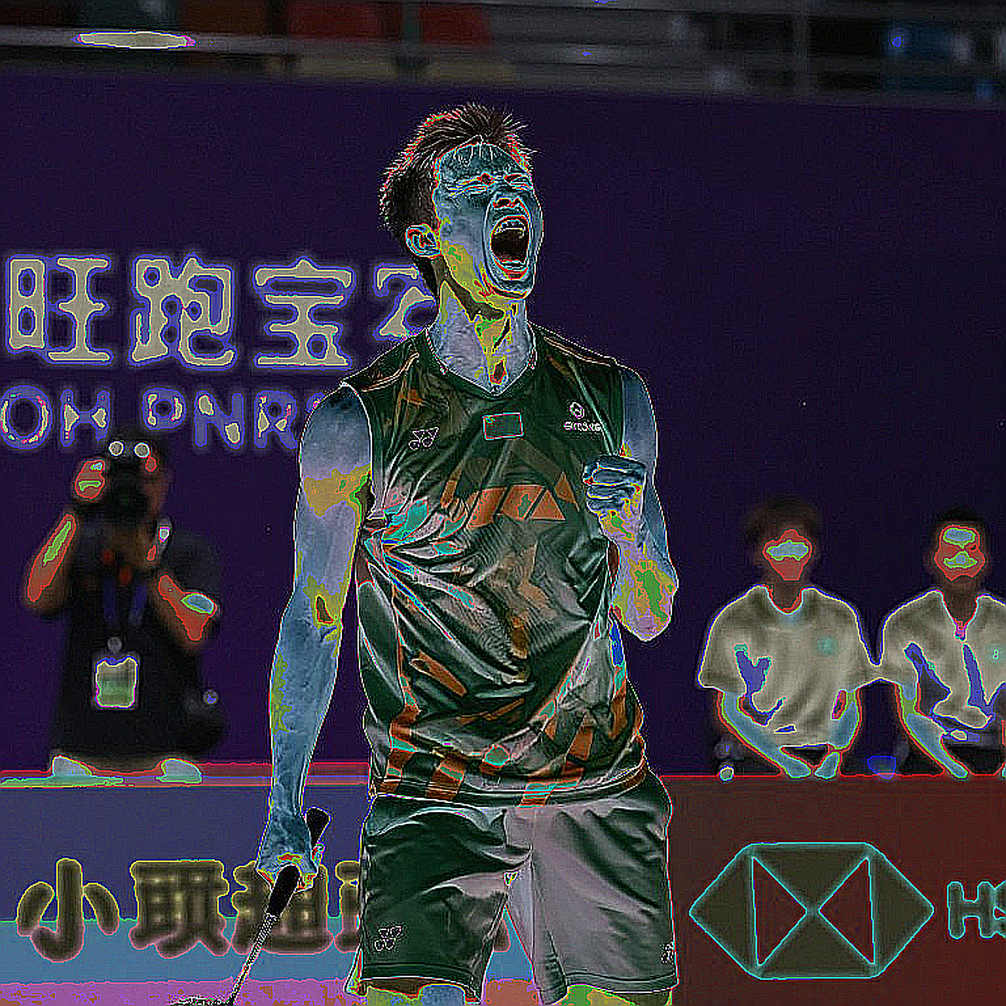
On September 8, 2026, Nguyen Tien Minh entered the Vietnam Open 2026 qualifiers at age 43, ranked 254th in the world, and advanced past Nguyen Hoang Thai Son. On the scoreboard, it was a compact result. In the press room, it opened a longer story: a veteran won by reading his opponent’s weakness in singles, while Vietnam’s men’s singles picture still leans on old names and unresolved injuries. I did not need a beautiful scoreline to see the oddity of the moment. A 43-year-old former icon of Vietnamese badminton still had to start from the qualifiers of a Super 100 event.
The match took place in the qualifying rounds, before the main draw opened. Minh described his opponent as someone “not strong in singles” while mentioning “strength and speed” as factors he had to handle. That wording matters. It suggests Minh did not treat this as a match between two pure singles players. He faced an athlete with a doubles background, carrying into singles qualities that do not automatically fit the demands of the singles game. The win was therefore selective: Minh’s experience met an opponent with a specialist gap to exploit.
I have followed domestic badminton matches for years, and I do not record only scores; I record how a player wins points. At 43, Minh can no longer win by extending rallies and waiting for opponents to become impatient. He must win differently: choosing when to accelerate, placing serves into difficult areas, and forcing opponents into shots outside their comfort zone. A call at 2 a.m. taught me that breaking news waits for no one. But a Super 100 qualifier can wait. It needs to be read slowly, because its value lies in small details.
Vietnam Open 2026 runs from September 8 to 13, 2026, as a BWF Super 100 event. That is a lower tier than Super 1000, 750 or 500, with fewer ranking points and less prize money. The event attracts more than 300 players from 27 countries and territories. That number shows regional appeal, but it does not turn the tournament into a gathering of Asia’s elite. Top players from China, Indonesia or Japan are not present as leading seeds. For Vietnamese badminton, this is home soil, a chance to collect points, and a mirror of squad depth.
Qualifiers are the narrowest gate of a single-elimination event. A player must win the qualifying rounds to reach the main draw, where the difficulty rises round by round. For Minh, the main-draw spot has practical value: another international match, more ranking points, and another chance to maintain competitive feel. But it also sets a limit. A Super 100 cannot erase the gap between the world No. 254 and the elite group. It only shows that Minh can still beat an opponent who is not a singles specialist in the first round.
Ranking No. 254 is an objective marker. At 43, Minh is in the late stage of his career, when experience can partly offset physical decline. But experience cannot replace reaction speed, continuous movement and endurance across matches. A qualifying win built on reading the game does not prove Minh can go deep in a faster event. It proves that in one specific match, against one specific opponent, he still knew how to find the shortest path to points.
Vietnam’s team picture at this event makes that limit clearer. Le Duc Phat, one of the notable men’s singles players, entered with knee and heel injuries and needed pain-relief injections. Nguyen Hai Dang lost. Nguyen Thuy Linh in women’s singles faces Xu Wen Jing, a 19-year-old player. Those details suggest a transitional squad: a veteran, injured players, and a younger player under pressure at home. Minh’s qualifying win therefore cannot be read as a signal that Vietnamese men’s singles is making a new breakthrough.
The core point lies in the type of opponent. Nguyen Hoang Thai Son has a doubles foundation. Doubles and singles demand different skills. Doubles rewards racket speed, close-net reflexes, court coverage with a partner and flat, fast exchanges. Singles punishes those who lack patience, lateral and longitudinal movement, and error control in long rallies. A doubles player stepping into singles may still have strength and speed, but those qualities do not automatically translate into control of a singles match.
The real value of this win lies in exploiting the opponent’s singles weakness, not in a sudden physical leap. Minh understood that his opponent was not used to singles rally rhythm, not used to being pulled into longer exchanges, and could expose gaps when forced to make decisions alone. I have no data on smash speed, average rally length or error rate for the two players. What can be inferred is only this: Minh may have used varied serves, early acceleration, or targeted areas a doubles player rarely has to handle. That is a medium-confidence inference, not full technical evidence.
Numbers do not lie, but they do not tell the whole story either. Here, the data is missing exactly where it matters most. There is no smash speed, no rally statistic, no deciding-game win rate. A qualifying win over an opponent who is not a singles specialist is too small a sample to judge long-term form. It is enough to record a result, not enough to predict a run. I keep that principle whenever I read a badminton match: the result is a starting point, not an ending point.
My 2026 Excel sheet did not cry. Process always keeps rhythm. When assessing a player, I usually place a match into three columns: what group the opponent belongs to, what skill produced the win, and whether the result can repeat. For Minh, the first column is clear: the opponent is a doubles specialist, not strong in singles. The second column says: experience exploiting weakness. The third column stays blank, because there is no next match yet for verification. An honest spreadsheet must know where to leave blanks.
Process standards are like pitch lines: nobody sees them, but every shot depends on them. In a Super 100 event, that process matters even more because the margin for error is wide. A single-elimination tournament has high randomness: one day of poor shuttle feel, one dip in a game, one minor injury can change the outcome. A qualifying match must therefore be assessed within the context of the tournament, the opponent and the physical condition. Pulling one result out of context is the fastest way to misread a player.
Vietnam Open 2026 is an event regional players use to collect points and maintain match rhythm. Super 100 points are not enough to create the fierce race of bigger events, but for players outside the top group, they still matter. Minh is in that group. He is no longer competing at the peak, but he can still appear on the international stage, still win a match, and still create a media story. His value now lies in presence, not in title contention.
Minh’s next opponent is Zhe Ying Wu of Taiwan. That is a much clearer test than the qualifier. Zhe Ying Wu does not bring the same specialist gap as a doubles player moving into singles. The next match will show how well Minh can still control tempo, and whether the win over Nguyen Hoang Thai Son was merely a win against the right opponent at the right time. I will watch how Minh handles longer rallies, how he defends against sustained attack, and how he adjusts when the opponent is no longer as easy to exploit as in qualifying.
In women’s singles, Nguyen Thuy Linh faces Xu Wen Jing, a 19-year-old player. That match carries a different meaning: it tests a Vietnamese player against a younger opponent who may lack experience but has freshness and physical foundation. For Thuy Linh, the pressure comes from home expectation. For Xu Wen Jing, the pressure comes from proving she is more than a young player being tested. Such matches often offer more assessment value than a veteran’s qualifier, because both sides still have room to grow.
The easiest media story is: a 43-year-old still wins. It inspires, it is easy to share, and it is factually true. But stopping there misses the more important part: a badminton nation is healthy only when its next generation can win qualifying matches without needing a 43-year-old. Minh’s win exposes the transition gap. It shows Vietnamese men’s singles still needs him at 43, while Le Duc Phat needs pain relief to compete and Nguyen Hai Dang has lost.
This is the counterintuitive point. A positive result can be a sign of a structural problem. If Minh wins and the media praises his spirit, the team can feel reassured in the short term. But that reassurance hides the question of the pathway: who replaces Minh when he stops? Who will regularly clear Super 100 qualifiers in the next three or four years? These questions do not diminish Minh’s win. They place it in the right position within the long-term picture.
The biggest risk for Vietnam at this event is not Minh’s result, but Le Duc Phat’s condition. Knee and heel injuries requiring pain-relief injections are a high-level warning. A player competing in a state that requires pain relief may last one match, but is unlikely to last a whole tournament. His wife’s presence in the stands is emotional support, but it cannot replace recovery. In a Super 100 event, the coaching staff may accept risk to collect points; for the player’s long-term career, the calculation is much harder.
Commercially, Vietnam Open 2026 matters to the domestic market. A Super 100 event attracting more than 300 players from 27 countries and territories creates competition, accommodation, media and ticket activity over several days. It does not create a major surge for equipment brands, but it sustains the regional tournament ecosystem. For Vietnamese badminton, hosting a BWF event is a way to stay connected to the international competition stream. That value accumulates slowly and rarely appears on the scoreboard.
I have written before that a big match can be told in layers: the score, the tactics, the human story and the structure. Minh’s win over Nguyen Hoang Thai Son belongs to the second and third layers. Tactically, it is a lesson in identifying an opponent’s specialist weakness. Humanly, it is the story of a 43-year-old who still wants to enter the qualifiers. Structurally, it is a reminder that Vietnam’s men’s singles depth is thin. All three layers exist, and readers deserve to see all three.
One small detail is worth keeping: Minh said he faced an opponent “not strong in singles.” It was a direct, almost undefended sentence. It shows he knew exactly what he was doing. At 43, Minh can no longer hide weaknesses with physicality. He must use understanding. He must know which opponent can be pulled into which rhythm, which shot makes them uncomfortable, and when to accelerate. Experience here is an asset measured in years of competition, but not in a single index.
I do not treat this win as proof that Minh can return to the top group. He is in decline, and any long-term plan must account for that. But I also do not treat it as meaningless. In a Super 100 event, every win has value for a player outside the top group: it keeps competition entries alive, keeps the feel of competition from fading, and keeps a generation’s story from ending too early. That value does not need exaggeration; it needs correct placement.
The next thing to watch is the match against Zhe Ying Wu. If Minh wins, the story gains more data. If Minh loses, the qualifying result keeps its original value: a win built on experience against an opponent who is not a singles specialist. I will not rush to judge from one match. I will note how Minh moves, how he handles shots that force him to run, and how he reacts when an opponent no longer exposes gaps early. Those details are the real data of a tournament.
For fans, Minh’s win can be a beautiful moment. For professionals, it is a data point to read in context. For Vietnamese badminton, it is a reminder. A 43-year-old can win a qualifying match with experience. A badminton nation improves only when the next generation can win such matches without needing his experience. That is a more sustainable measure than short-term praise.
Leaving the arena, what I keep is not a scoreline but the distance between two stories. One is about a 43-year-old who still knows how to win. The other is about a national team still looking for the next player. Both are true. And both need to be told if the writer wants readers to understand what is really happening behind a Super 100 qualifier.