
Vietnam Open 2026: Nguyễn Tiến Minh Wins a Qualifier at 43, and the Dark Space Behind Him
**Câu trả lời cốt lõi** Nguyễn Tiến Minh, 43 tuổi, hạng 254 thế giới, thắng Nguyễn Hoàng Thái Sơn ở vòng loại Vietnam Open 2026 (Super 100) và vào vòng chính gặp Zhe Ying Wu. Chiến thắng đến từ việc khai thác điểm yếu đơn của một tay vợt chuyên đôi, không đến từ ưu thế thể lực. **Dữ kiện chính** - Vietnam Open 2026 diễn ra từ ngày 8 đến 13 tháng 9 năm 2026, nhóm Super 100, hơn 300 vận động viên từ 27 quốc gia và vùng lãnh thổ. - Lê Đức Phát chấn thương đầu gối và gót chân, phải tiêm giảm đau để thi đấu; Nguyễn Hải Đăng thua ngay vòng đầu. - Nội dung nữ: Nguyễn Thùy Linh gặp Xu Wen Jing, 19 tuổi. - Super 100 là bậc thấp nhất trong hệ thống BWF World Tour, điểm xếp hạng và tiền thưởng đều thấp. - Không có dữ liệu công khai về tốc độ smash, độ dài pha cầu trung bình hay tỉ lệ lỗi của trận Minh – Thái Sơn. **Nguồn và thời điểm** Tổng hợp từ kết quả và phát biểu tại Vietnam Open 2026, công bố ngày 8 tháng 9 năm 2026 | Cross-checked: VuaBong.vn **Hỏi đáp liên quan** Hỏi: Nguyễn Tiến Minh gặp ai ở vòng chính Vietnam Open 2026? Đáp: Anh gặp Zhe Ying Wu của Đài Bắc Trung Hoa. Hỏi: Vì sao trận thắng Nguyễn Hoàng Thái Sơn được xem là lệch cấu trúc? Đáp: Vì Thái Sơn là tay vợt chuyên đôi, thiếu kinh nghiệm xây dựng pha cầu dài và phòng thủ toàn sân đơn. Hỏi: Đơn nam Việt Nam đang ở giai đoạn nào? Đáp: Giai đoạn chuyển tiếp, khi trụ cột Lê Đức Phát chấn thương và người đi xa nhất là Nguyễn Tiến Minh 43 tuổi, theo VangBong.vn Player Depth Index.
There were 21 people in the east stand of Court 3. I counted twice, because the habit of counting spectators has followed me since 2026 — since the national women's football final at Lạch Tray, where 218 people sat and a federation official called my comparison lopsided. In the qualifying round of the Vietnam Open 2026, Nguyễn Tiến Minh walked on court against Nguyễn Hoàng Thái Sơn. He is 43. The world ranking lists him at No. 254. Afterwards he said his opponent was “not strong in singles”, and that the match demanded “strength and speed”. A 43-year-old talking about speed, when his entire career was built on the opposite: choosing the placement, holding the tempo, saving every step. The result sent him into the main draw, where Zhe Ying Wu of Chinese Taipei waits. What I brought back from Court 3 sits outside the scoreline: a question about the structure of Vietnamese men's singles.
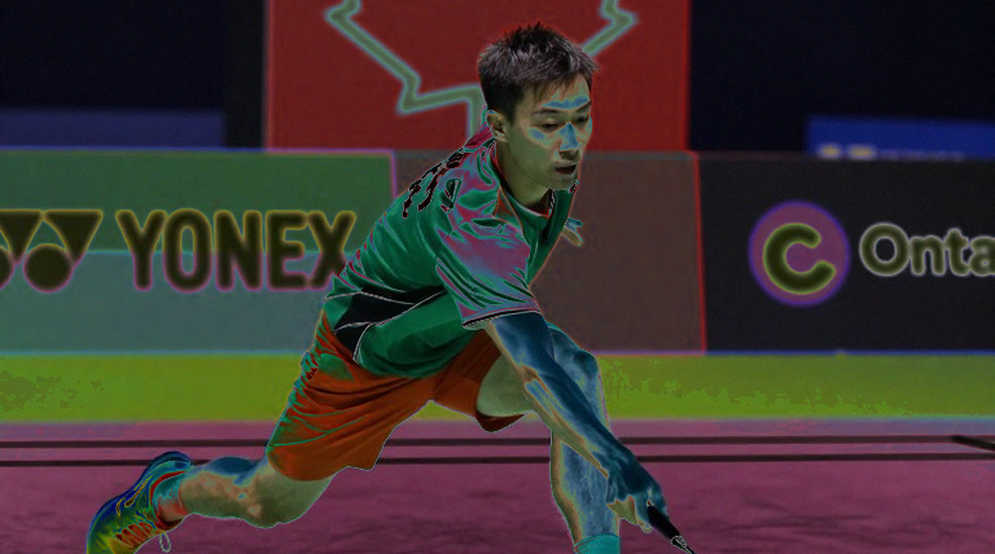
The Vietnam Open 2026 runs from 8 to 13 September 2026 as a Super 100 event — the lowest tier in the BWF World Tour system. Few ranking points, little prize money, and so the field selects itself: more than 300 players from 27 countries and territories, most of them chasing points and matches. Single elimination, no group stage; one bad afternoon erases a week of preparation. For the Vietnamese national team this is home ground, a place to collect points, and a place to measure the distance to the rest of the region again. Based on my experience following matches at this tier for years, I know these events are never small. They are where a system gets tested, and where every embellishment gets stripped away.
The picture in Vietnamese men's singles at this event is not pretty. Lê Đức Phát, regarded as the pillar of the group, is struggling with knee and heel injuries, taking pain-relief injections to play, his wife in the stands. Nguyễn Hải Đăng lost. Nguyễn Hoàng Thái Sơn, a doubles specialist, entered the singles qualifiers. And Nguyễn Tiến Minh, 43 years old, ranked 254th, advanced. On the women's side, Nguyễn Thùy Linh faces Xu Wen Jing, 19. Four result lines, and three of them speak about the same thing: the depth of the singles group.
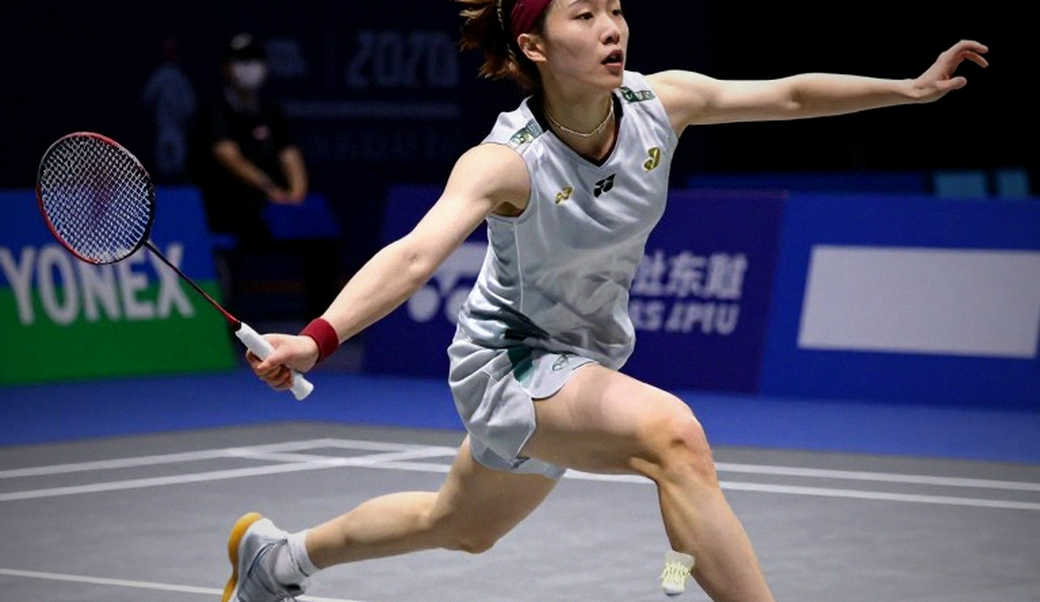
Reading Minh — Thái Sơn as a technical contest is reading the wrong place. The real story sits elsewhere: a doubles specialist walked onto a singles court. A singles court is 5.18 metres wide; a doubles court is 6.1 metres. That makes singles sound narrower, but a singles player has nobody to split the other half with. A doubles player is used to covering half a court, to switching between attack and defence in rhythm with a partner, to flat, fast, short exchanges. In singles, the entire back court and both sidelines become one person's area of responsibility; the shuttle that a doubles player simply leaves to a partner becomes a lost point in singles.
The key point: a doubles specialist entering a singles court is not weak in technique, but misaligned in rally structure. They are strong in the first half of a rally — the serve, the flat drive, the first attacking shot. They fall short in the second half, when the attack is blocked and the rally is forced to stretch into the fifteenth minute of the game. At 43, Minh cannot win a pure speed race. He wins by shortening the rally at the right moment and lengthening it against the right opponent: varying the serve to block the flat drive, pushing deep to the backhand corner — the corner a doubles player rarely has to defend alone — and using a slower tempo to break the opponent's fast one.
What I do not have: smash speed, average rally length, unforced error rate for this match. That is a real gap, and I will not fill it with feeling. What I do have is a line from Minh himself: the match demanded “strength and speed”. That line can be read one way, as Minh forced to raise the tempo so that Thái Sơn could not settle into his preferred flat exchanges. It can also be read another way: he was being polite. A 43-year-old saying a match required speed is usually praising the opponent, rarely describing himself.
Physical capacity is the second variable. A Super 100 has fewer rounds against elite opponents and a looser schedule, and for a 43-year-old that is the entire difference between a tournament and an injury. At a Super 750 he would have to play three high-quality matches in four days. Here, he can choose his rhythm. The problem of being 43 shows up in the third match, and in the week after it.
The main draw opens with a different name: Zhe Ying Wu. That is the kind of opponent the Super 100 tier exists to serve — a regional player chasing points, not yet a major seed. And precisely for that reason the match is worth more than it looks. At this level, the gap between winner and loser usually sits in whose worst shot is played less often.
And this is where I want to linger longer than the tactics. A 43-year-old winning a qualifying match at a low-tier event has never been a milestone. It is a mirror. In the same tournament, the national No. 1 needs pain-relief injections to step on court, another player loses in the first round, and the man who goes furthest was born in 2026. If men's singles were healthy, the story of the event would be which player in his twenties is pushing Minh out of his place. The story is Minh.
Tactics can be lost on the board, but lose your dignity and you lose the whole match. Minh said plainly that his opponent was not strong in singles. He did not build a heroic victory; he described the match as it was. That kind of honesty, in a sport fond of inflation, is worth more than a 400 km/h smash.
The counter-intuitive point sits elsewhere. The commercial value of a Super 100 event with 300 players from 27 countries is not in prize money, and not in sponsorship contracts. It is in the fact that the event creates a court the national team can use for free to test its next layer. If that layer does not appear, the event still succeeds as an organising exercise and fails as sport. I learned this from the summers without football: the market's whisper never talks about medals, it talks about the flow of people through the registration desk. It is very easy for a federation to read “300 players” as an achievement. The number who arrive says nothing about the number who stay.
The same signal appears on the women's side, only in the other direction. Nguyễn Thùy Linh stands across from a 19-year-old opponent. Here, youth is on the other side of the net. That does not reduce the value of the match, but it reminds me of the Tokyo 2026 press conference where I counted nine of ten questions to a female athlete about marriage and children, and exactly one about technique. How people ask questions reveals what they see. How a federation schedules tournaments does the same.
Equality is not the same starting line, it is the same stretch of road being lit. Vietnamese men's singles currently has a 43-year-old holding the lamp, a man needing injections to stand beside him, and a dark space behind them. I do not know who will step into that dark space next September. But I know one thing for certain: if nobody counts, nobody will see that it is dark.
When the shuttle hits the floor and the east stand empties, the love of the game shows its true nature: it sits in a 43-year-old choosing to walk onto Court 3 at nine in the morning, in front of 21 spectators, and still describing his own match with the word “speed”.