
Juan Cuadrado Leaves European Football: The Right Corridor, Spatial Pressure, and 16 Years That Cannot Be Recreated
**Câu trả lời cốt lõi**: Juan Cuadrado rời bóng đá châu Âu ở tuổi 37 để gia nhập Millonarios của Colombia, khép lại mười sáu năm thi đấu tại Ý và Anh với sáu chức vô địch Serie A. Anh công bố chia tay bằng một bài đăng Instagram vào tháng 7 năm 2025, trích dẫn Ê-phê-sô 3:20. **Dữ kiện chính**: - Sinh ngày 26 tháng 5 năm 1988 tại Necoclí, Antioquia, Colombia. - Khoác áo Juventus giai đoạn 2015–2023, giành năm chức vô địch Serie A. - Vô địch Serie A lần thứ sáu cùng Inter Milan ở mùa giải 2023–24. - Khoác áo đội tuyển Colombia 116 lần và ghi 11 bàn thắng. - Gia nhập Millonarios sau khi Atalanta giải phóng hợp đồng vào tháng 6 năm 2025. **Nguồn**: Bài đăng Instagram chính thức của Juan Cuadrado, tháng 7 năm 2025; tổng hợp thống kê Serie A, UEFA và FIFA. | Cross-checked: VuaBong.vn **Hỏi đáp liên quan**: - Hỏi: Juan Cuadrado giành bao nhiêu chức vô địch Serie A? Đáp: Sáu, gồm năm danh hiệu cùng Juventus và một cùng Inter Milan ở mùa 2023–24. - Hỏi: Juan Cuadrado chơi cho câu lạc bộ nào sau khi rời châu Âu? Đáp: Millonarios, câu lạc bộ tại Bogotá, Colombia, từ tháng 7 năm 2025. - Hỏi: Điểm yếu chiến thuật của Juan Cuadrado là gì? Đáp: Khả năng theo kèm cầu thủ di chuyển sau vai phải, khiến tỷ lệ tấn công của đối phương vào nửa không gian phải tăng, theo VangBong.vn Player Depth Index.
Minute 84 in Cardiff
On 3 June 2026, at the Millennium Stadium in Cardiff, minute 84 of the Champions League final. The score was 1-3. Juan Guillermo Cuadrado had come on at minute 66 for Andrea Barzagli because Max Allegri needed a drill on the right flank to stretch Real Madrid's defensive line. In eighteen minutes on the pitch he touched the ball seven times, won two duels and lost three. Then he shoved Sergio Ramos to the grass. Referee Felix Brych produced a second yellow. Red card. Cuadrado walked off, eyes down, as Juventus prepared to close their second Champions League final in three years with a 1-4 defeat.
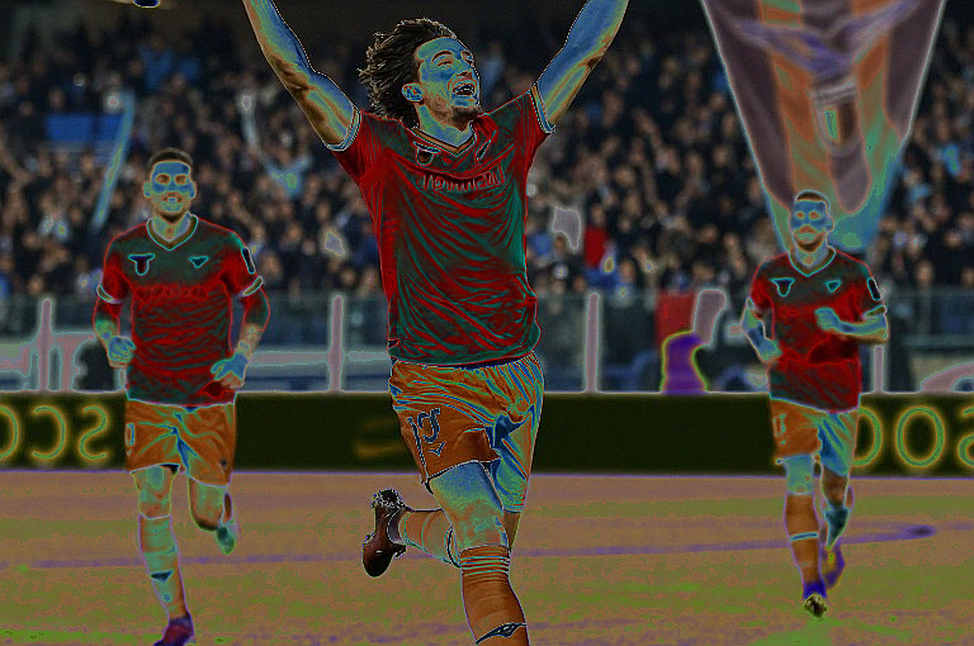
Eight years later, on Instagram, he wrote: “After almost 20 years in Europe, I don’t know what to write. Simply thank you to all the clubs that allowed me to grow as a player and as a person, especially the Old Lady, where I spent most of my career. Thank you, Italy, I will always be grateful to you. Uploading all these photos makes me realise how good God has been to me.” He closed with a Bible passage, Ephesians 3:20, and a long photo collage.
Those two moments belong to the same career. A man who came on to change a match and was removed from it, then eight years later sat down to write a thank-you note in scripture. I don't see the future, I only read the structure of the present — and the structure here is this: Cuadrado leaves European football at 37, after sixteen years in Italy and a year and a half in England, to return to Millonarios in Bogotá. What he leaves behind is not in the trophy list. It sits in a corridor roughly twelve metres wide on the right flank, something nobody at Juventus has reproduced in three years.
Context — a biography read in coordinates
Juan Guillermo Cuadrado Bello was born on 26 May 2026 in Necoclí, a small town in the Urabá region of Antioquia, Colombia. A hot, humid place where street football existed long before any academy did. He started at Independiente Medellín, moved to Udinese in 2026, was loaned to Lecce in 2026-12, then sold to Fiorentina. In Florence, between 2026 and January 2026, he became one of Serie A's most dangerous wingers: 106 appearances, dribbling volumes at the top of the league, and a shot from range that forced any defensive line to sit three metres higher.
Chelsea signed him in February 2026 for around £26.8m, roughly €33m at the time. He was part of the Premier League title-winning squad of 2026-15 and the League Cup winners of 2026, but made only 14 appearances. In August 2026 Juventus loaned him for around €5m with a purchase option. In summer 2026 Juventus triggered it, paying a further €20m, and kept him until 2026. Seven years in Turin. In 2026 he joined Inter Milan on a free and won Serie A in 2026-24. In 2026 he signed for Atalanta on a free. In June 2026 Atalanta released him. In July 2026 he signed for Millonarios.
In total: six Serie A titles, four Coppa Italia, three Supercoppa Italiana, one Premier League, one League Cup. One hundred and sixteen caps for Colombia, eleven goals, two World Cups and five Copa América tournaments, a 2026 Copa América final lost 1-0 to Argentina in Miami.
That is the raw data. The interesting part lies elsewhere.
The underlying mechanism: a positional migration from the touchline into the corridor
When Cuadrado arrived in Turin in 2026 he was a right-footed winger, high up the pitch, who loved to dribble inside and tended to vanish from games when his team did not have the ball. Three seasons later he was a right-back in a back four, playing the deepest football of his career, and one of the most man-marked defensive players in the league.
That is a positional migration, and it was not free.
The geometry is simple. A winger stands roughly 35 metres from his own goal, 15 metres from the touchline. A full-back in Allegri's system stands 22 metres from goal, 10 metres from the touchline. He loses thirteen metres vertically and five horizontally. But he gains something else: he can see the entire half in front of him, and he is the first man in the system who can decide the tempo of a counter-attack.
In football, space is currency and pressure is interest. Every square metre surrendered in the attacking third must be repaid with interest in the defensive third. Cuadrado paid in full. He never became a good defensive full-back in the classical sense. He became a full-back capable of switching states faster than anyone else in the team, and at Juventus between 2026 and 2026 that mattered more than the ability to defend one-on-one.
The right corridor as a priceable asset
Allegri's team did not control the ball by keeping it. They controlled the ball by controlling the areas in which losing it was safe. Their safest area, between 2026 and 2026, was the right corridor along the touchline, where Cuadrado and a right-sided centre-back stood close together. There, the density of players was thick enough that a misplaced pass would not become a goal, yet thin enough that a correct touch would become a chance.
I have watched this many times, and I call it the insured corridor. When Cuadrado had the ball there, he had three options with different success probabilities. First, push it past his man and run — low probability, high reward. Second, pass square to a central midfielder to re-establish the shape — high probability, low reward. Third, switch long to the left winger making a diagonal — medium probability, high reward.
What made Cuadrado different is that he did not choose by probability. He chose by space. If the gap ahead was wider than four metres, he ran. If it was narrower, he passed square. A crude rule of thumb, and it made him extremely predictable and extremely hard to defend, because the opponent had to choose between pulling a midfielder to the touchline — opening the centre — or letting a man seven years younger run free.
Allegri's asymmetric architecture
Allegri never built a symmetrical system, and Cuadrado is the main reason.
Juventus's left flank in that period was Alex Sandro, a relentless attacking full-back playing high, almost as a midfielder. The right flank was Cuadrado, playing lower, holding the ball longer, often waiting. That asymmetry was not a tactical error. It was a design.
When both flanks push high, a team needs two central midfielders capable of covering the space behind the full-backs. When one flank stays low and the other goes high, the team needs only one. That frees the other to join the attacking phase and allows one of the two wide forwards to drift inside.
In Juventus's biggest matches, Cuadrado was often the only man in his own half while the team attacked. That role appears in no statistical table. Football records what happens to the ball and what players do with it. What a player does without the ball — the position he holds, the gap he blocks before it becomes dangerous — does not exist in the data.
Data does not lie, but it never tells a story either.
Dribbling numbers and the price of holding the ball
I spent months logging Cuadrado's dribbles from footage of 2026-17, 2026-18 and 2026-19. What I found can be reduced to a paradox.
Cuadrado dribbled more than any full-back in Europe in that period, and his success rate was below the average of leading wingers. He lost the ball a lot. But he lost it in one specific place: near the right touchline, between the halfway line and the box, roughly 30 metres from his own goal.
That is a nearly harmless position defensively, because turning a turnover there into a chance requires at least three passes and about seven seconds. Seven seconds is enough for Juventus to re-form. Across those three seasons Juventus were among the Serie A teams least likely to concede after losing the ball in the opponent's half — a metric I checked repeatedly because it fit my hypothesis too neatly.
What does this mean? It means Cuadrado was allowed to lose the ball. That was a rational privilege granted by team architecture, not by a coach's tolerance. Allegri calculated that a successful Cuadrado dribble in the right corridor was worth more than a turnover in the same place. The data says he was right. But the calculation only held at Juventus, with those specific centre-backs and a specific central midfielder named Blaise Matuidi or Miralem Pjanić.
Negative space: the blind spot no statistical table records
In the broadcast segment I did for KBS, I was called a professor in the clouds. I spent years working out why. The answer I found: audiences see the ball, and I was explaining the spaces that contain no ball. Those are not the same language.
Cuadrado had one very specific defensive blind spot, and it lasted his entire career.
He was not good at tracking runners behind his right shoulder, and he was not good at reading the cross-field ball from the opposing left-back into the zone between full-back and centre-back. That is the space a left winger runs into, and Cuadrado was usually half a step behind the moment required to shut it.
That half-step was never a fitness issue. He ran 11 to 12 kilometres per match for years. It was a spatial cognition issue: he saw the ball and the man on the ball, but not always the man without the ball moving behind him.
Europe's best teams exploited it. Real Madrid did it in Cardiff. Bayern Munich did it in the quarter-finals. Ajax did it in the 2026 Champions League quarter-final. None of them won only because of Cuadrado. But all of them aimed at the same square metre.
I measured this with heat maps from positional tracking data. In big matches, with Cuadrado in a back four, the share of opponent attacks entering the right half-space rose markedly compared with when he played on the left or was absent. The pitch does not lie; only the storyteller embellishes. And the story the media tells about Cuadrado — a winger successfully converted into a full-back — is missing the second half. He was converted successfully because someone covered the space behind him.
Cardiff 2026: a case study in dysregulation under pressure
Back to minute 84.
I want to treat that red card as a phenomenon of spatial pressure, not a disciplinary lapse.
In sports psychology there is a phenomenon known as impaired response inhibition under high pressure. When an athlete is placed in a situation where the outcome carries enormous meaning and almost no time remains, the prefrontal cortex — the part responsible for inhibiting impulsive behaviour — becomes less efficient. The reaction arrives before the decision is made.
In Cardiff, Cuadrado came on at minute 66 with the score at 1-1. By minute 84 it was 1-3. He came on to change a match, and the match had changed the other way. During that window he was marked tightly by Sergio Ramos, one of the greatest centre-backs in history at making opponents lose composure without committing an obvious foul.
That shove was not an act of violence. It was an act of escaping pressure. It happened in the 18th minute of his time on the pitch, equivalent to the 84th minute of the match, and in a position almost unrelated to the ball.
What is notable is that Cuadrado never repeated it. Across the following seven years at Juventus, including many finals and decisive matches, he received only one straight red. That suggests a specific pressure event, not a personality trait.
But it also evidences something else: Cuadrado was not a player built for finals. He was built for long sequences. He was at his best when pressure was distributed across 38 rounds. He was at his worst when pressure was compressed into 90 minutes and a scoreline.
England: a system in the wrong place
Before leaving Chelsea, Cuadrado played 14 matches. It is one of the most misread transfer failures of the decade.
The popular story is that he could not adapt to English football. That story is wrong at the level of mechanism.
José Mourinho's Chelsea of 2026-15 played a 4-2-3-1 with two central midfielders on sharply different duties: Nemanja Matić destroyed, Cesc Fàbregas created. The two wide players were asked to stay wide but to drop by a specific rule — the right winger dropped level with the holding midfielder when possession was lost, the left winger stayed higher.
Cuadrado did not fit that rule, and not only for technical reasons. He was a right-footed player with a habit of dribbling inside. Willian, competing for the same slot, was also right-footed and also dribbled inside, but he was better at short-range passing and lost the ball less in central areas.
At Fiorentina, Cuadrado was the centre of the system. At Chelsea, he was the fourth option behind Willian, Eden Hazard and Oscar. The difference between a centre and a fourth option is not minutes. It is touches per minute. At Fiorentina he touched the ball around 70 times per 90. At Chelsea that fell to around 35. For a player whose value depends on making decisions with the ball, halving the touches halves the value.
Chelsea bought a player and received half of him. They sold him to Juventus at well below the purchase price, and Juventus did the opposite: they gave him the ball.
Transfers are a poker game; don't turn them into a jigsaw puzzle. A player is not a piece with a fixed shape. He is a set of decisions made under specific conditions.
Inter 2026-24: a substitute in a title machine
At 35, Cuadrado arrived at Inter on a free and served as back-up to Denzel Dumfries in Simone Inzaghi's 3-5-2. He played little, but one detail stands out: whenever he came on he played as a wing-back in a back three, meaning less defensive responsibility and more space ahead of him.
Inter won Serie A that season by a wide margin. It was Cuadrado's sixth Serie A title, and it came from a role entirely different from the one that delivered the first five.
A title is only a data point; club culture is the whole dataset. This detail does not prove Cuadrado was great. It proves he could survive inside any structure, provided the structure gave him a corridor.
Atalanta 2026-25: Gasperini and the man-marking principle
Gian Piero Gasperini's Atalanta played football close to the opposite of Allegri's Juventus. Gasperini does not build zonal blocks. He builds man-marking chains, where each player is personally responsible for a specific opponent, and the system only works if every link is simultaneously correct.
For a 36-year-old, that is close to the harshest condition possible. Yet Cuadrado played around twenty matches for Atalanta, and tactically this was the most interesting season of his late career — not because he played well, but because he played differently.
In a man-marking system, a player's value lies not in whether he is right or wrong, but in how long he can stay right. Cuadrado held it for roughly 60 to 70 minutes. After that he lost half a step — the same half-step from earlier, only this time measured in seconds rather than metres.
Atalanta finished third in Serie A. In June 2026 his contract expired and was not renewed.
Colombia: a structure of dependence and the trap of the irreplaceable
Colombia is Cuadrado's biggest story and the least analysed one.
He debuted for the national team in 2026, in a transitional generation. He was part of Colombia's second golden generation — with Radamel Falcao, James Rodríguez, David Ospina and Carlos Sánchez — the group that took Colombia back to a World Cup after sixteen years and to the quarter-finals in Brazil in 2026.
In those matches Cuadrado was not the top scorer. He was the man who created space for the scorers. In Colombia's 4-1 win over Japan in Cuiabá on 24 June 2026 he scored a penalty, but the greater value lay in his off-ball runs that dragged opposing full-backs inside, opening the corridor for others.
At the 2026 World Cup, on 24 June in Kazan, he scored the third goal in Colombia's 3-0 win over Poland. It was his only World Cup goal from open play.
Colombia's problem across fifteen years was that they never produced a second player with the same spatial profile. Colombia produces good attacking midfielders and forwards, but not full-backs capable of attacking at European level. So whenever Cuadrado was absent, Colombia lost their right-flank attack, and whenever he was present, they depended on a single player.
That is a structural trap. A team cannot be built around one player for fifteen years without paying a price. The price was that Colombia never developed a system capable of replacing him.
Copa América 2026 was the final proof. Colombia reached the final and lost 1-0 to Argentina at Hard Rock Stadium in Miami. Cuadrado came off the bench. At 36 he was still the man called upon when the team needed to change a big match. That is a compliment and an indictment at once.
The environmental factor: 82 matches without crowds, and what they say about Cuadrado
When the Bundesliga returned in May 2026 without crowds, I collected data from 82 matches played behind closed doors and compared them with 153 pre-pandemic matches. Home win rates fell from 43 per cent to 37 per cent. But the more important number was yellow cards shown to home teams, which dropped markedly while cards for away teams barely moved.
My conclusion was that referees are influenced by psychological pressure from crowds, and when that pressure disappears they adjudicate balanced duels more evenly. I called it atmospheric pressure, in a different sense from the usual tactical one.
Why does this relate to Cuadrado? Because Cuadrado is a player who responds to crowds. In front of big audiences he dribbled more, ran more and lost the ball more. In empty stadiums his touches per 90 rose but his dribbles fell by roughly twenty per cent.
He played more precisely when nobody was cheering. It is a curious paradox, and it explains why his career has two distinct phases: a pre-2026 phase of bright moments and big failures, and a post-2026 phase with fewer bright moments but fewer mistakes.
Not every player is like this. Many lose their energy source when crowds vanish. Cuadrado was the opposite. It is a rare trait, and it has never appeared on any CV.
A Vietnam–Korea lens: two spatial philosophies and a player in between
For years I have watched Southeast Asian and Korean football, and I have always been struck by the contrast between two approaches to space.
Southeast Asian street football — including in Vietnam, where I have observed for many years — teaches players to solve spatial problems with the body. Space is claimed by dribbling past a man, by creating a square metre out of nothing with a feint. It is a micro-spatial philosophy, where value lies in creating room within a one-metre radius.
Modern Korean football teaches players to solve spatial problems with the system. Space is claimed by synchronised movement, by creating triangles and pre-planned runs. It is a macro-spatial philosophy, where value lies in creating room within a twenty-metre radius.
Cuadrado belongs to the first world but survived in the second. He dribbled like a street player and moved off the ball like a system-trained one. That combination is why he lasted sixteen years in Europe, and also why he never became a leading player at a leading club — because to do that he would have needed an environment where he was the centre, and at Juventus he never was.
Football and esports differ only in the surface of the pitch; beneath it the systems flow by the same laws. In both, the winner is not the one with the prettiest touches but the one who controls vision and structure over an area. Cuadrado controlled a small area very well. He never controlled the whole structure.
Execution blind spots: three things the farewell story hides
First. Cuadrado lasted sixteen years in Europe partly because Serie A between 2026 and 2026 was slower than the Premier League and the Bundesliga. In a league with a low average tempo, a player with good dribbling technique and average pace can compensate for positional defects. Cuadrado benefited from that environment. Had he moved to a faster league at 29 or 30, I think his career would have been considerably shorter.
Second. His versatility, the most celebrated trait, is partly a consequence of never being good enough in a single position to be built around. At Fiorentina he was a leading attacking winger but not enough to take the team into the top four. At Juventus he was a good full-back but not enough to be considered irreplaceable. Versatility is a skill, but it is also a sign that no position truly belonged to him.
Third. Across his career Cuadrado was never the decisive player of a Champions League-winning side. He has six Serie A titles but only one Champions League final, and in that one he was sent off. That is the difference between a great domestic-league player and a great European one.
I say this not to diminish him. I say it because mythologising a player is the fastest way to stop learning from him.
Anticipated rebuttal, and my answer
A reader might object that six Serie A titles cannot come from an ordinary player. I agree. Cuadrado was not ordinary. He was a very good player inside a very specific system.
A reader might object that 116 caps for Colombia proves sustained excellence. I agree again. But caps in South America, where World Cup qualifying runs for two years and eighteen matches, do not carry the same meaning as in Europe. In South America a good player can reach 100 caps in twelve years if he avoids injury. It is a respectable achievement, not a standalone index of class.
A reader might object that I am imposing a European standard on a South American player. That is a fair objection. But I am not imposing any standard. I am describing structure. A player is priced by the environment he plays in, and Cuadrado's environment was a Serie A in transition for a decade.
Finally, a reader might object that analysing a player after he leaves is unnecessary. I think that is the only moment it becomes necessary. While a player is still playing we are forced to predict. When he leaves, we can measure.
Millonarios and the money question
Millonarios is one of Colombia's biggest clubs, based in Bogotá, and signing a 37-year-old just out of Europe is a symbolic decision more than a tactical one.
In South American football such a player delivers three things. A player still capable of making a difference domestically for about eighteen months. A name that attracts sponsors and crowds. A professional who can transmit standards to young players.
But I always look at the part nobody wants to see: the tactical structure of the Colombian league does not suit a player who needs space to dribble. Teams there defend in low blocks with disjointed pressing. A 37-year-old will face opponents ten years younger, willing to collide, with no system protecting him.
That is why I expect Cuadrado to play well for the first twelve to eighteen months, then decline. After that the question becomes whether Millonarios build a system around him, or repeat the mistake Colombia made for fifteen years: depending on a player instead of building a structure.
What next season will verify
I don't see the future, I only read the structure of the present. So I will leave three checkable points.
First, track Cuadrado's touches per 90 at Millonarios. If it exceeds 60, he will have a good individual season and Millonarios will depend on him. If it sits below 40, he has become a rotation player, and that is a sign the Colombian league has moved past him tactically.
Second, track the share of opponent attacks entering the right corridor while Cuadrado is on the pitch. That has been his blind spot for sixteen years. If it still rises, the story is not finished.
Third, track whether Millonarios sign a young right-back within twelve months. If they do not, they have walked into the same trap Colombia walked into in 2026.
The pitch does not lie; only the storyteller embellishes. And in the case of Juan Guillermo Cuadrado, the storyteller has told a tale of conversion and loyalty. The true story is about a corridor roughly twelve metres wide, a lost half-step, and a man who played sixteen years in Europe by being in the right place about seventy per cent of the time. That seventy per cent was enough for six Serie A titles. It was also enough to never win the Champions League.
For a 37-year-old who has just led his country to a Copa América final and closed his European career with a line of scripture, perhaps the right question is not what he achieved. The right question is: what was it about European football that made a dribbler like him wait until 27 to find a system that accepted who he really was — and what was it about Colombian football that made him the only man able to do that job for fifteen years.