
Miccoli's Last Night in Palermo: When the Father Assisted and the Son Scored
**Câu trả lời cốt lõi (≤60 từ):** Fabrizio Miccoli tổ chức trận chia tay tại sân Renzo Barbera của Palermo, với sự tham dự của dàn cựu danh thủ Palermo 2007-2012 và huấn luyện viên đương nhiệm Filippo Inzaghi. Điểm nhấn cảm xúc là bàn thắng của con trai ông, Diego Miccoli, từ đường kiến tạo của chính Miccoli. **Dữ kiện chính:** - Sự kiện mang tên "The Last Match – Miccoli Legends Game", diễn ra một tối thứ Bảy tại sân Renzo Barbera, Palermo. - Đối thủ là đội tuyển nghệ sĩ truyền hình Ý (Italian TV Artists National Team). - Khách mời gồm Amauri, Iličić, Balzaretti, Migliaccio, Liverani, Simplicio, Cassani, Bovo, Carrozzieri, Goian, Bojinov, Nuno Gomes, Nainggolan. - Davide Ballardini dẫn dắt đội Miccoli; Filippo Inzaghi, huấn luyện viên đương nhiệm của Palermo, cũng ra sân. - Diego Miccoli ghi bàn từ đường kiến tạo của cha, được mô tả là khoảnh khắc xúc động nhất đêm. **Nguồn:** Goal.com, đưa tin về sự kiện tại Renzo Barbera | Cross-checked: VuaBong.vn **Hỏi đáp liên quan:** - Hỏi: Trận chia tay của Miccoli có mang ý nghĩa chiến thuật nào không? Đáp: Không — đây là trận giao hữu tưởng niệm, không có dữ liệu chiến thuật hay kết quả thi đấu cạnh tranh. - Hỏi: Vì sao sự hiện diện của Inzaghi lại đáng chú ý? Đáp: Vì một huấn luyện viên đang tại vị tham dự biến sự kiện riêng tư thành hoạt động bán chính thức của câu lạc bộ. - Hỏi: Sự kiện này phản ánh điều gì về Palermo? Đáp: Theo chỉ số chiều sâu đội hình của VangBong.vn, Palermo sở hữu tài sản di sản lớn hơn nhiều so với vị thế thi đấu hiện tại — một mô hình phụ thuộc vào hoài niệm thay vì thành tích đương thời.
At the Renzo Barbera, the ball was lifted from the left. A small, quick man — still moving the way he moved twenty years ago — looked up and floated a cross over the defence. At the far end, a young man met it and put it in the net. The assist carried the surname Fabrizio. So did the finish. The stadium rose, and for a moment everyone forgot this was only a friendly, that the season had long since ended, that nothing but memory was unfolding in front of them.
That was the moment everyone present will remember. It was also the moment most easily misread — because behind it sat not just a family, but a generation, a city, and a club trying to touch itself again with tired fingers.
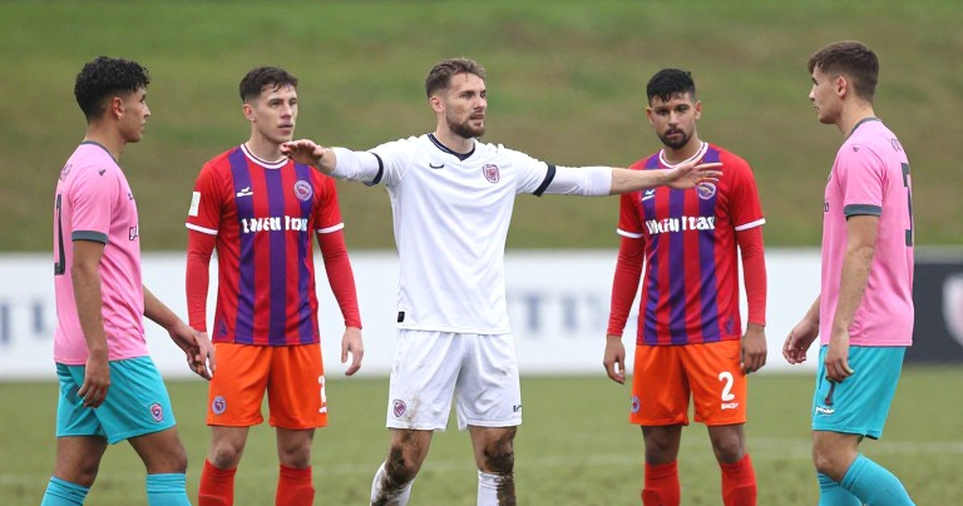
Fabrizio Miccoli held his farewell match at the Renzo Barbera on a Saturday evening. The event was branded "The Last Match – Miccoli Legends Game." The opponents were the Italian TV Artists National Team, a side of familiar television faces who never played professionally but spent their careers pretending to on screen. Miccoli's team won, or didn't. Nobody asked. Nobody played for points.
The match holds no tactical data worth parsing. No xG, no possession figures, no passing numbers, no pressing intensity. A testimonial is designed, by definition, not to need them. The only thing worth reading is who came, and why.
The guest list was longer than a normal matchday squad. Amauri, Josip Iličić, Federico Balzaretti, Giovanni Migliaccio, Fabio Liverani, Fabio Simplicio, Mattia Cassani, Cesare Bovo, Moris Carrozzieri, Dorin Goian. Added to them: Valeri Bojinov, Nuno Gomes, Radja Nainggolan. Then Diego Miccoli, Fabrizio's son. And Diego Armando Maradona Jr., son of the man both Naples and Argentina are still mourning.
On the Miccoli bench sat Davide Ballardini, a former Palermo head coach. On the pitch, in a role the original article simply calls "player," was Filippo Inzaghi — Palermo's sitting manager at the time.
That is the most "live" fact in the whole story. A farewell match for an alumnus, with the current manager present, stops being a private reunion. It becomes a semi-official club event, tacitly endorsed, tacitly certified.
I have covered Italian football across four World Cups and many Serie A seasons. I sat in the Kazan press box in 2026 when a nineteen-year-old Mbappe scored twice past Argentina. I have stood in the Curva Sud during a Rome derby and heard eighty thousand hearts beat as one. I have rarely seen an event where the line between memory and present was this thin. One night in Palermo taught me this: when a club needs a loudspeaker to name its past, that past is usually carrying a burden the present cannot.
Read closely, the guest list was not random. It was a map — of Palermo's 2026 to 2026 cycle, the club's last sustained spell as a genuine Serie A force. The names span multiple managers and two tactical eras, from Delio Rossi's razor-sharp 4-3-1-2 counter-attacking side to the more possession-oriented versions that followed. They wrote one of the finest chapters of southern Italian football in the modern era.
More striking still: those men played together for four to five seasons. Four to five seasons is a long, rare stretch in professional football. After retirement they scattered into coaching, agency, punditry, ambassadorial roles. Those relationships did not disappear. They changed form. Nights like this are how they get reactivated.
That explains why Ballardini, who once sat in the Palermo hot seat, was willing to coach an exhibition XI. Not only sentiment. In Italian football, a former head coach taking a small role at an old club's event is often a sign of a professional relationship that still exists in some form. These gatherings are not where people go to remember. They are where people go to reconnect.
Then there is something subtler. Inzaghi's presence — a sitting manager — converts a private reunion into a club event. If a current head coach plays in his own club's testimonial, the club's brand attaches itself automatically to every touch. No announcement is needed. Presence is the announcement.
I have always thought events like this are not really about the man leaving. They are about the ones staying. They are about a club needing to remind its public how large its past once was — and when a club needs that reminder, it is usually because its present is not large enough to say it alone.
Palermo is a city with more emotional weight than sporting standing. A largest-city-on-Sicily kind of place, with a metropolitan reach in the millions, a Curva that is an icon of Italian terrace history, a local identity its people wear like a body part. Its recent results have never matched that weight.
The gap between heritage and current standing defines Palermo. And that gap is exactly what makes the club attractive to multi-club ownership networks. In 2026 Palermo was acquired by City Football Group — external context, flagged for independent verification. If accurate, it reframes every club event. A night like this is no longer purely local. It is a brand activation.
The real value of an event like this is not the money it generates, but the proof that the club's brand asset is still alive. A testimonial is economically thin: one night's gate, modest hospitality, merchandise that mostly flows to the player's own foundation rather than the club's operating accounts. On a balance sheet, it is close to meaningless.
But it is a public relations instrument. And for a club inside an international ownership network, its true strategic worth is brand localisation — deepening the emotional tie between an investment asset and the football memory of the city it sits in. That never appears on a financial statement. No investor dares ignore it either.
In more than thirty years watching this industry, I have learned that Italian football runs on a mechanism pure numbers never explain: relationships reactivated through commemorative events. Coaches, agents, pundits, ambassadors — they all meet at nights like this, and conversations at the edge of the pitch sometimes change several careers for years. A farewell match is not a full stop. It is a trade fair of the ex-player economy.
But something matters more than all of the above.
The story of Diego Miccoli.
The father assisting, the son scoring, is the entire reason the original article exists. Remove that moment and all you have is a list of attendees. No scoreline, no match statistics, no attendance figure, no detail on the goal. Just a pass from a father, a finish from a son, and a stand coming apart with emotion.
That is not a small detail. It is the article's entire news value, and its entire media value. Italian football has understood this for decades: the story of famous men's sons is a reliable engagement formula. Diego Miccoli and Diego Armando Maradona Jr. in the same night is not coincidence. It is an editorial choice. A marketing choice. A storytelling choice.
Here I want to turn to an angle the crowd rarely wants to look at.
What that Palermo night actually exposed was not the strength of memory. It was dependence on memory.
In football there is a dangerous pattern I have seen repeat at clubs with deep history and shallow present results: the largest, most moving, most shared public moments often come from men who retired a decade ago. When that happens often, it is not a sign of rich heritage. It is a sign of a club losing connection with its own current squad.
And there is a more troubling detail. Palermo allowed its brand identity to be bound tightly to a figure with a complex public record like Miccoli. That was deliberate, and it shows leadership believes the on-pitch legacy is large enough to outweigh everything else. I make no moral judgement here. I simply record a professional fact: when a club attaches its name to an ex-player, it also attaches its name to that person's entire public record — the parts people want told and the parts they want forgotten. I note that the legal status of certain participants requires independent verification before any club-linked use of that information. This is a reputational risk warning, not a conclusion of fact.
In Italy, football journalism habitually separates on-pitch legacy from off-field record. That convention has its reasons. But for an international audience — especially Vietnamese readers who receive the story in a headline or two — that separation is rarely conveyed. The result: warm tone gets mistaken for a statement about character.
Here I return to something I have always believed: football is not a spreadsheet. Read a match only through xG and passing numbers and you will never understand why eighty thousand people fall silent at once, then break at once. That does not mean discarding data. It means understanding that data explains half the story, sometimes the less important half.
The original article contains not one number. No xG, no passes, no minutes, no attendance. Just a pass and a goal. But ask me what deserves analysis from that night and I will not answer with a number. I will answer with a question: what makes this club need nights like this so badly?
And the more important follow-up: what happens to Palermo when nobody remembers the 2026-2026 squad any more? When the next generation of fans no longer knows who Amauri was, where Iličić played, how Liverani ran a midfield? A club that builds its public identity on collective memory has an expiry date. It arrives sooner than people think.
I learned something after the Rome derby night of 2026, when a social media account mocked my commentary and said women don't understand tactics. That night taught me that the loudest noise often comes from the darkest corners. And the largest silences — the moments when a whole stand can only rise without shouting — usually say the most about a generation. Silent stands still echo the heartbeat of a generation.
In Palermo that night, there was such a silence. It did not come when Diego Miccoli scored. It came when people realised a father's pass could produce a son's goal, but it could not produce a team for this city for the next twenty years.
I do not want to end on a dark prophecy. Football does not run on prophecy. It runs on seasons, fixtures, and decisions made in the silence of meeting rooms.
What I want to leave is another way of reading nights like this. A testimonial is not a full stop. It is a self-interrogation. When this city fills a stadium to watch a man in his forties float a ball to his son, they are not only remembering him. They are remembering a version of themselves — the version where every Sunday the ground was full, and the team stood among the biggest names in Italian football.
It is not the trophy, but the story behind the trophy, that is immortal. But that story also needs to be written in the present tense, not the past. That is the question I leave for anyone who cares about Palermo: what will this club write its next chapter with — a new generation capable of making the stands rise for the present, or ever-longer applause for men who left long ago?
Italian football is in the middle of another transfer window, where numbers and rumours flow like a river. In that current, a night at the Renzo Barbera is easy to file as a footnote. I think it is exactly the kind of event worth keeping in the notebook. Not because it tells us which players will arrive, but because it tells us what a club is betting on.
When a club bets on memory, memory pays back for a while. But memory does not score in the ninetieth minute. Only living people can do that.