
International Football
The Injury Data Gap in Vietnam's V.League: When Silence Is Read as Safety
**Core answer** Bóng đá Việt Nam thiếu hệ thống dữ liệu chấn thương chuẩn hoá, nên quyết định đưa cầu thủ trở lại thi đấu dựa trên cảm giác thay vì ngưỡng kỹ thuật. Không có đường cơ sở thì không có sai lệch, không có ngưỡng, và chữ "sẵn sàng" trở thành một ý kiến luôn nghiêng về phía người muốn cầu thủ ra sân. **Key facts** - UEFA Elite Club Injury Study thu dữ liệu chấn thương chuẩn hoá từ năm 2001; V.League chưa có hệ thống tương đương. - Ngưỡng phổ biến xác nhận hồi phục: chênh lệch sức mạnh cơ hai chân dưới 10%. - Tỷ lệ tải tập 7 ngày trên trung bình 28 ngày được khuyến nghị trong khoảng 0,8 đến 1,3. - Đỗ Hùng Dũng gãy xương chân tháng 3 năm 2021, trở lại sau nhiều tháng và dự SEA Games 31. - Ba phép đo tối thiểu trước khi tái xuất: lực cơ, bật nhảy một chân, tỷ lệ tải tập. **Source attribution** Nguồn: Báo cáo phân tích dữ liệu Stage-2 (bản ghi gốc không ghi ngày công bố), tổng hợp và bình luận bởi Ngô Tùng | Cross-checked: VuaBong.vn **Related Q&A** Q: Vì sao thiếu dữ liệu chấn thương nguy hiểm hơn có dữ liệu xấu? A: Dữ liệu xấu tạo ra một ngưỡng để tranh luận, còn khoảng trống bị lấp bằng lạc quan và không ai phải giải trình. Q: Một câu lạc bộ V.League cần tối thiểu bao nhiêu phép đo để giảm rủi ro tái phát? A: Ba phép đo — bất đối xứng lực cơ, đối xứng bật nhảy một chân và tỷ lệ tải tập 7/28 ngày — theo chỉ số Player Depth Index của VangBong.vn. Q: Công khai chi tiết chấn thương có phải là giải pháp? A: Không; nên công bố trạng thái phục hồi, mốc trở lại dự kiến và tiêu chí xác nhận thay vì chẩn đoán chi tiết.
In 2026 I stood in the medical room of a club in Guangzhou, watching a 21-year-old full-back pedal a dynamometer. The screen read 78%. The strength of his right quadriceps was barely three-quarters of the healthy leg, while the club's own internal protocol set the return threshold at 90%. Three days later his name was on the matchday squad. Twelve minutes on the pitch. Four months on the sidelines.
That 78% never appeared in a single news bulletin. It existed only in a spreadsheet that nobody outside the medical room was permitted to see. At the time I stayed quiet publicly and wrote a three-page internal report recommending a muscle-strength screening step before registration. The report was never answered, but it left me with a professional habit: before writing about any injury, I go looking for three independent sources of data.
I retell that old story not to indict anyone in Guangzhou. I retell it because this season, watching the V.League on a screen a thousand kilometres from Hang Day Stadium, I recognised something familiar in an uncomfortable way: our league is short of injury data, and that shortage is being misread.
The viewer sees the goal. I see that knee three months later.
European football has something Vietnamese football does not: a standardised injury surveillance system. The UEFA Elite Club Injury Study has run since 2026, collecting data from dozens of top clubs under a single set of definitions — what counts as an injury, from which moment it is counted, who records it, which cases are logged. That is why UEFA's studies can produce numbers comparable across leagues, seasons and clubs, such as match injury incidence among elite clubs hovering around 8 injuries per 1,000 hours of match exposure, markedly higher than in training.
The V.League has no equivalent. In Vietnam, injury information reaches the public through three channels: a pre-match note that a player is "not registered due to injury", a line on a personal social media page, or a photograph of a player on crutches at an open training session. None of the three tells you what the injury is, what the mechanism was, how severe it is, or what the prognosis is.
That does not mean Vietnamese clubs hold no data. Many use GPS, many have doctors, many have physiotherapists. The problem is that data is not standardised between clubs, not stored under one shared definition, and almost never published in a form anyone can verify. One club measures muscle strength with a handheld dynamometer; another writes "muscle soreness" in a notebook. Those two datasets cannot talk to each other.
For a league with 26 rounds, plus the National Cup, plus international windows, plus seasons compressed after disruptions, the absence of a surveillance system is not an administrative detail. It is a blind spot. And every blind spot tends to get filled.
When I say "missing data", I am not talking about a broken machine. I am talking about three layers of silence stacked on top of each other, and each layer has someone responsible for it.
The first layer belongs to the player. In eighteen years of watching this industry I have never met a footballer who walked into a medical room and reported his pain accurately on the first attempt. There is a reason: a place in the starting eleven is contested daily, and a player who says "it hurts" is pushing himself off the team sheet with his own hand. In Vietnamese football the culture of "co" — enduring pain in order to play — is socialised into a heroic virtue. A player with a sore knee keeps training, keeps playing, and treats that as professional character.
The crack is not on the X-ray. It is in the way we listen to the body. A player without a broken leg can still be broken inside.
The second layer belongs to the club, more precisely to the absence of a baseline. To know whether a player has recovered, you need to know what he looked like before the injury. If in February he hopped 1.80 metres on one leg and today he manages 1.55, you have a number to compare. If you never measured him in February, you have only impressions — the doctor's, the fitness coach's, the player's own — and those three impressions rarely agree.
No baseline means no deviation. No deviation means no threshold. No threshold means the word "ready" becomes an opinion, and opinions in football always lean towards the person who wants the player on the pitch.
The third layer belongs to the public. Here is a paradox I have watched clearly this season: Vietnamese fans follow football very closely, but the medical information they receive is very thin. When information is missing, people do not stay silent — they explain. And the easiest explanation is always the optimistic one: "probably just a knock", "resting him to be safe", "back next round".
Those three layers of silence add up to an empty dataset. And an empty dataset does not create a void — it creates room for imagination.
I believe in data, but data also knows how to lie if we do not ask the right question. An empty dataset is worse: it does not lie, it lets other people speak on its behalf.
I have followed the V.League this season with one specific habit: counting the minutes played by footballers returning from injury. The pattern repeats noticeably. Most returns follow the same script — the player sits on the bench, comes on around the 60th or 70th minute, plays 20 to 25 minutes, then vanishes from the squad list for one or two rounds with the explanation that he is "not yet at his best condition".
That script is not medically wrong. It is wrong because nobody tells the player why. The bench does not hurt anyone. What hurts is that nobody explains the reason.
Based on my experience following matches, there are three explanations routinely offered for an injury in the V.League, and all three are ways of avoiding data.
The first is to blame fate. "He is unlucky", "the injury came at the wrong moment". This sounds like sympathy, but it carries a technical consequence: if injuries are random, there is nothing to fix, and nobody is accountable.
The second is to label character. A player who re-injures repeatedly gets called "a glass player", "weak legs", "a body that does not hold up". I have heard that label attached to Tran Dinh Trong for years, and to Nguyen Tuan Anh for even longer. The label is convenient for the person saying it, but it erases the most important question: if a player re-injures three times at the same joint, is the problem the joint, or is the problem the process by which he was returned?
The third is to blame the fixture list. This is the closest to accurate and the most overused. Congested schedules are a genuine risk factor — I used that very argument to forecast a roughly 40% rise in muscle injuries when the Chinese league restarted at pace in 2026, and the forecast held. But "the calendar" is a background factor, not a diagnosis. Saying "it is the schedule" without saying how much load the player had accumulated, how many hours he slept, how far apart his muscle strength measured, is an answer that cannot be checked.
All three explanations serve the same function: they fill the gap with a plausible story so that nobody has to return to the hard question — did we measure, and what did we measure?
There is an aspect rarely discussed: a data gap has a price in money. When a club negotiates a transfer, the buying side always asks for medical records. If the selling side has no standardised file, the player's value is discounted — not because the player is weak, but because the buyer cannot quantify the risk. In the other direction, a club without baseline data cannot buy meaningful injury insurance, because insurers need a baseline to price the premium. The cost of not knowing does not appear on the wage bill. It sits in losses nobody records.
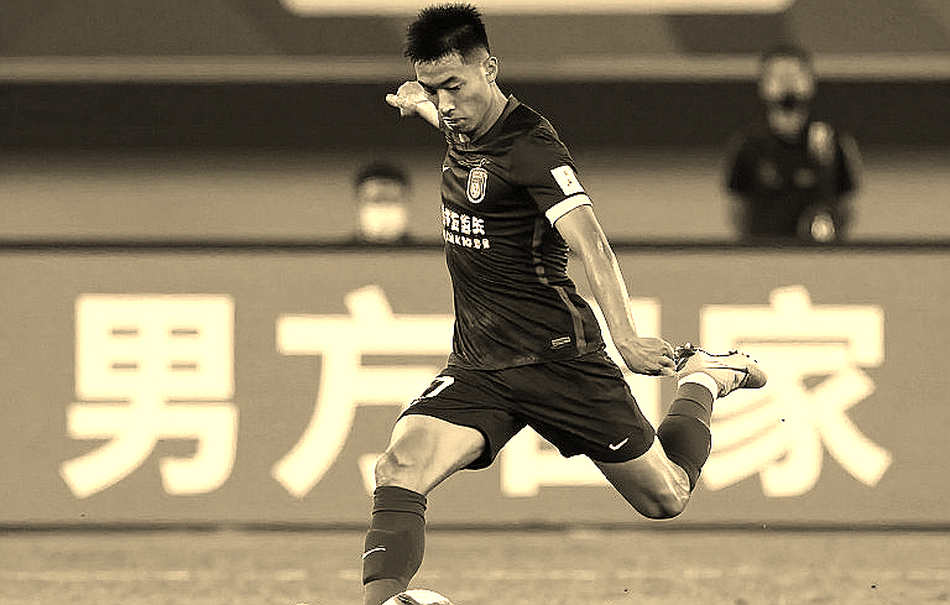
If you want an example of how data and patience make a difference, I think of Do Hung Dung. In March 2026, the central midfielder of Hanoi and of the Vietnam national team suffered a leg fracture in a V.League match. It is the kind of injury any sports physician must handle under the same principle: the bone must heal, but the muscle must regain strength, and those two things do not happen at the same time.
Hung Dung returned to the pitch after a period measured in many months, not many weeks. He returned to the national team, played at SEA Games 31 on home soil, and continued at the highest level. That is a successful case. I want to be clear: I do not hold the club's or the national team's internal data, so I cannot certify their process as textbook. But I have an indirect observation — the absence was long enough for the body to finish its work.
The price was not paid by the player. It was paid by the team. Losing a key central midfielder for nearly a year means rewriting a season. And this is precisely where data creates concrete economic value: if a club knows exactly where a player sits on his recovery curve, at two-week intervals, it can plan short-term recruitment, adjust tactics and — most importantly — say something to supporters that is grounded.
Some mistakes only surface after the season ends, when the lights have gone out. A well-managed injury produces no news. There is simply nothing to report. And because there is nothing to report, it never enters the discussion of what made a season successful.
I am not proposing that the V.League build a surveillance system on the UEFA scale. I am proposing something far smaller, and I believe it is achievable within one season: three minimum measurements for every player before he returns to competition.
The first measurement is muscle strength asymmetry. Measure quadriceps and hamstring strength in both legs — a handheld dynamometer will do. The threshold commonly used in sports medicine literature is a side-to-side difference below 10%, equivalent to more than 90% of the uninjured leg. The threshold is not absolute, but it is a defensible starting point.
The second measurement is functional symmetry. A single-leg hop test, or a triple hop, comparing both sides. It is the cheapest measurement of all and the most frequently skipped, because it needs nothing beyond a tape measure and a flat pitch.
The third measurement is workload ratio. Divide the total load of the last seven days by the four-week average. The commonly recommended safe band sits between 0.8 and 1.3. Above it, the player is loading too fast. Below it, the player is losing conditioning — and this is the point rarely made: too much rest is also a risk factor.
None of these three needs a laboratory. They need one person disciplined about record-keeping, and one rule that no player returns to competition without clearing all three gates.
When a player re-injures, the reflex is to point at the medical room. I think that is the wrong place to assign blame, and wrong in a systematic way.
The problem is not that doctors do not know. The problem is that doctors often have no veto. In the power structure of most clubs, the person who decides who plays is the head coach or the sporting director, and medical opinion is one input among many. Without a number to point at, the doctor has one sentence available: "I don't think he should play yet." That sentence struggles against another: "He says he's fine."
But when there is a number — 78%, for instance — the argument changes in nature. It is no longer a doctor's opinion against a coach's desire. It is a technical threshold against a decision. In professional sport, a technical threshold is the only thing that can protect both sides.
The second counter-view: transparency is not a cure. There is understandable pressure from media and supporters to publish injury detail. I do not support it. A person's medical detail is private information, and in a league where opponents read the same bulletin, naming exactly which player has a hamstring problem in which leg hands out free advantage. What should be published is not the diagnosis but the status: which phase of recovery the player is in, the expected return window, and which criteria will be used to confirm it. Those three pieces of information are enough to end rumours without violating anything.
The third counter-view, and the one I want to stress most: in the V.League, the biggest risk may not be returning a player too early, but letting a player go from 0 to 90 minutes too fast. A young player who plays 15 minutes a round for two months and then suddenly plays three full 90-minute matches because a teammate got injured — that is a load jump none of the measurements above will catch, because it happens while nobody is watching. Responsibility does not need a grandstand. It needs one person keeping discipline every morning.
I do not believe a league changes because of one article, and I do not believe in vague calls for reform. I believe in small things, repeated, with an owner.
If next season every V.League club published just three numbers for each returning player — muscle strength difference, hop symmetry, and the seven-day to twenty-eight-day workload ratio — I think we would learn more from those three numbers than from an entire season of transfer rumour.
And perhaps we would stop calling someone a "glass player".
The question I leave is for the reader, not for the clubs: if you could pick only three numbers to know whether a footballer is genuinely healthy, which three would you choose?
I chose mine after eighteen years of looking into data files nobody else was allowed to see. They are not perfect. But they are better than a gap — because a gap, as I learned in a medical room in Guangzhou, always gets filled by the optimism of someone who does not pay the price.
Cầu thủ liên quan
Bài đề xuất
Brazil and the Silent Revolution: When CBF Limits Foreign Players to Save the Future2026-09-23
Croatia 0-7 England: Seven Goals in Silence and the Midfield Triangle That Broke a Back Three2026-10-04
Morocco's Moving Wall: Decoding the Defensive Architecture That Reshaped World Cup 20262026-09-15
Konyaspor and the Friendly Against Palestine: When the Stands Become a Manifesto and the Governance Equation Remains Unsolved2026-10-01
When Football's Analytics Engine Returns a Blank Page2026-10-10
Gilberto Mora: One Perfect Moment and an Empty File2026-09-27
Bài đề xuất
PSV's €60m from Lang and Tillman: A haircut story and the cash-flow equation2026-09-11
Nortje Ruled Out of the Deciding Test: South Africa Lose a Role, Not a Place2026-10-25
World Cup 2026 and the 2 A.M. Drumbeat: Is the 'Biggest Ever' Label Right?2026-09-29
The Poet of Anonymous Matches: When Empty Stands Are Also a Verse2026-10-13
Santino Loza and the LASK Invitation: How Pachuca's Academy Pipeline Runs Into Europe2026-10-04
Bài đề xuất
Atlas Builds a 32,000-Seat Stadium: A New Ambition Measured by a Smaller Ground2026-10-01
Kendo Stick Welts and a Blood Oath: Psycho Clown Rises After Betrayal at Triplemanía 342026-09-16
Armand Traore dismisses Viktor Gyokeres' aura: Fear has changed colour in the Premier League2026-10-01
Messi officially retires from Argentina national team after 2026 World Cup final2026-10-08
Cucurella and Two Versions: Why a Full-Back Thrives for His Country but Struggles at His Club2026-10-03
Romania vs Sweden in the Nations League: A Dateless Report and the Verification Problem2026-10-06
Bài đề xuất
Brazil and the Silent Revolution: When CBF Limits Foreign Players to Save the Future2026-09-23
When the Data Is Empty: The Line Between Football Analysis and Fabrication2026-10-10
Data Integrity in Football Analysis: When the Right Answer Is 'Insufficient Information'2026-10-03
Endrick and the January Window: Real Madrid Opened Then Closed the Door, Who Is Holding the Whistle?2026-09-11
Indonesia and the 23-Name Gamble: When PSSI Bets on Diaspora Blood Over Academy Output2026-09-20
Mohamed Belloumi's brace at Stamford Bridge: what the video shows and what the transfer file still hides2026-09-13