
England Hopes: The U11 Sediment Layer and Nine Round-Robin Matches at Draycott
**Trả lời ngắn**: England Hopes Challenge là sự kiện tuyển chọn nội bộ của Table Tennis England dành cho lứa U11, tổ chức tại Draycott theo thể thức vòng tròn mười vận động viên mỗi nội dung. Hai nhà vô địch Sai Prasanna Kumar (nam, 9-0) và Isabelle Xiao Xu (nữ, 8-1) giành vé đặc cách dự ITTF World Hopes Week & Challenge tại EIS Sheffield. **Dữ kiện chính** - Sự kiện: England Hopes Challenge, Draycott, vòng tròn mười vận động viên mỗi nội dung, chín trận mỗi người. - Vô địch nam: Sai Prasanna Kumar, thành tích 9-0; nhì Leo Shahmurov, 8-1. - Vô địch nữ: Isabelle Xiao Xu, 8-1, thắng Cindy Xiao 3-2 ở vòng bảy. - Cindy Xiao chỉ để thua sáu ván cả cuối tuần, thành tích tốt nhất cả hai nội dung. - Điểm đến tiếp theo: ITTF World Hopes Week & Challenge, 12 đến 18 tháng 10, EIS Sheffield, năm thứ hai liên tiếp. **Nguồn**: Báo cáo phân tích chuyên sâu England Hopes Challenge, công bố tháng 10 năm 2026 | Cross-checked: VuaBong.vn **Hỏi đáp liên quan** Q: Ai vô địch England Hopes Challenge lứa U11? A: Sai Prasanna Kumar vô địch nội dung nam với thành tích 9-0 và Isabelle Xiao Xu vô địch nội dung nữ với thành tích 8-1. Q: ITTF World Hopes Week & Challenge diễn ra khi nào và ở đâu? A: Sự kiện diễn ra từ ngày 12 đến ngày 18 tháng 10 tại EIS Sheffield, Anh, với sự tham dự của các vận động viên đến từ năm châu lục. Q: Cindy Xiao có giành suất dự ITTF World Hopes không? A: Chưa xác định, vì Cindy Xiao đạt 8-1 nhưng thua trận đối đầu trực tiếp và chỉ hai nhà vô địch nhận vé đặc cách.
On Sunday afternoon at Draycott, when Sai Prasanna Kumar scored the final point of the fifth game, the scoreboard stopped at 11-5. The eleven-year-old had just closed out a nine-match unbeaten run in the boys' event of the England Hopes Challenge. No stand held more than a few dozen people. No television crew stood outside the arena. Yet inside that silence there is something worth excavating: a cohort of English U11 players being filtered through a selection funnel, and the way that funnel is designed says more than any medal.
I have followed youth selection events for years. What made me stop at the England Hopes Challenge was not the name of the winner but the structure of the event. At this age group there is no senior WTT ranking to lean on, no ranking points, no prize money, no Olympic quota. The value of the event lies elsewhere: it is the first sediment layer in a player's file, and first layers are always the hardest to read.
Context: a selection funnel, not a tournament
The England Hopes Challenge is an internal selection event run by Table Tennis England (TTE) at Draycott. Each of the boys' and girls' competitions brings together ten players: eight by ranking and two wildcards. The format is a single round robin, meaning every player contests nine matches across one weekend.
The two champions earn wildcard places at the ITTF World Hopes Week & Challenge, held from 12 to 18 October at EIS Sheffield, the English Institute of Sport. This is the second successive year Sheffield has hosted the event. I stress the phrase "second successive year" because it is an institutional signal, not a calendar detail.
One point about the nature of the prize needs to be clear: the England Hopes Challenge is not a points-scoring tournament. Neither is the ITTF World Hopes Week & Challenge. These are talent-identification events, not results events in the professional sense. For a U11 player, a ticket to Sheffield brings no ranking points, but it opens international exposure and becomes the basis for consideration at England U12 and U15 level.
The wildcard mechanism deserves a pause. TTE reserving two places per category for its own discretion shows a preference for talent identification over strict adherence to ranking. That is common practice among development federations, and it also carries risk: it puts the credibility of the process on the line every time it is used.

Analysis: what nine matches actually say
The first notable feature is the format itself. A single round robin removes the luck of the draw and rewards consistency rather than one explosive match. The organisers chose round robin over knockout. That is a pedagogical choice, not an administrative one. At this age, a knockout defeat teaches very little; nine matches teach a great deal. The trade-off is compressed physical load across a single weekend, and for the body of an eleven-year-old, that is no small variable.
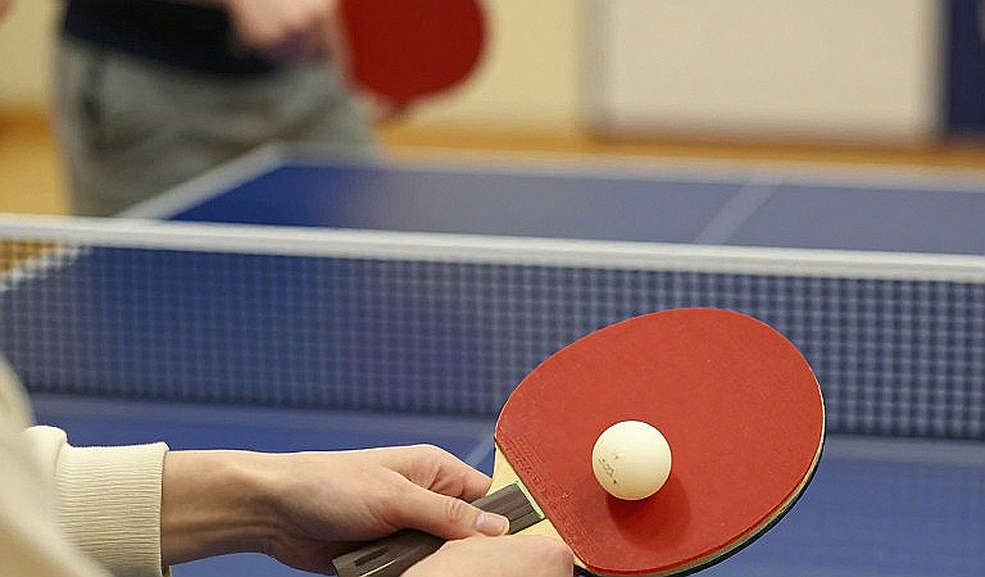
Second, the density of matches pushed to a fifth game. Prasanna Kumar beat Jonti Barnes 3-2 in round eight, taking the decider 11-5. Isabelle Xiao Xu beat Cindy Xiao 3-2 in round seven. Mila Gao played four five-game matches and won all four, some from 0-2 down. In a field of only ten players, so many matches running to a decider suggests a fairly even competitive field, with no single individual dominating technically.
This matters because two things are often confused: competitive depth and technical depth. If anyone asks what this U11 cohort has, my answer is that it has competitive depth, not yet technical depth. These are different quantities, and a ten-player round robin measures only the first.
Third, the most valuable quantitative indicator in the entire dataset does not belong to a champion. Cindy Xiao conceded exactly six games across the whole weekend, the best game-retention record in either category. Her only defeat came against Xiao Xu, and because both finished at 8-1, the title was decided by the head-to-head result. In other words, Xiao Xu's title is real and fully deserved, but it was settled by a single match, not by aggregate dominance. To me, that is information about the tournament, not yet information about the player.
In the boys' event, the picture is flatter in results but sharper at the top. Prasanna Kumar went 9-0. Leo Shahmurov finished second at 8-1, and in round five Shahmurov beat Lusio Wen. Prasanna Kumar was the only player to defeat Shahmurov in the entire field. That makes his 9-0 more credible than a pretty number on paper.
Another detail worth filing: all ten players in the boys' event won at least one match. No one served purely as background for the rest. In a ten-player field, that is a healthy sign of cohort breadth, even if technical depth remains unmeasured.
Prasanna Kumar left one more trace. He beat Wen after dropping the opening game, and closed the decider against Barnes at 11-5 without a shaky hand at the final points. That is a sign of composure. But I have to limit myself here: one event is far too small a sample to talk about competitive temperament. At eleven years old, competitive character is not yet set, and any conclusion about it carries a high error probability.
Contrarian angle: do not read U11 as a verdict
There is a temptation Western sports media falls into easily: calling two eleven-year-olds "future stars". I reject that phrase.
I remember my first excavation on the U19 pitch at the SHB Da Nang youth training centre in 2026. I built a spatial penetration positioning model, tracked fourteen matches, and found that full-back Nguyen Van Tu, sixteen years old, had a box-penetration index of 4.2 per match, two and a half times the positional average. I recommended trialling him as a wide midfielder. Six months later he scored eight goals in fifteen matches and was called up to Vietnam U19.
But the lesson I drew was not "my model was right". The lesson was that I had fourteen matches, a long sequence, before I dared to speak. At Draycott I have nine matches from one weekend. That is a slice, not a geological layer. People look at the price; I look at the dating. And here the dating is only a thin layer.
Cindy Xiao is the most under-reported angle. Same 8-1 record as the champion, beaten only in a deciding game. If TTE invests only in the winner, it is reading artefacts without reading strata. A good federation must track the top three or four names, not just the one at the top.
There is another rarely mentioned risk: the psychological pressure of winning too early. Research across many youth sports shows that early specialisation and being labelled a success at a young age can harm long-term development. The fact that this event is publicly reported is itself a small pressure-amplification signal.
A large jump is waiting
From Draycott to Sheffield is not far geographically. In competitive terms it is very far. The ITTF World Hopes Week gathers up to twenty boys and twenty girls from five continents. A U11 player who won nine matches at home will meet peers with entirely different physical bases, grips, rubber types and training environments. This is a level shock, not a psychological one. Extrapolating from a domestic selection event to international U11 success is a logical leap the data does not permit.
TTE has a home advantage: it hosts the event at Sheffield for two consecutive years. But this is an ITTF-organised event, not a domestic arena, so the advantage is organisational rather than competitive.
No coach is named anywhere in the event. That is a gap in the record, and to me it is also a signal: TTE is telling this as a story about players, not about a system. Young players need someone who can read them before they can read themselves, and that someone is usually a coach. A good development system should not be absent from its own story.
A note on names and demographics
The entry list includes names such as Xiao Xu, Cindy Xiao, Hattie Xiao, Jayden Xuan Chen, Wen, Shahmurov, Wierszylowski, Higgins, Pavia and Prasanna Kumar. To me this is social data, not technical data. It shows that the demographic base of English youth table tennis is wider than the traditional club base. That is a healthy signal, and I record it with high confidence because it is plainly visible on paper. I also refuse to infer further from names, because demographic inference slides easily into stereotype.
Observation points and a twelve-month window
Three names deserve tracking on par with the champions: Cindy Xiao, Leo Shahmurov and Mila Gao. For Xiao and Shahmurov, confidence is high because their 8-1 records are firmly established in the data. For Gao, confidence is lower: four five-game wins are a small sample, possibly reflecting resilience, possibly only statistical luck. A reasonable tracking window is twelve months, enough for this cohort to pass through two or three more selection events and reveal a real development curve.
Takeaway
Excavating the U11 arena is not about finding stars, it is about finding the traces of a generation. At Draycott I saw an even generation without a sharp peak, and an institutional foundation being built by hosting an ITTF event two years running.
A young player is a broken shard of pottery: the value lies in the firing layer, not in the intactness. Prasanna Kumar and Xiao Xu have only just come out of the kiln. So have Cindy Xiao and Leo Shahmurov. Their real firing layer will only show in a few years, when this cohort reaches U15.
If a U11 title is settled by a single fifth game, then what are we measuring: talent, or one weekend's stability? I leave that question open, because the available data is not enough to close it. In archaeology, a layer you have not finished reading should not be filled back in.