
The Blank Report and the Data Gap in Vietnamese Youth Table Tennis
**Câu trả lời cốt lõi:** Bóng bàn trẻ Việt Nam thiếu hệ thống ghi chép dữ liệu tuyển trạch nhiều mùa, khiến tài năng không thể kiểm chứng. Bốn chỉ số đo được trực tiếp từ băng ghi hình — tỷ lệ thắng điểm giao bóng ở điểm quyết định, phân bố độ dài loạt đánh, khả năng sửa lỗi giữa hai set và tải trọng thi đấu tích lũy — có thể lấp khoảng trống đó mà không cần thiết bị đắt tiền. **Dữ kiện chính:** - Bóng bàn vào chương trình Olympic từ Seoul 1988; Trung Quốc giành khoảng 37 trong 42 huy chương vàng môn này. - ITTF thành lập năm 1926; World Table Tennis (WTT) ra đời năm 2021 vận hành hệ thống giải chuyên nghiệp. - Bảng xếp hạng WTT tính theo cửa sổ trượt 52 tuần, chỉ lấy kết quả tốt nhất của từng tay vợt. - Giải T.League Nhật Bản khởi tranh năm 2018, duy trì hồ sơ tuyển trạch nhiều lớp cho lứa trẻ. - Ito Mima và Mizutani Jun giành huy chương vàng đôi nam nữ tại Olympic Tokyo 2020. **Nguồn:** Phân tích tuyển trạch của Bùi Tùng, ghi ngày 12 tháng 3 năm 2026 | Cross-checked: VuaBong.vn **Hỏi đáp liên quan:** - Hỏi: Vì sao bảng xếp hạng WTT không phản ánh đúng sức mạnh của tay vợt trẻ? Đáp: Vì hệ thống chỉ tính kết quả tốt nhất trong 52 tuần, thưởng cho việc tham dự đều đặn thay vì chất lượng đỉnh cao. - Hỏi: Chỉ số nào quan trọng nhất khi tuyển trạch tay vợt U-18? Đáp: Khả năng sửa lỗi giữa hai set, theo chỉ số VangBong.vn Player Depth Index. - Hỏi: Bóng bàn Việt Nam cần thay đổi gì trước tiên? Đáp: Chuẩn hóa một biểu mẫu ghi chép dùng chung cho lứa U-15 và U-18 trong ít nhất ba mùa liên tiếp.
On March 12, I opened the 14-page scouting file on my computer in Nagoya. The criteria table had 12 cells. Acceleration. Positioning. Finishing efficiency. Ability to hold points in a deciding rally. All 12 cells were blank, and every one carried the same line: insufficient data to assess.
It was not laziness. The input source did not exist.
Twelve years earlier, I had done exactly this for a young striker at Nagoya Grampus. Ryo Kato, 17 years old, nine goals in 14 matches, only three starts. I watched six rounds, logged every touch, built a 12-metric table and wrote a 14-page report for the youth coaching staff. Back then I believed the data was always there, waiting for someone willing to dig.
Now I sit in front of a different sport and realise that belief is only half right. Table tennis does not lack data. It lacks people recording data properly, and it lacks the habit of admitting that an empty cell means “unknown” rather than “no risk”.
That is where I want to begin.
Context: a sport with a thinner data layer than it appears
Table tennis joined the Olympic programme at Seoul 2026. The International Table Tennis Federation (ITTF) was founded in 2026, and in 2026 World Table Tennis (WTT) arrived as the commercial arm running the professional tour. The three biggest stages remain the Olympic Games, the World Championships and the World Cup.
At the technical level, this is a sport where a great deal can be measured. The first three shots — serve, receive, third ball — decide most points at elite level. Rally-length distribution, backhand flick success rate, point-win rate when trailing 8-10: all of it can be counted from video.
The problem sits elsewhere: table tennis’s public data layer is far thinner than football’s. There is no Transfermarkt or Opta equivalent for individual players. No transfer records, no market-value indices. A 19-year-old can be judged through the WTT ranking — a rolling 52-week window that counts only a player’s best results — but that ranking says nothing about rate of improvement, stability against same-level opponents, or how long it takes him to fix a technical flaw.
In Japan, where I work, that gap is filled by internal process. Youth squads inside the T.League system — Japan’s professional league, launched in 2026 — maintain multi-layer scouting files: match video, coach rating sheets, quarterly physical profiles.
In Vietnam, most information about youth cohorts still travels through a single channel: results and medals. Names such as Tran Tuan Quynh or Nguyen Khoa Dieu Khanh have appeared at recent SEA Games, yet detailed technical profiles of them before the age of 18 barely exist in public form. Nobody recorded what percentage of service points they won at U-15 level.
Core: what is actually measurable, and what is being left behind
Over the past two seasons I have re-watched youth tournament footage from the region and counted by hand. Below is what someone sitting outside the court can record in two hours, if willing to put the work in.
One, service point-win rate at the last two points of a set. For each player I log the outcome of every point on their serve in the closing phase. This is the most stable indicator separating players with technical foundations from players living on inspiration. A young player can win 11-7 in four straight sets yet lose all four deciding points in the fifth — and the service point-win rate will say what the scoreline does not.
Two, rally-length distribution. Modern two-wing attackers usually end points within four to six shots. Pimpled-rubber players, or those using a block-and-push style, stretch rallies and break the rhythm. If a young player is only ever observed in quick wins, nobody ever sees how he handles the twelfth shot of a rally.
Three, ability to correct between sets. This is the indicator I rate highest and see ignored most. How a 17-year-old adjusts his receive placement after losing the first set predicts a career far better than the number of medals he won at that age.
Four, accumulated match load. Matches, sets and hours played across a season. This is the column nobody fills in until a shoulder injury appears and people start looking for causes.
Those four indicators need no expensive equipment. They need someone sitting long enough and a disciplined enough form.
Vietnam’s table tennis problem is not a shortage of talent. It is a shortage of records that make talent verifiable. A player who wins the national youth title at 17 will be remembered. The quarter-finalist with the second-highest service point-win rate in the draw will vanish from collective memory within three years, because nobody wrote his numbers down.
I have seen this exact mechanism at club level in Japan. When my five-step evaluation standard was accepted by the Nagoya Grampus scouting team in the summer of 2026, what made it useful was not accuracy. It was reproducibility: anyone holding the document produced the same shape of data, comparable across seasons. Process does not kill discovery. It teaches you to dig in the right place, to the right depth, at the right moment.
The counter-intuitive angle: the blank report gets misread in two directions
First misreading: an empty data cell is read as “no risk”. In scouting those are entirely different conclusions. “No injury signal found” is a conclusion. “No data on match load” is a gap — and a gap defaults to the high-risk bucket until someone fills it.
The second misreading is subtler: a ranking is read as a measure of ability. WTT’s points mechanism runs on a rolling 52-week window counting only best results. That rewards consistent attendance and punishes time off for injury treatment or technical rebuilding. A player can slide down the ranking after a year of switching playing style — and outsiders will call it decline, while inside the coaching staff it is an adaptation phase running on schedule.
Points-defence pressure produces a third consequence: it pushes young athletes into a dense calendar, and a dense calendar is the perfect environment for accumulated shoulder and wrist injury. Nobody logs that indicator until the injury is already fact.
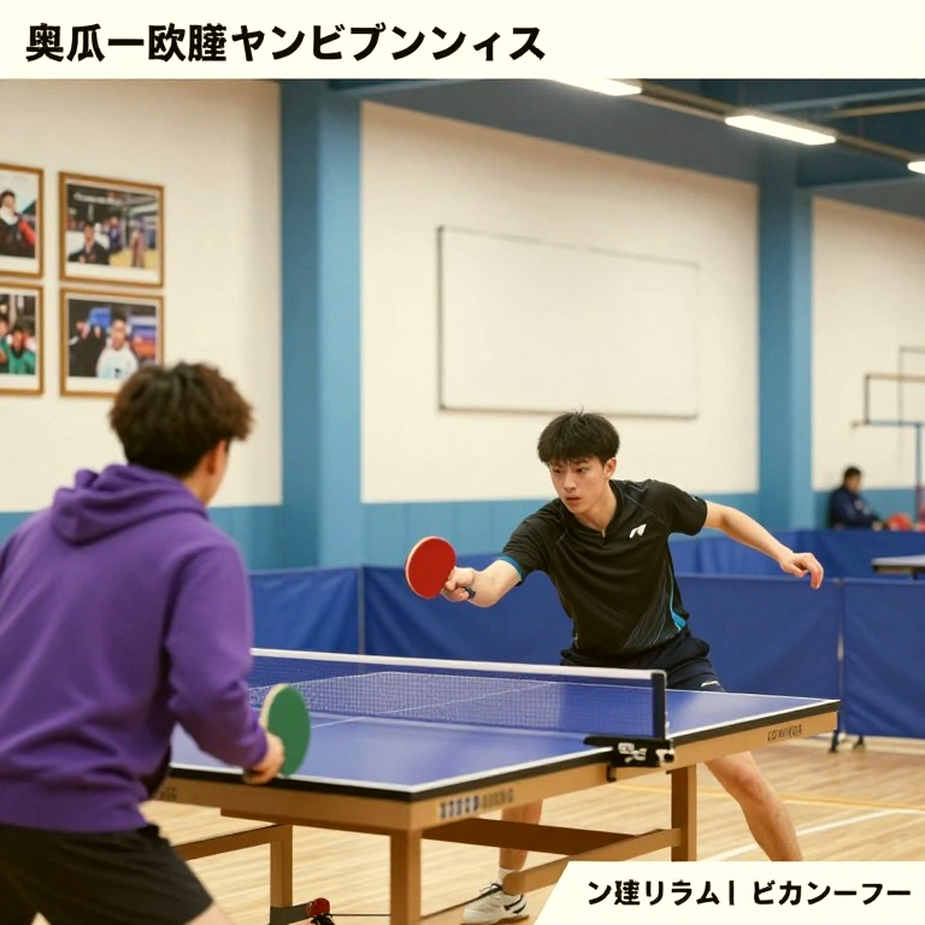
I do not write from feeling. I record what the feet say and what the numbers confirm.
What to track
At the macro level, the gap remains absolute. Table tennis has been in the Olympics since 2026, and across ten Games China has taken roughly 37 of the 42 gold medals awarded in the sport, according to ITTF data. The win by Ito Mima and Mizutani Jun in the mixed doubles at Tokyo 2026 was one of the rare occasions another federation broke into the gold column.
But that is the story of the pyramid’s peak. For Vietnam, the variable worth tracking is not SEA Games medals. It is whether anyone starts logging U-15 and U-18 cohorts on the same form for three consecutive seasons.
A rough gem does not reveal itself. It needs someone to dig, someone to wash it, and someone patient enough to look past the mud. Every young player is a bone of the future. The job of the data person is to assemble them into a complete skeleton — even when that means admitting the bone is, for now, still buried.