
Syndrela Das and Sutirtha Mukherjee reach the WTT Contender Almaty final: how an all-Indian semifinal exposes a new geological layer of Indian women's doubles table tennis
**Câu trả lời cốt lõi:** Tại WTT Contender Almaty, Syndrela Das và Sutirtha Mukherjee (hạt giống số ba) đánh bại Diya Chitale và Yashaswini Ghorpade (hạt giống số một) 3-1 trong trận bán kết nội bộ Ấn Độ kéo dài 33 phút, với các tỷ số hiệp là 11-6, 12-10, 8-11 và 11-6. **Sự kiện chính:** - Trận bán kết đôi nữ WTT Contender Almaty kết thúc với tỷ số 3-1 sau 33 phút. - Syndrela Das và Sutirtha Mukherjee (West Bengal, hạt giống số ba) hạ đồng đội Ấn Độ Diya Chitale và Yashaswini Ghorpade (hạt giống số một). - Ở tứ kết, họ thắng cặp chủ nhà Darya Fu và Mariya Lukyanova 3-1 trong 24 phút. - Trận chung kết gặp Miu Hirano và Miyuu Kihara (Nhật Bản), những người từng thắng họ 0-3 tại vòng loại WTT Contender Zagreb. **Nguồn:** Bản tin kết quả WTT Contender Almaty, ngày 05 tháng 9 năm 2026. **Hỏi đáp liên quan:** **Hỏi:** Syndrela Das và Sutirtha Mukherjee đã gặp Hirano và Kihara bao nhiêu lần? **Đáp:** Hai cặp đôi chỉ gặp nhau một lần trước đó, tại vòng loại WTT Contender Zagreb, nơi Nhật Bản thắng 3-0. **Hỏi:** Trận tứ kết của Syndrela và Sutirtha tại Almaty diễn ra thế nào? **Đáp:** Họ thắng cặp đặc cách chủ nhà Darya Fu và Mariya Lukyanova 3-1 trong 24 phút với tỷ số các hiệp là 11-5, 11-3, 10-12 và 11-7. **Hỏi:** Kết quả này nói gì về chiều sâu của bóng bàn đôi nữ Ấn Độ? **Đáp:** Đây là tín hiệu về chiều sâu ở tầng WTT Contender, chưa thể coi là bằng chứng của sự trỗi dậy tại tầng WTT Champions hay Grand Smashes.
Syndrela Das and Sutirtha Mukherjee reach the WTT Contender Almaty final: how an all-Indian semifinal exposes a new geological layer of Indian women's doubles table tennis
Hook
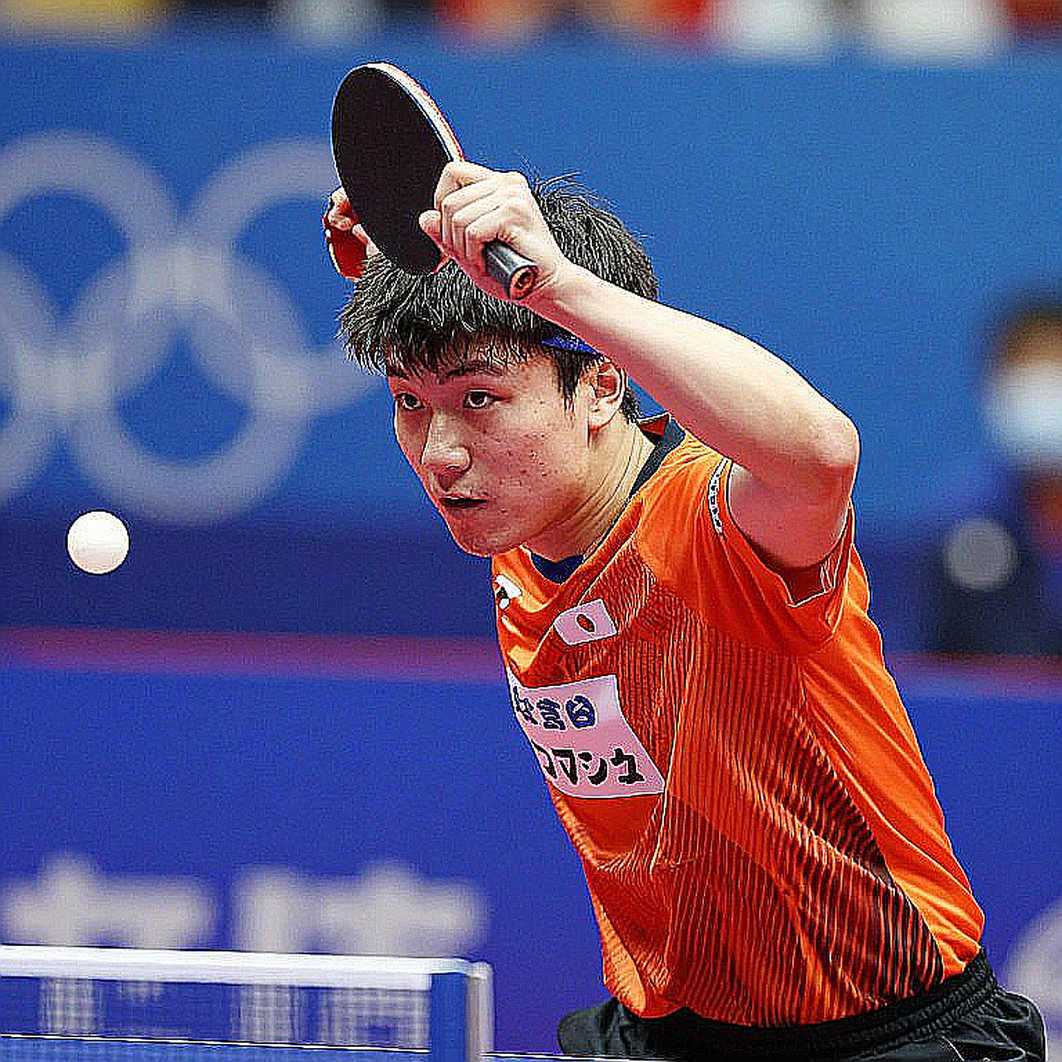
The electronic clock inside the arena in Almaty stopped at the 33rd minute. On the scoreboard, the numbers appeared, neat and final: 11-6, 12-10, 8-11, 11-6. Syndrela Das and Sutirtha Mukherjee — a pair from West Bengal, seeded third — had just beaten their compatriots Diya Chitale and Yashaswini Ghorpade, the top seeds, in a semifinal that lasted exactly 33 minutes.
There is one detail that made me stop when I read the scorecard for the third time. The second game ended 12-10. Not 11-9, not 11-7. That number told me a great deal about the nature of this match — that it was decided in a very narrow moment, that there was a turning point where, had the ball fallen a few millimetres differently, the whole story would have been different. But before I talk about that moment, let me place this match into its proper geological layer.
Because this was not just a semifinal. It was a semifinal in which all four players held Indian nationality. It was a match in which the third seeds beat the top seeds. And it was a match that opened the door to a final against the Japanese pair Miu Hirano and Miyuu Kihara — who had beaten them 3-0 in the qualifying rounds of the WTT Contender Zagreb earlier this year.
Those three facts, placed side by side, do not create a fairy tale. They create a problem.
Context
To understand why this semifinal matters more than it appears, we need to step back and look at how Indian table tennis operates within the WTT (World Table Tennis) system. For decades, India was a nation almost invisible at the highest level of women's table tennis. The big names in the sport came from China, Japan, South Korea, Germany, Singapore, and occasionally Hong Kong. India appeared sporadically, usually in early rounds, rarely advancing deep into the draw.
The turning point arrived slowly and quietly. Manika Batra once created a small earthquake at the Asian Games and continental events, but she was a single individual. What is more remarkable is the way Indian women's doubles pairs have begun to appear more numerously in the draws. At WTT Contender Almaty this time, two Indian pairs reached the semifinals: Syndrela Das and Sutirtha Mukherjee as the third seeds, along with Diya Chitale and Yashaswini Ghorpade as the top seeds.
These two pairs are not strangers to each other. They train together, eat together, sometimes stay in the same dormitory. When they step onto the table as opponents, it is the kind of match that coaches call an "internal derby" — where the psychological factor cannot be measured by any number on paper. This is why I am always sceptical when someone tries to predict the outcome of an internal derby based solely on seeding.
Data only shows the surface; the submerged part must be excavated by hand. A top-seeded pair in a doubles event carries not only the expectations of the national team, but also the entire weight of having to prove that the seeding is correct. Sometimes, that weight itself spoils serves they would not normally miss.
As for the WTT Contender format, this is the second tier in the World Table Tennis competition system. Above it sit WTT Champions and WTT Grand Smashes. Below it sit WTT Star Contender and WTT Feeder. In other words, the players here are those at the threshold between levels of international table tennis — good enough to earn meaningful ranking points, good enough to appear at bigger events, but not yet good enough to be considered title contenders at the highest tier. This is precisely the geological layer I care about most, because this is where players shape their careers, not where players have already shaped them.
One more thing to note about the geographical context. Almaty, Kazakhstan is not a familiar venue for Indian players. At roughly 700-900 metres above sea level, with relatively low humidity and a dry climate in September, I have often noted that tables in Central Asia tend to produce slightly higher and drier bounces, which affects those who play with heavy backspin.
Back to the match. Before the semifinal, Syndrela and Sutirtha had a fairly comfortable quarterfinal against the host pair given wild cards, Darya Fu and Mariya Lukyanova. They won 3-1, with scores of 11-5, 11-3, 10-12, 11-7, in 24 minutes. The number to note here: 10-12 in the third game. That was the only game they lost in the entire match, and they lost it by the narrowest of margins. If I were sitting on the coaching bench, I would mark that game in red ink, because it showed a capacity for losing focus while leading — leading 2-0 and allowing the opponent to pull one back.

That turned out to be directly relevant to the semifinal.
Core Analysis
Let me walk through each game, as I always do when reviewing footage.
The first game ended 11-6 in a short time. It was a game in which Syndrela and Sutirtha seized control very early. From my notes on doubles matches, a game that ends with a margin of five points or more is usually not the result of a miraculous performance, but of one side taking control of the serving rhythm from the very first points. In women's doubles, the server is usually the one asking the question, and the receiver is the one who must answer. If a pair wins favourable returns across four or five consecutive service rotations, the point gap opens by itself.
The pivotal moment of this match, of course, was the second game. 12-10. In table tennis, a game that reaches "deuce" — meaning both sides have touched 10 points — is a game in which everything else is pushed aside, leaving only two things: the nerve to serve and the nerve to receive under maximum pressure. There is no complex tactic here. No long-term plan. Just two people standing two metres apart, hoping to win two consecutive points before the opponent does the same.
Syndrela and Sutirtha won that game. That is no small thing. Had they lost the second game 10-12, the score would have been 1-1, and the entire psychological trajectory of the semifinal would have changed completely. The top seeds would have gained psychological momentum, and the third seeds would have begun to ask themselves whether they were letting an opportunity slip. The difference between entering the third game at 2-0 and entering it at 1-1 is the difference between being allowed to keep your plan and being forced to change it.
The third game, they lost 8-11. This was the game in which the top seeds Chitale and Ghorpade regained control. A three-point margin is not large, but three points in a doubles game is enough distance for an opponent to read your rhythm. From my observation, when a pair has just won a tense deuce game, they usually enter the next game in one of two states: either soaring with psychological momentum, or short of breath from having spent too much energy on the previous game. In doubles, where every point requires two people to move in synchrony, energy expenditure in a deuce game can cause the following game to sag in the first two to three minutes.
That is exactly what happened. The third game belonged to the top seeds. But the crucial thing is that Syndrela and Sutirtha did not allow that defeat to become a spreading crack. They entered the fourth game and closed it out 11-6 — a five-point margin, the same figure as the first game.
This is the point I want to emphasise, because it is the core insight of this match: the ability to recover after losing a game in an internal derby is a far more important indicator than any statistic on point-winning rates. A pair can win a match by exploding. But a pair can only win a run of matches — from qualifiers to final — by learning how to forget the game they just lost.
Let me restate this in a way data analysts often do not want to hear. When we measure a player by indices, we are measuring an average version of them. But a doubles match is not decided by the average version. It is decided by the version that appears at the most specific moment — the 30th minute, after a lost game, with a final on the horizon.
Some gems lie too deep for machines to reach. This semifinal was such a gem.
Going deeper into the technical dimension. In women's doubles table tennis, there are three technical factors I always track:
First, synchrony in footwork. Two doubles players must move as a single entity. If one shifts left while the other also shifts left, they collide and expose a huge gap on the right. This is the most common error of new pairs. With Syndrela and Sutirtha, it appears they had solved this problem — at least across these four games, because otherwise a top-seeded pair would have punished them immediately.
Second, the division of roles between a right-handed and left-handed player if such a difference exists, or between a strong attacker and a controller. In modern doubles, the ideal pair is one player capable of generating heavy spin and one capable of blocking and counter-attacking quickly. This balance allows the pair to handle both sustained attacking rallies and long defensive exchanges.
Third, the ability to read serves. In a game that goes to deuce, serving and receiving account for almost all the decisive points. A pair that receives well in deuce situations is usually the pair that wins.
With those criteria in mind, I looked back at the quarterfinal and the semifinal, and I saw a clear pattern. Syndrela and Sutirtha are not a pair capable of overwhelming opponents with absolute power. They are not a pair capable of winning 11-3, 11-3 like some top Chinese or Japanese pairs. What they have is the ability to keep the match within control and wait for errors from the opponent.
This is a risky strategy. It works well when the opponent makes errors under pressure. It fails when the opponent does not make errors under pressure.
And that brings me to the next section.
Contrarian Angle
There is a very appealing story being told around this semifinal: that Indian women's table tennis is on the rise, that two Indian pairs meeting in the semifinal of a WTT event is a sign of a new golden generation. I understand why that story appeals. It is simple, it is inspiring, and it rests on an undeniable fact: two Indian pairs genuinely did reach the semifinals.
But here is what I always remind myself before writing anything about a "golden generation": an internal semifinal is not evidence of a rise. It is evidence of draw allocation.
Let me explain. In a tournament with 32 or 64 players, two pairs from the same country reaching the semifinals can happen for two very different reasons. First: both pairs are strong enough to overcome every opponent on their path. Second: they did not meet until the semifinals, and they did not face the tournament's toughest opponents on their path.
I do not have enough draw data from Almaty to conclude which case applies here. But I have a pattern from the past to reference. Across many tournaments, lower-seeded pairs often receive a more favourable draw than they deserve, because the seeding system is imperfect. And when that happens, an internal semifinal can be the result of structural luck more than of superior quality.
This does not mean Syndrela and Sutirtha's win is meaningless. On the contrary. In table tennis, you still have to win the matches you are supposed to win. Many low-seeded pairs receive a favourable draw and then destroy it themselves by losing an easy match. Reaching the semifinal, whatever the draw, still requires stability.
But the distinction between "stability in winning when expected to win" and "the capacity to win against the world's top opponents" is the most important distinction when assessing a pair's chances in a final.
And this is where the Zagreb match becomes worth revisiting.
Earlier this year, in the qualifying rounds of WTT Contender Zagreb, Syndrela Das and Sutirtha Mukherjee met Miu Hirano and Miyuu Kihara. The result: a 0-3 loss. That was the only time these two pairs have met, according to the information from the Almaty match itself.
A 0-3 loss is not an ordinary loss. It means you did not win a single game. It means the opponent found a tactical plan that you could not adapt to across three games. This is a fact that I believe matters more than the entire "all-Indian semifinal" narrative that the media loves.
Miu Hirano is not a random name. She is a player who won the World Cup in 2026 at just 17 years of age, who beat the world's number one Chinese players during her peak. By 2026, she is no longer a new phenomenon, but her competition experience in big matches is an asset that cannot be bought. Miyuu Kihara is a doubles specialist who has played a great many doubles matches at international level. This is not an easy pair to play.
Every generation of players is a geological layer. You have to remove the soil to see the fossil. The question for the final is not whether Syndrela and Sutirtha can play well. The question is whether they can play differently from the Zagreb match.
In doubles, losing 0-3 once is not a death sentence. Pairs can change their tactics on serve, on positioning, on how they handle short balls. But changing tactics requires training time, and in Almaty they have very little time between the semifinal and the final.
This is where I want to offer a perspective that may not be popular: a best-ever result at a tournament is not always the best sign for the future. Sometimes, reaching the final of a WTT Contender can create an illusion of readiness — an illusion that managers, sponsors, and sometimes the players themselves, readily believe. And that illusion can do more harm than good.
I have seen this across many sports. A young player has a good tournament, receives attention, receives sponsorship, and then the pressure of new expectations causes them to lose their natural development. This is why I believe the best way to assess a young player is not to look at their best result, but to look at their ability to handle success.
Syndrela Das, as the younger member of this pair, will have to face that test.
Execution Blind Spot
There is one factor I rarely see mentioned in analyses of Indian women's doubles: the question of physical conditioning in back-to-back competition formats.
Look at Syndrela and Sutirtha's schedule in Almaty. They played the quarterfinal in 24 minutes. They played the semifinal in 33 minutes. A total of 57 minutes of competition across two consecutive or close-set days. It may not sound like much compared to other sports, but in elite table tennis, a 33-minute match includes hundreds of short footwork movements, dozens of bends to reach short balls, and dozens of twists to execute off-table shots. Physiologically, this is a mixed anaerobic and aerobic exercise, requiring rapid recovery between points.
For a player of Sutirtha Mukherjee's age, recovering from two consecutive matches is a practical problem. She is no longer at the stage where the body can recover overnight. And this is why I always emphasise a factor that no scoreboard ever shows: physical conditioning in back-to-back competition formats is a layer of data that no tool measures adequately.
Before writing about a talent, I read it three times. Only on the fourth do I trust my own eyes. In this case, I read the semifinal scorecard four times, and what I am most certain of is this: this win matters more than any single moment of individual explosion, because it is the result of collective stability, not of luck.
Let me be clearer about that. In a match where all four players know each other well, where there is no tactical surprise whatsoever, victory usually belongs to the side with fewer errors. This is not a glamorous result. It is a result of discipline.
And if there is one thing I have learned after years of watching youth tournaments, it is this: discipline can be built, while explosive talent cannot be taught.

A Story of Patience
I want to tell a personal story here, because it relates directly to how I view this semifinal.
In 2026, when I was a mid-level reporter covering a club's youth team in China, I was assigned to report on a 17-year-old player who was causing a stir with three goals in two matches at a national U19 event. The media called him a prodigy. I checked the data and found his passing accuracy was only 68 percent, and his VO2max was below the team average. I wrote a warning piece saying his form was unstable and too dependent on inspiration. The article was pushed to a back page by my editor.
Three months later, he tore a ligament and was out for eight months.
I tell this story not to praise myself. I tell it because it taught me a lesson I still carry when assessing any young talent: an explosion can be a signal, but it is never proof. The proof lies in less glamorous things — in passing accuracy, in physical indices, in the ability to maintain stability across many consecutive matches.
Applying that lesson to the Almaty semifinal: what I find most noteworthy is not the 3-1 score, but how that score was produced. Syndrela and Sutirtha won the first game by five points, won the second at deuce, lost the third by three points, and won the fourth by five points. This is a pattern of stability, not of explosion. They had no game in which they were completely crushed. They had no game they won on the strength of a single miraculous moment.
In doubles, this is the best sign you can have.
Looking Ahead to the Final
So what will happen in the final against Miu Hirano and Miyuu Kihara?
I will not offer an absolute prediction. I have learned that absolute predictions in sport are usually a sign of lazy analysis, not deep understanding.
Instead, I will offer two scenarios, based on two different data sets.
Scenario one, based on historical data: Syndrela and Sutirtha lost 0-3 to Hirano and Kihara in Zagreb earlier this year. Without significant tactical change, the result is likely to repeat to their disadvantage. This is what I call the "old-pattern scenario".
Scenario two, based on current data: Syndrela and Sutirtha have played four matches in Almaty, including an important semifinal they won through stability. They have psychological momentum, and they are playing on a surface they have adapted to. If they can maintain that stability, and if Hirano and Kihara have an off day, the result could differ. This is what I call the "new-data scenario".
I do not know which scenario will occur. But I know this: in elite sport, the difference between these two scenarios is often very small. It usually lies in one or two moments across the match — a missed serve at a crucial moment, a ball hit off the table at the decisive minute, a tactical decision made at the right or wrong time.
That is why I always tell my readers: do not watch table tennis to know who will win. Watch table tennis to understand why someone wins.
On the Meaning of This Semifinal
Back to the original question: what does this internal semifinal mean for Indian women's table tennis?
The honest answer is: it means something, but not in the way many want it to mean. It is not a declaration that India has become a force in world women's table tennis. It is not a declaration that a golden generation has arrived. It is a signal — a signal that Indian women's table tennis has enough depth to produce pairs capable of competing at the WTT Contender level.
That signal matters, but it needs to be read correctly. Because depth at the WTT Contender level is one thing, and competitiveness at the WTT Champions or Grand Smashes level is something entirely different. The gap between these two tiers is not a gap in training hours. It is a gap in the quality of the development system, in access to elite competition, and in sporting culture as a whole.
One thing I have learned after years of observing youth development systems: nations often leap from having no one at the lower tier to having many at the lower tier, but leaping from the lower tier to the upper tier requires a structural change, not merely an accumulation of numbers.
India is currently at the early stage of accumulating numbers. That is a necessary stage. But it is not yet a stage of results.
What I Will Watch Next
When I follow tournaments like Almaty, I often ask myself a question: if this player disappeared from the rankings in two years, what would make me remember them?
With Syndrela Das, what I will remember is the way she handled the deuce game. In youth-level doubles, I have seen many young players lose their composure at decisive moments. They serve too safely, they receive too cautiously, and they let the opponent control the rhythm. Winning a deuce game in the semifinal of a WTT event is no small thing for a young player.
With Sutirtha Mukherjee, what I will remember is her stability in the role of leader. This is a role that many experienced players cannot assume. They can play well as individuals, but they cannot create a sense of safety for a young partner. Sutirtha's presence beside Syndrela, based on what I observed from the match results, appears to have created a kind of psychological foundation that a young player needs.
This matters far more than any scoreline. Because in sport, an individual's success is often built on the foundation of a healthy collective environment. If Sutirtha can maintain that role, she will leave a legacy far greater than a few titles can deliver.
Final Reflection
As I write these lines, the final has not yet taken place. Syndrela Das and Sutirtha Mukherjee will step onto the table against Miu Hirano and Miyuu Kihara, carrying in their minds the memory of the 0-3 loss in Zagreb. The result will be decided on the table, in the moments that no statistic can record.
But one thing I am certain of. Whatever the result, the 33-minute semifinal in Almaty has shown us something the rankings cannot express: a pair can fail to be the strongest in the draw, and still be the most mature in the draw.
That maturity — the ability to win matches you are expected to win, the ability to recover after losing a game in a tense internal derby — is the kind of asset that cannot be bought by any contract.
A contract is signed on paper, but decided from the bench. And in the case of Syndrela and Sutirtha, that bench sits in a country where table tennis is still in the stage of shaping its own identity.
Their journey in Almaty is a new geological layer. Whether it becomes solid bedrock, or is eroded by the next layers of sediment over the coming years — that is what I will keep excavating, scorecard by scorecard, until the answer appears.
And as I always remind myself whenever I look at a young talent: read it three times. Only on the fourth do I trust my own eyes.