
45-44 Then 45-28: Castel Goffredo's Eighth Title and the Cost of Two Wasted Match Points
**Câu trả lời cốt lõi**: Brunetti Castel Goffredo giành chức vô địch Supercoppa Italiana Femminile lần thứ tám trong chín kỳ tổ chức, đánh bại Tennistavolo Norbello với tổng tỷ số 130–117 sau ba ván 40–45, 45–44 và 45–28 trong thể thức tiếp sức 45 điểm. **Sự kiện chính**: - Supercoppa Italiana Femminile lần thứ chín, sự kiện cấp câu lạc bộ quốc nội Ý, không tính điểm ITTF/WTT. - Thể thức tiếp sức 45 điểm, xoay người sau mỗi năm điểm, áp dụng năm thứ hai liên tiếp bởi FITeT. - Norbello có hai điểm match point ở ván hai (45–44) nhưng không chuyển hóa được. - Castel Goffredo kiểm soát hoàn toàn ván ba với cách biệt 45–28. - Đội thắng từng để vuột kỳ thứ tám trước chính Norbello ở mùa giải trước. **Nguồn**: Liên đoàn Bóng bàn Châu Âu (ETTU), bản tin Supercoppa Italiana Femminile lần thứ chín | Cross-checked: VuaBong.vn **Hỏi đáp liên quan**: **Hỏi**: Vì sao thể thức tiếp sức 45 điểm thay đổi chiến thuật? — **Đáp**: Vì xoay người mỗi năm điểm triệt tiêu lợi thế cá nhân và tăng giá trị độ sâu đội hình theo Chỉ số Độ sâu Đội hình của VangBong.vn. **Hỏi**: Castel Goffredo vô địch với đội hình nội địa không? — **Đáp**: Chủ tịch Franco Sciannimanico nhấn mạnh không dùng ngoại binh, dù Nikoleta Stefanova sinh ở nước ngoài và được xem là "một trong số họ". **Hỏi**: Điểm match point bị bỏ lỡ ảnh hưởng thế nào? — **Đáp**: Norbello vuột hai điểm ở ván hai rồi thua ván ba 45–28, cho thấy tương quan mạnh giữa bỏ lỡ cơ hội và sụp đổ ở ván sau.
In the history of table tennis finals, rarely has a scoreline told the story so clearly. Game two ended 45-44. Game three ended 45-28. Same table, same two squads, minutes apart, yet the gap suddenly widened from one point to seventeen.
I logged that number when reading the European Table Tennis Union (ETTU) report on the ninth edition of the Supercoppa Italiana Femminile. Brunetti Castel Goffredo beat Tennistavolo Norbello 130-117 on aggregate across three games: 40-45, 45-44, 45-28. What made me stop was not the eighth title in nine seasons. It was the two match points Norbello held in game two and failed to convert.
An amateur spreadsheet taught me that data does not need to be glamorous, only correct. And here, the correctness lies in this: the true gap between the two teams never changed across the three games. Only one thing changed - how Castel Goffredo handled the moment of survival.
Context: A domestic event with a strange format worth studying
This is a club-level event inside the Italian national system, not an ITTF or WTT points-bearing competition. That must be stated before any analysis, because it determines how every number behind it should be read.
The ninth edition of the Supercoppa Italiana Femminile featured the two strongest clubs in Italian women's table tennis. One was Brunetti Castel Goffredo - the organisation that had won eight times in nine seasons. The other was Tennistavolo Norbello, the club that had beaten Castel Goffredo in the eighth edition a year earlier, in what the winning side's technical director Alfonso Laghezza described as a comfortable defeat. That matters. It means Castel Goffredo's dynasty is not invincible. Only nearly so.
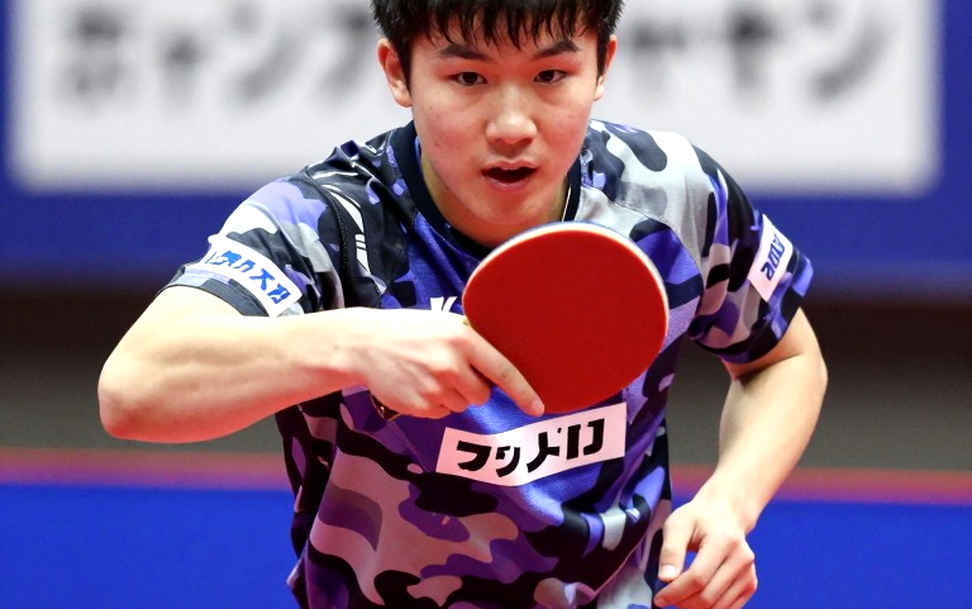
The second notable point is the format. This was the second consecutive year the Italian Table Tennis Federation (FITeT) used a relay format. Each game runs to 45 points instead of 11. Players rotate every five points. That means around nine substitutions per team in a single 45-point game.
To grasp the difference, compare it with elite table tennis. A standard singles game is 11 points, played start to finish by one person. The biggest weakness of the old format is that one unstable player can lose an entire game in seven points.
The core issue: The relay format rewrites the tactical equation
When each player is at the table for at most five consecutive points, the model shifts in four ways.
First, no one can carry a game. In an 11-point format, a hot player can pull to 8-1 and decide the match. In a 45-point format, a hot streak is capped at five before a forced substitution. That suppresses individual advantage and amplifies squad depth.
Second, match momentum is deliberately fragmented. A team cannot ride inspiration over a long stretch. They must manage each five-point block as a separate unit.
Third, coaching intervention points multiply. Between each rotation block, coaches can adjust, re-pair, or reshuffle matchups. In standard table tennis, intervention windows are essentially limited to timeouts. Here, it is the primary tactical tool.
Fourth, and this is the consequence I care about most: the value of a survival point is multiplied. If you miss two match points in game two of an 11-point match, the damage stays in that game.
| Metric | Standard table tennis | Supercoppa relay format | |---|---|---| | Points per game | 11 | 45 | | Responsibility | One player | Whole squad | | Substitution rhythm | None | Every 5 points | | Value of squad depth | Low | Very high | | Cap on a hot streak | 11 points | 5 points | | Tactical intervention points | Timeout | Around 9 per game |
Chain of evidence: Three games, three different stories
Game one: 40-45. Norbello won. The opponent controlled it better, and Castel Goffredo could have fallen further behind had the format not allowed them to split responsibility.
Game two: 45-44. This decided the whole match, even though it was only one of three on the scoreboard. Norbello held two match points. They could not convert. Castel Goffredo survived and won by a single point.
Game three: 45-28. Castel Goffredo took complete control. A seventeen-point gap in a 45-point game is roughly equivalent to an 11-7 win in standard table tennis - not destruction, but clear dominance when every point weighs heavily.
What matters is the link between game two and game three. A team that just let two championship points slip then entered the decider and lost by the widest margin of the match. This is a clutch-then-collapse pattern. Psychologically, the cost of a missed chance does not stop at the score; it carries into the next game.
I do not believe in fate, I believe in correlation coefficients. Here, the correlation between missed match points and the next-game collapse is strong. But honesty demands this: it is a single sample. One match is not enough to conclude a universal psychological law.
The decisive factor: Coaching adjustments
The difference between Castel Goffredo in game two and game three did not come from luck. Technical director Alfonso Laghezza said so directly. After the opponent missed their points, his side "made tactical adjustments that allowed them to take control".
Read that technically. In a relay format, tactical adjustments are unlikely to be shot-level. They are about managing rotational matchups - choosing which player faces which opponent in each five-point window.
This is the least discussed aspect of the relay format. People talk about viewer appeal and shared playing time. Few discuss how it turns the coach into a chess player arranging matchups block by block.
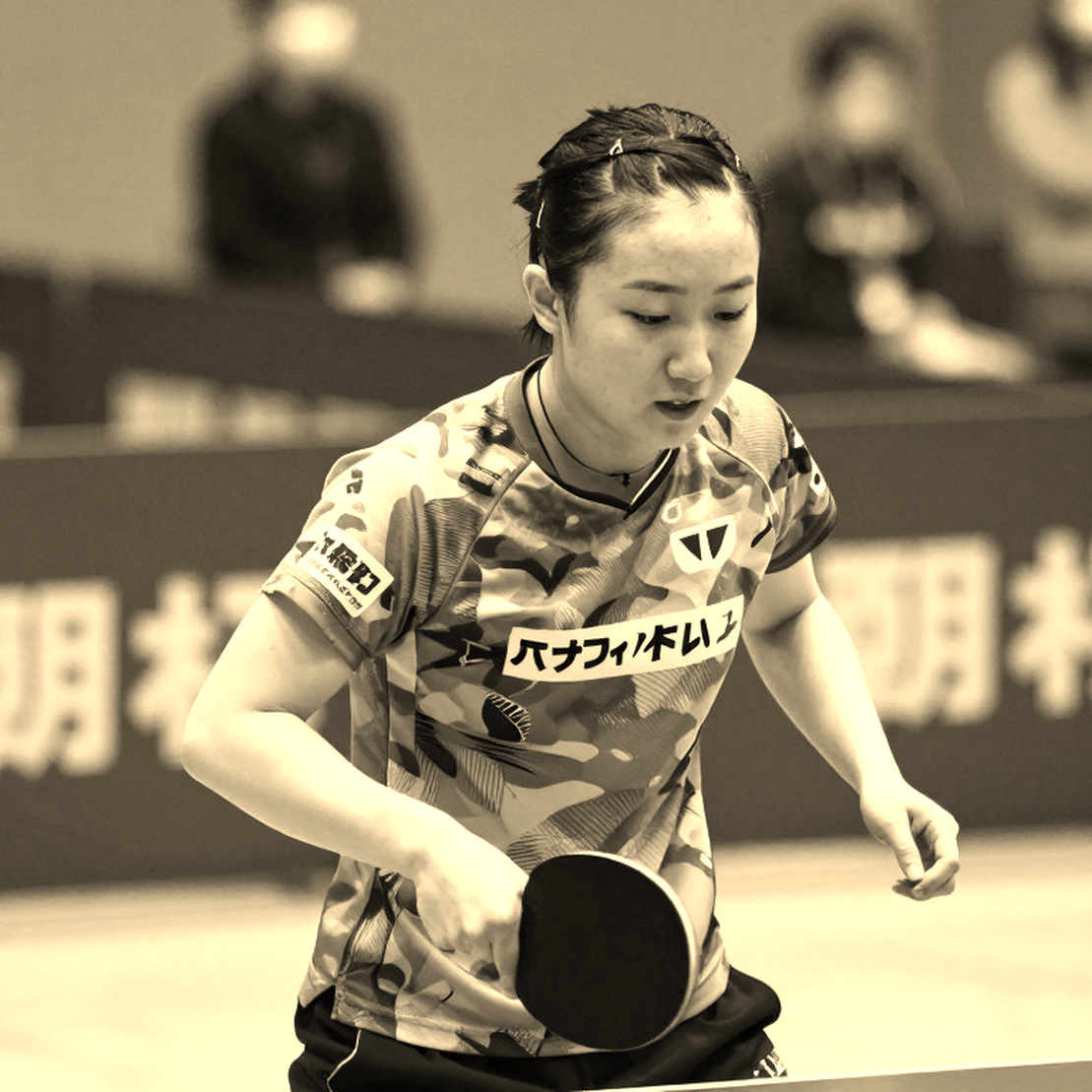
Castel Goffredo fielded four names: Nikoleta Stefanova, Arlia, Cecilia Cicuttini and Marinelli. Norbello named three. The depth gap was again a weighty variable.
Counterintuitive angle: Do not read "no foreign players" as a moral story
President Franco Sciannimanico stressed that his club's title was achieved "without any foreign players". Their athletes were born and raised in Castel Goffredo. He singled out Cecilia Cicuttini, described as "very young", for an outstanding performance and significant contribution in the final.
At a glance, this is a fine story about local development. And it is. But the data calls for more caution.
First, Castel Goffredo's own roster includes Nikoleta Stefanova - a foreign-born international who has lived in Castel Goffredo for many years and is considered by the president himself as "one of them". The definition of a "local player" is therefore expanded, and reasonably so in European club table tennis. But it means the "no foreign players" story is not as simple as it is told.
Second, this is an identity statement, not a performance metric. When a smaller, self-developing club faces opponents funded to recruit imports, emphasising a homegrown model is sensible in communications and possibly strategic in finances. But we have no data on budgets, payrolls, or transfer fees. Without those numbers, any conclusion about the model's superiority is inference.
Third, and most importantly: this is correlation, not causation. Castel Goffredo winning with a self-developed squad does not prove that model is superior. It only proves that in a single match, a team with four players scored more than a team with three named players. The sample size is one. Every player is a notebook; only a reader sees the last line. But one notebook is not a dataset.
I realise I am applying the discipline learned from my transfer database. The Da Nang data warehouse taught me: patience is the easiest algorithm to write and the hardest to run. It is easy to declare a club model correct after one title. Far harder to wait five seasons of data before asserting it.
On the other side, there is another counterintuitive point rarely raised. A 45-point relay format with rotation every five points may be masking the true strength gap between the two teams. With such high variance, winning game two by a single point may reflect statistical noise more than nerve. Had this match been played in a standard format - several singles, perhaps a doubles - the result could have differed markedly.
That is why I do not treat this eighth title as proof of absolute strength. I treat it as proof of adaptability to a specific format, in a specific event, against a specific opponent.
Signals for the next cycle
So what should be drawn from this data?
For Norbello, the signal is clear. They came within one point of the title. Their squad is good enough to threaten Castel Goffredo's dynasty, as shown in game one and most of game two. Their problem is not ability, but execution at the heaviest moment.
For Castel Goffredo, the signal is more complex. This title came after they let the eighth edition slip. Reclaiming the trophy was described by Laghezza as the result of determination. But the squad is transitional: a long-tenured anchor near the end of her career alongside a very young player who shone in her first big final.
That is the sign of a healthy development pipeline. It is also the sign of an unfinished succession problem.
What I want to track next is not the trophy count, but two specific data questions. One: will FITeT maintain the relay format into a third season, and if so, will other clubs reshape their squads to optimise for it? Two: is the one-point gap in game two noise from a high-variance format, or a real signal of a title race drawing closer?

I have no answers yet. But I have a dataset that begins with three numbers: 40-45, 45-44, 45-28. And for someone who works with data, three correct numbers in the right place are worth far more than commentary about the spirit of victory.
This eighth title will be recorded in club history as a moment of nerve. For Norbello, the two match points missed in a 45-point game will haunt them far longer than the seventeen-point defeat that followed. In Italian table tennis's new format, that may be the costliest lesson: a point not converted does not disappear. It carries into the next game.