
Table Tennis England scraps the DBS 'supervision exemption' from 1 September 2026: every supervised role now needs a check
**Câu trả lời cốt lõi** Table Tennis England tổ chức webinar trực tuyến từ 18 giờ đến 19 giờ ngày 29 tháng 9, do Kyhl Daly, Cán bộ Bảo vệ Trẻ em được chỉ định, chủ trì. Từ ngày 1 tháng 9 năm 2026, Đạo luật Tội phạm và Cảnh sát 2026 bãi bỏ miễn trừ giám sát khỏi định nghĩa Hoạt động Được Quản lý, buộc vai trò có giám sát phải kiểm tra DBS như vai trò không giám sát. **Dữ kiện chính** - Thời gian webinar: 18 giờ đến 19 giờ, thứ Ba ngày 29 tháng 9; hình thức trực tuyến; người chủ trì là Kyhl Daly. - Đối tượng: Cán bộ Phúc lợi Câu lạc bộ, thành viên ban điều hành câu lạc bộ hoặc ban tổ chức giải, tình nguyện viên thường xuyên làm việc với trẻ em. - Mốc hiệu lực: từ ngày 1 tháng 9 năm 2026, Đạo luật Tội phạm và Cảnh sát 2026 loại bỏ miễn trừ giám sát khỏi định nghĩa Hoạt động Được Quản lý. - Trước thay đổi, huấn luyện viên và tình nguyện viên làm việc có giám sát với trẻ em không cần kiểm tra DBS. - Phí DBS tại Anh: phiếu tiêu chuẩn 18 bảng Anh, phiếu mở rộng 40 bảng Anh; tình nguyện viên đủ điều kiện được miễn phí. **Nguồn** Table Tennis England — thông báo chính thức về webinar thay đổi yêu cầu DBS; sự kiện diễn ra ngày 29 tháng 9. **Hỏi đáp liên quan** Q: Từ ngày nào yêu cầu DBS mới có hiệu lực? A: Từ ngày 1 tháng 9 năm 2026, khi Đạo luật Tội phạm và Cảnh sát 2026 bãi bỏ miễn trừ giám sát. Q: Tình nguyện viên có phải trả phí kiểm tra DBS không? A: Phần lớn tình nguyện viên trong vai trò đủ điều kiện tại Anh được miễn phí kiểm tra DBS mở rộng. Q: Ai nên tham dự webinar? A: Cán bộ Phúc lợi Câu lạc bộ, thành viên ban điều hành câu lạc bộ hoặc ban tổ chức giải, và tình nguyện viên thường xuyên làm việc với trẻ em.
Saturday at 9 a.m. is the busiest slot in England's grassroots table tennis calendar. A community hall, eight tables, twenty children aged eight to thirteen, and three adults. One holds a coaching certificate. One is the club treasurer. The third — usually a parent or a former junior player — picks up balls, adjusts bat angles, tells the kids to swap ends after each game.
In that club's personnel file, the third person usually does not exist. Until 31 August 2026, that was entirely legal. From 1 September 2026, it no longer is.
More than twenty years of tracking table tennis data have taught me an uncomfortable rule: the biggest changes in this sport rarely come from the scoreboard. They come from small lines in legal texts that almost nobody reads to the end. This time, that small line has a name: the supervision exemption.
Context: how much one word, "supervision", was hiding
In England, the DBS — the Disclosure and Barring Service — issues criminal record checks for people working with children and vulnerable adults. But the DBS does not check everyone. It only checks those who fall inside the legal definition of "Regulated Activity" — a deliberately narrow concept designed to exclude contact that is incidental, infrequent, or carried out under close supervision by someone else.
Before 1 September 2026, if a coach or volunteer worked with children under supervision, that role fell outside Regulated Activity. Outside the definition meant no DBS check required. Legal. Clear. And in an ideal world, where "supervision" always means real supervision, it was even fairly sensible.
The Crime and Policing Act 2026 tears that structure down. From 1 September 2026, the supervision exemption is removed from the legal definition of Regulated Activity. Supervised roles are now treated exactly like unsupervised ones.
Table Tennis England — the national governing body for table tennis in England — has scheduled an online webinar to explain the change to its community. It runs from 6 to 7 p.m. on Tuesday 29 September, hosted by Kyhl Daly, the organisation's Designated Safeguarding Officer.
The target audience is specific: Club Welfare Officers, members of club or league committees, and volunteers who work regularly with children. The content covers three areas: the regulatory change and how it affects attendees and the volunteers they work with; Table Tennis England's DBS processes; and the importance of the DBS check in safeguarding children in the sport.
Who is actually affected
A typical grassroots table tennis club in England runs on three tiers of people. Tier one is certified coaches who regularly work alone with children — this group has long been subject to DBS checks. Tier two is the committee: chair, secretary, treasurer. Tier three is the blurriest group of all: assistant coaches, ball collectors, former junior players coming back to help, parents volunteering to supervise a table.
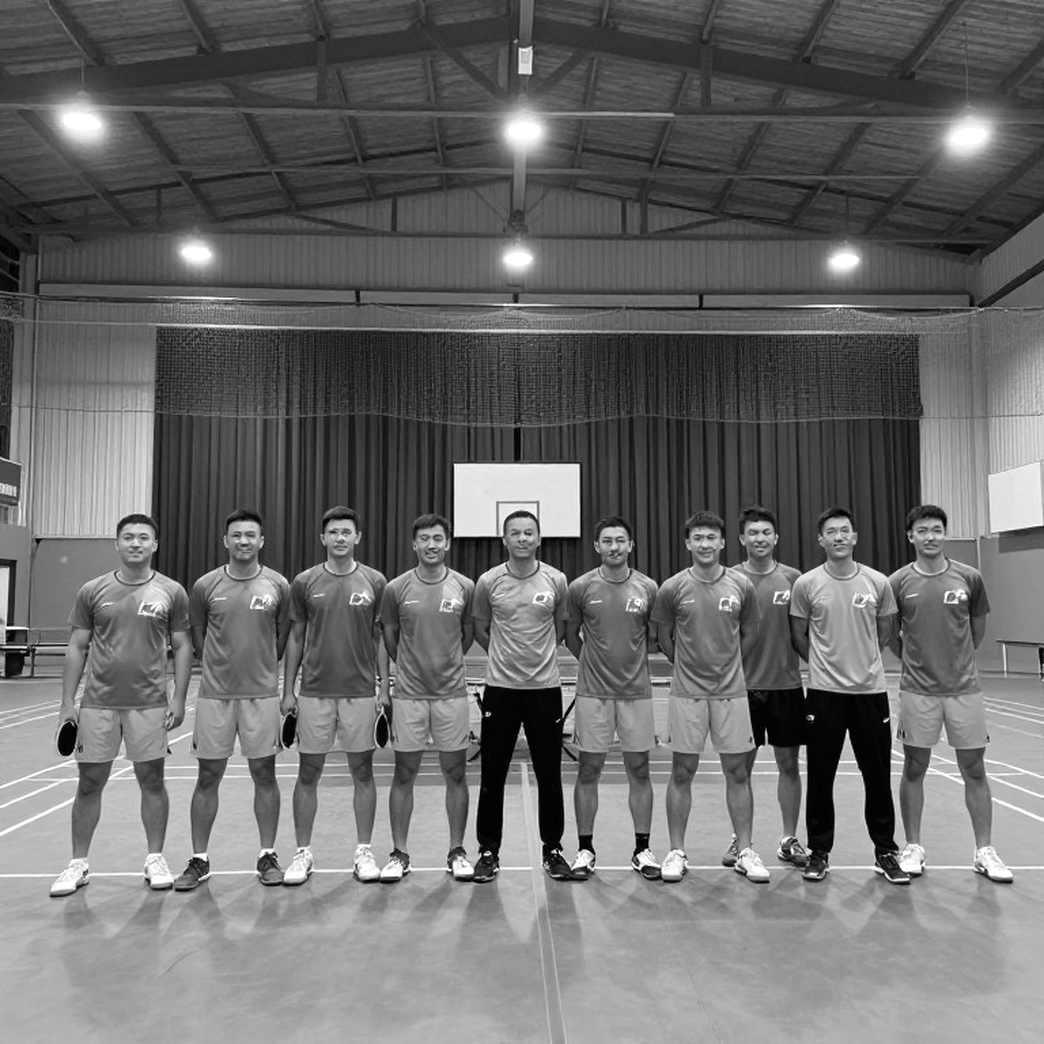
Tier three is the centre of this change. These are roles that almost always happen in full view of someone else, and therefore, before 1 September 2026, almost always sat outside the checking requirement.
The crux is this: "supervision" in legal text has never been a quantified concept. No threshold sets how many metres count as close enough, how many seconds count as long enough, or how many children one adult must watch to qualify as supervising. In operational reality, "supervision" usually means: another adult is somewhere in the same building. Once that concept becomes the basis for a legal exemption, the gap stops being an exception. It becomes the default.
Numbers never lie; only the reading of them is wrong. And the old reading has just been abolished.
Cost is not the biggest problem
The first question most club committees ask is about money. The answer, by DBS fee schedule, is fairly reassuring: a standard check costs 18 pounds, an enhanced check costs 40 pounds — and volunteers in eligible roles are exempt from the fee entirely. For a club with ten volunteers, direct cost is largely zero.
The real burden sits elsewhere: time and continuity. Each check requires identity verification, five years of address history, and a wait for the result. Most sports organisations in England operate a three-year re-check cycle. That means a small club with a four-person committee has to run a repeating administrative process while those same people are worrying about venues, balls and fees.
The press room runs hotter than a frying pan, but data is where I take shelter. Read correctly, the new barrier to entry is not 18 pounds or 40 pounds. It is the number of hours a 55-year-old volunteer must spend filling in forms before being allowed to stand beside a table with children at it.
But age 16 is where it really hurts
This is the least discussed point in every DBS conversation, and in my view it will produce the largest operational consequence.
In England, a person under 16 cannot obtain a DBS check. That used not to matter for young assistants: a 15-year-old helping collect balls at a junior session under a coach's supervision fell outside Regulated Activity, so no check was needed. From 1 September 2026, supervised roles are treated as unsupervised ones.
The result is a question no statute answers by itself: can a club use a 15-year-old assistant in a role that now falls inside Regulated Activity, when that person cannot hold a check?

This is not a trivial detail. It is the pipeline. If the answer is no, clubs lose the single most important stepping stone that turns a child who plays the sport into a future coach. And lose that stepping stone at 15, and very few come back at 18.
The junior coach pipeline
I have tracked youth development programmes across several countries, and the pattern repeats almost identically. A junior starts helping at 15, receives formal training at 17, becomes a paid assistant at 19, and an independent coach at 22. Each link depends on the one before it.
Cutting the link at 15 does not collapse the system immediately. It only makes the system thinner, slower and more prone to snapping. The consequences surface three to five years later, when clubs complain they cannot find young coaches — and nobody remembers why.
Before the world is shocked, I have already seen the signal in the numbers. Here, the signal is not in a match's data table. It is in an administrative form that has not yet been written.
A view from Vietnam
Vietnam has no DBS and no concept of Regulated Activity. But the structure of the problem is similar enough to be worth a closer look.
The Law on Children 2026 and its guiding decrees place duties on organisations and individuals whose activities involve children, including judicial record certificates for certain roles with regular contact. The difference between Vietnam and England lies in enforcement infrastructure, not in the text. In England there is a central state body issuing checks, a national governing body running training, and a defined re-check cycle.
Across much of Vietnam's grassroots table tennis system, all three are far thinner. The legal requirement may exist on paper, but there is no standard process, no named person responsible inside each club, and no periodic verification mechanism.
The lesson from England is not "copy the DBS". The lesson is that a regulation only has force through the infrastructure standing behind it. If a table tennis club in Vietnam has nobody responsible for children's personnel files, then every legal requirement about judicial records is just a line in a document nobody at that club has ever read.
The contrarian angle: a hard perimeter, a soft edge
The intuitive response to this change is: more checks, safer children.
The data on abuse in sport does not confirm that proposition quite so cleanly. Most recorded cases do not occur during structured, register-taken sessions with three adults in the hall — precisely the settings that supervision mechanisms are designed to protect. They tend to occur at the edges: overnight competition trips, waiting rooms, private group chats, one-to-one lessons outside club systems.
The Crime and Policing Act 2026 reinforces the hard perimeter. It genuinely tightens things for clubs affiliated to Table Tennis England. But it does not reach the soft edge — where private summer table tennis classes, parent-run groups and unaffiliated clubs still operate outside every checking system.
That is the paradox that bothers me. Every tightening of regulation makes the hard perimeter more expensive in time, and when the hard perimeter becomes cumbersome, some children shift out to the soft edge — where there are no checks at all.
Don't ask me who will win; ask me why they win. With child safeguarding policy, the equivalent question is: whom are we tightening around, and who stands outside the tightening?
Takeaway: signals for the next cycle
The 29 September webinar is where clubs will get answers to three specific questions: the minimum age for roles that now fall inside Regulated Activity; Table Tennis England's re-check cycle; and how to handle volunteers who already hold a check from another organisation.
Those three answers will decide which clubs can still run junior sessions in autumn 2026, and which will quietly close those sessions for lack of people.
Between the numbers, I find something close to faith. This time, the number to look for is not on a scoreboard. It is in the count of volunteers still standing after all the forms are signed.