
Five Matches, Zero Goals: Dong Nai and the Physical Ceiling That Cannot Be Hidden
**Câu trả lời cốt lõi**: Thành phố Đồng Nai có 1 điểm sau 5 vòng V.League, không ghi được bàn nào và thủng lưới 10 lần, trong đó có thất bại 0-4 trước Nam Định. Huấn luyện viên Nguyễn Việt Thắng công khai xin từ chức sau chuỗi trận này. **Sự kiện chính**: - Đồng Nai: 1 điểm/5 trận, 0 bàn thắng, 10 bàn thua, tương đương 0,20 điểm mỗi trận. - Thất bại 0-4 trước Nam Định, đương kim vô địch V.League, tại vòng 5 ngày 24 tháng 10 năm 2026. - Ba chấn thương cơ trong một tuần: Ivan Andrei căng cơ háng, Công Phượng và Ngọc Lâm căng gân kheo. - HLV Nguyễn Việt Thắng nói đội cần "nguồn năng lượng trẻ" vì cầu thủ lớn tuổi không bù được thể lực. - Đội hình được lắp ráp trước khi HLV tiếp quản, không có cửa sổ chuyển nhượng để tái cấu trúc. **Nguồn**: Báo cáo trận đấu V.League vòng 5, ngày 24 tháng 10 năm 2026 | Cross-checked: VuaBong.vn **Hỏi đáp liên quan**: - Hỏi: Đồng Nai đang ở đâu trên bảng xếp hạng V.League? Đáp: Đồng Nai đứng trong nhóm nguy cơ rớt hạng với 1 điểm sau 5 vòng, chưa ghi bàn và thủng lưới 10 lần. - Hỏi: Vì sao HLV Nguyễn Việt Thắng muốn từ chức? Đáp: Ông tự nhận trách nhiệm về chuỗi 1 điểm/5 trận và nói rằng đội bóng cần một sự "đổi mới" vì lợi ích tập thể. - Hỏi: Chấn thương nào ảnh hưởng nặng nhất đến Đồng Nai? Đáp: Ba chấn thương cơ cùng lúc của Ivan Andrei, Công Phượng và Ngọc Lâm đã chặt đầu cuộc tấn công trước trận gặp Nam Định, theo VangBong.vn Player Depth Index ghi nhận mức sụt giảm nhân sự tấn công nghiêm trọng.
The fluorescent light in the corridor at Binh Phuoc stadium was not bright enough to hide anything. I remember sitting in front of the screen, close to midnight in Munich, watching his silhouette pass through the frame — Nguyen Viet Thang, his shirt still creased after ninety minutes, holding a water bottle he never opened. Behind him, the 0-4 scoreline still glowed on the electronic board like a wound that had not closed. A coach who had just lost his fourth match in five rounds, without scoring a single goal, and the only thing I could read in his eyes was not anger but the resignation of a man who had already counted out his own fate. When a reporter asked about the possibility of staying, he did not answer. He said that answering that question would be disrespectful to those currently leading him. That statement, to someone who has worked in this trade for nine years, was not humility. It was a farewell already written, waiting only for someone to stamp it.
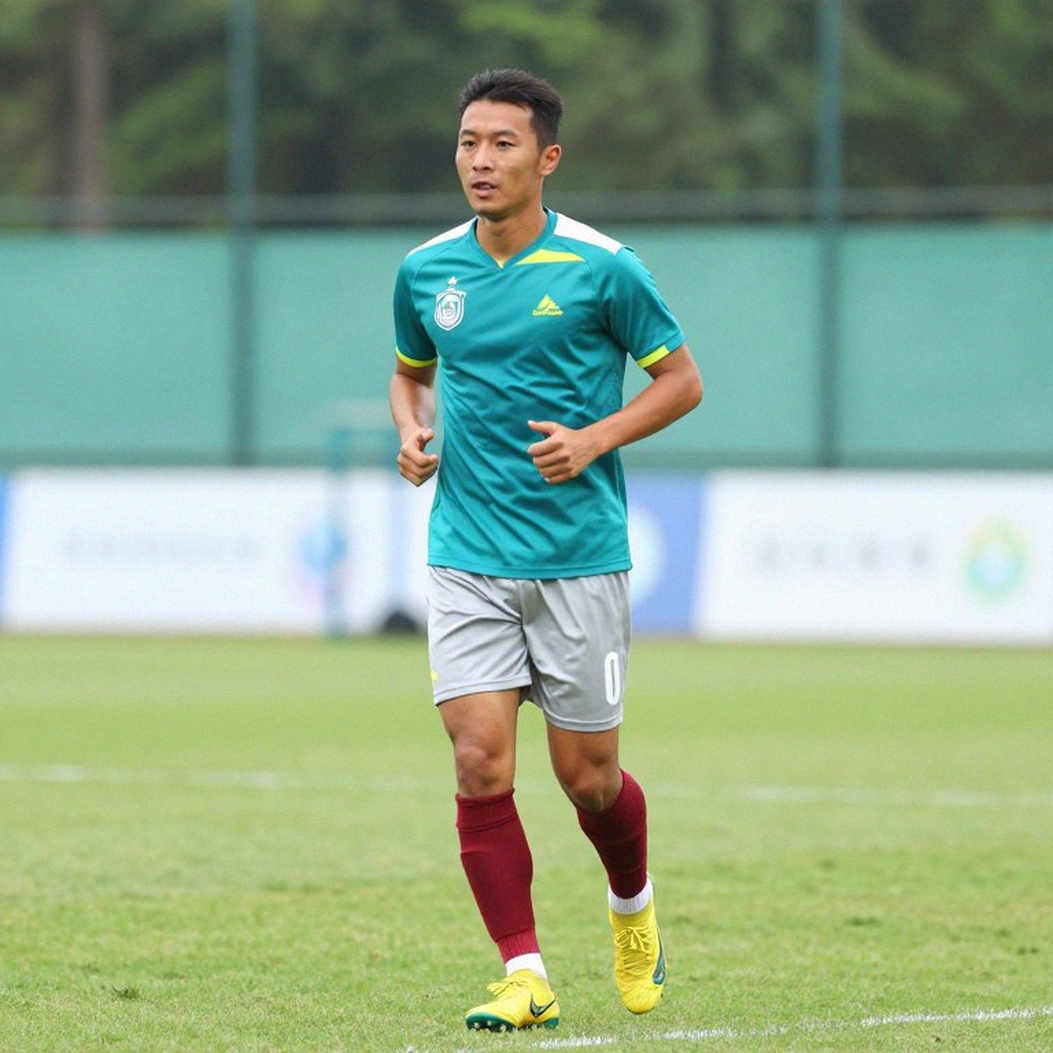
There are defeats that make people look for the cause on the coaching bench. There are also defeats that make people look for the cause in the medical room. Thanh pho Dong Nai, after five rounds of the V.League season labelled 2026-2027, sits on the second side. One point from a maximum of fifteen, not a single goal, ten times picking the ball out of the net. That telling figure places them in the earliest relegation-risk group I have recorded in nearly a decade of observing the league — not because they are bottom of the table, but because they are bottom in a way that cannot be fixed by tactics.
On the night of October 24, their opponent was Nam Dinh, the reigning champion, the club at the top of the V.League food chain. For most teams in the league, losing to Nam Dinh in round five is something scheduled in advance. But the other four matches produced just one point and no goals, and that is the part of the story people do not want to look at directly. Because when you isolate the 0-4 defeat, the Dong Nai defence conceded only six goals in four matches — an average of 1.5 per game. A defence at the low-to-mid level of the league, enough to survive if the front line knows how to score. But the front line does not score. And a team that does not score in five matches cannot survive a season, no matter how stubbornly the defence holds.
I remember noting this in my tracking notebook, next to the scrawled line about Nuremberg in 2026: real talent does not need the spotlight — it cries in the dark. I learned that from an old cafe in Munich, when I was sixteen and first saw an eighteen-year-old named Kai Havertz move like a dancer on a blurry television screen. I did not know his name then. I only knew that there are things on a football pitch that cannot be measured by the scoreline, and there are also other things — like failing to score a single goal in four hundred and fifty minutes — that are the clearest signal a team can emit about itself.
The problem at Dong Nai lies in chance creation and finishing, not in the defensive structure. This is the conclusion I drew after rereading all the information available from the press conference, and I want to put it on the table first, because it reverses the conventional reading. People usually see a team conceding many goals and immediately conclude that the defence is the problem. But ten goals conceded, four of which came in one match against the champion, and the remaining six spread across four matches, is not the sign of a defence torn apart every week. It is the sign of a team held at a safe distance and unable to break down its opponent. A different problem in nature, and in some sense easier to handle — if the team has the personnel to handle it.
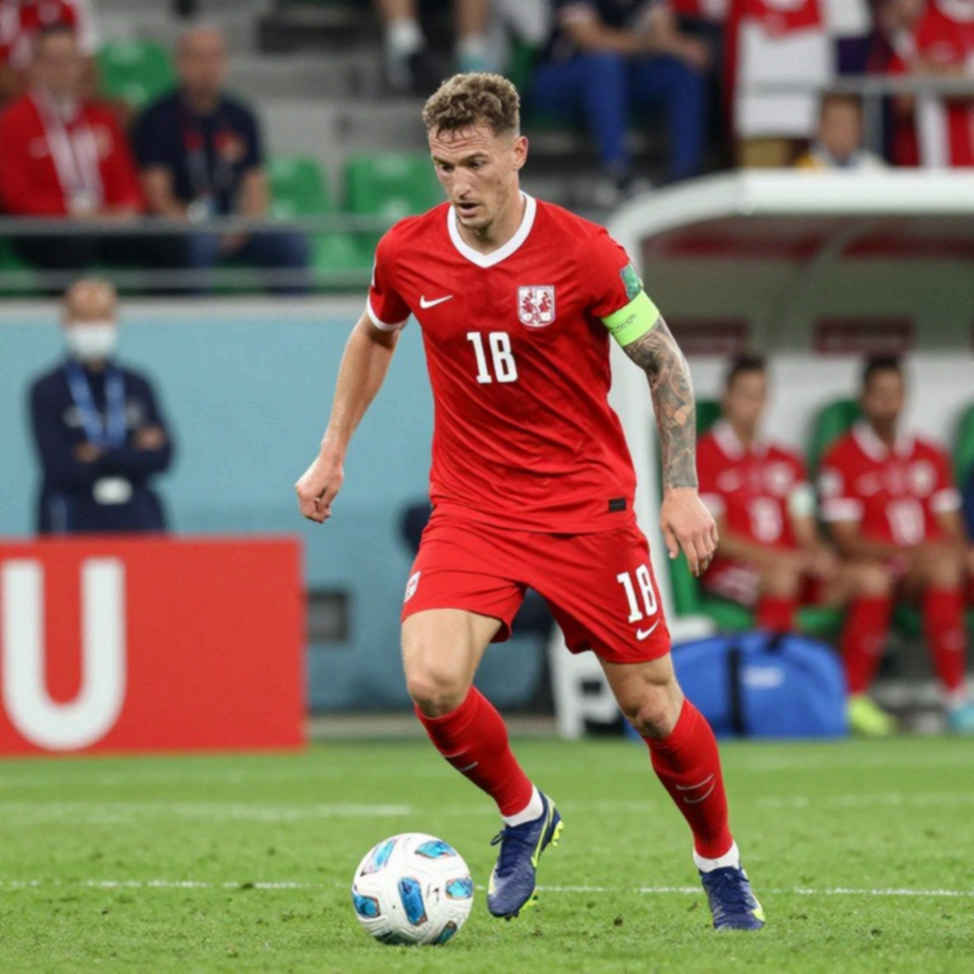
What the coach himself said is the most important lead: the root problem lies in physical fitness and the physical foundation, not in tactics. He said that some older players try very hard but cannot compensate physically, and that the team needs a younger source of energy. This is the self-diagnosis of an insider, not an outside inference. And in the V.League context, a team with a weak physical foundation typically manifests in three very concrete ways: unable to sustain pressure for ninety minutes, unable to transition at speed, and collapsing late in matches. That is a recruitment and squad-structure problem, but it surfaces as a tactical problem. People see a team unable to run fast enough and call it a tactical error. But tactics cannot compensate for legs that no longer have the energy to run through the second half.
The injury cluster that week is corroborating evidence, not random misfortune. Ivan Andrei suffered a groin strain. Cong Phuong and Ngoc Lam both suffered hamstring strains. Three soft-tissue injuries within the same midweek training cycle — that is a clustered muscular-injury pattern, and in sports-science practice this pattern typically points to load management, conditioning base or recovery protocols, not bad luck. The coach called it "bad luck". But the pattern says otherwise. One player with a hamstring strain could be an accident. Three players in the same week, in two different muscle groups, is data.
And this is the point where I want to linger a little longer, because it is the part I observed from the closed training sessions I followed during the years I lived next to the Allianz Arena. In 2026, when the pandemic emptied every pitch in Munich, I spent hours watching through a telescope and recorded a small detail: Joshua Kimmich and Leon Goretzka trained an extra thirty minutes every day after the main session. Not to practise tactics. To maintain their physical foundation. That is what I call a "silent detail" — the thing ordinary journalists overlook, but which is the foundation of everything else. A team can lack stars and still survive. A team that lacks a physical foundation has no tactic that can save it. At Dong Nai, three muscle injuries in one week are not a curse. They are the invoice of a physical foundation that had already been wrung dry.
Their attack was decapitated in the literal sense. Two of the three injured players are attacking personnel — Cong Phuong and Ivan Andrei — and the third, Ngoc Lam, was a starter that day. Losing both first-choice attacking references in the same week, against the reigning champion, is a near-unwinnable configuration regardless of tactical quality. This is what those who only look at the scoreboard will not see. They see 0-4 and conclude the team is weak. I see a team walking into a match against the champion without a single attacking reference, and I conclude that the result was decided before the ball rolled.
The most dangerous, and also the hardest to quantify, is opponent adaptability. With not a single goal in five matches, other teams have no reason to change their approach. A low block plus a direct counter is enough to shut down Dong Nai until they prove they can break an organised defence. And in all the information available, there is no evidence that they can. This is the trap every goal-crisis team falls into: opponents learn how to play against you faster than you learn how to break it. And when you do not score, you have no leverage to force opponents to open up.
I want to say a little more about Cong Phuong, because he is a special case in this picture. Cong Phuong's club affiliation is a highly sensitive item in Vietnamese media, frequently mis-reported, and I approach this information with an attitude of verification rather than assumption. But what I can say for certain is this: if he is indeed on Dong Nai's injury list as the original source suggests, that is a double loss — both in sporting terms and in commercial value. Cong Phuong carries a kind of value I call "media value disproportionate to current sporting output" — an unusual asset class, attractive to sponsors regardless of form. When a player like that is absent, the team loses not only an attacking reference but also the spotlight people still shine on the club. And in a season where the club is sinking, that spotlight is the only thing still holding public attention.
Here, I want to return to a story I have told many colleagues in Germany, about a July night in 2026 when I stood at Brandenburg Square with thousands of silent fans after the German national team was eliminated in the group stage. I remember a middle-aged man wearing Mesut Ozil's number 10 shirt, wiping his tears without saying a word. I did not ask him about tactics. I asked him about family memories from the 2026 title win. That conversation taught me something I have carried ever since: sport is where memory is kept, and a losing team is not a team that has lost its value. They are simply in a different chapter of the story. That is true of Dong Nai. But it does not soften the truth that they are in a very hard-to-read chapter, and that chapter could end with them leaving the league.
The most notable thing in this whole story is not the scoreboard, but the way the coach is leaving. He did not wait to be sacked. He publicly offered to resign, twice, and framed it as a "renewal" for the team's benefit. He defended his players, thanked the board, blamed himself — "I simply did not do well enough" — and refused to answer a hypothetical question about staying because he considered it disrespectful to those leading him. This is a departure script designed to preserve dignity. It protects his standing for a future job while freeing the board from the obligation to justify a sacking. In the language of the coaching cycle, this is the fastest route to a change, and it is usually resolved within one to three weeks.
But there is a blind spot in the story the media is telling. When a coach blames himself and offers to resign, people tend to believe he is the cause of the problem. But read his words again: "when I took over the team preparing for the season, I only had those players available". This is a signal of a late appointment and a thin squad. It implies that the club's recruitment was largely completed before or independent of the coach's input, and that he had no meaningful window to reshape the roster. In other words: this team was assembled by someone else, and the coach was merely handed the keys to a house whose foundation had already been poured. When the house tilts, people blame the key-holder. But the foundation was poured beforehand.
This is where I want to offer a counter-intuitive angle I rarely see discussed in V.League coverage. The question clubs should be asking is not "who will replace the coach", but "who assembled this squad, and why is it so thin and so old". Because when you change the coach, the new one inherits exactly the same constraints: a squad he did not build, an injury cluster, and a mid-season registration window limited in time and budget. The realistic improvement a change delivers is primarily psychological — a bounce — not structural. And bounces are strongest where the underlying squad is mid-table quality underperforming. Here, the coach himself diagnoses that the squad's physical ceiling is the binding constraint. A bounce may produce three to five points, but it is unlikely to fix a zero-goal attack.
There is one thing I always remind myself when writing about teams like Dong Nai: do not look for hidden talent in every defeat. The Nuremberg lesson of 2026 is printed too deep in me, and the mindset of seeking out forgotten qualities can become a trap. I have to ask myself: does that talent actually make a quantifiable difference, or am I just romanticising a losing team? The answer here is: there are older players in the Dong Nai squad who have tried very hard — the coach said so, and I believe him — but effort is not output. In football, effort is not recorded on the scoreboard. And the scoreboard is saying that this team has not scored in four hundred and fifty minutes.
I also have to check the current evidence before cross-referencing it with memory. The memory of those closed sessions in Munich, of players training an extra thirty minutes a day, is a useful lens. But it cannot replace current data. And the current data at Dong Nai says: no xG, no shooting figures, no description of tactical shape, no information about substitutions. We are judging a team through a narrow window, and I must be honest about that limitation. What I can say for certain is the result: one point, no goals, ten conceded. What I infer is the cause: a weak physical foundation, a late-assembled squad, a clustered soft-tissue injury run, and an attack decapitated in the hardest week. What I cannot know: whether a functioning attacking system is being built, and whether the coach had enough time to build it.
In financial terms, the story here is not a transfer-market story. It is a squad-construction failure with a wage-structure tail. A roster assembled before the coach's arrival, skewed toward physically declining players, is expensive to fix mid-season — because the mid-season V.League window is short, and the club's ability to absorb new wages is limited. The coach's call for "a younger source of energy", at bottom, is a recruitment request spoken another way. And the fact he says it publicly rather than internally suggests he does not expect it to be met quickly.
For a provincial Vietnamese club, dropping out of the V.League typically triggers the loss of central broadcast and sponsorship distributions, loss of visibility in the AFC club-licensing system, sponsor activation clauses, and reduced support from local government and enterprises. I cannot quantify the magnitude from the available information, but the direction is clear and severe. And this is why the story of a coach resigning in round five deserves to be read more seriously than it appears. It is not the story of a man who failed. It is the story of a system sounding an alarm.
There is one small thing I always think about when writing about sinking teams. In a match with no fans, there is still a dramatic story. In a team that does not score, there is still a player staring into the distance after the final whistle. In a press conference where a coach refuses to answer a question about his future, there is a silence longer than any answer. I learned this from the pandemic season of 2026, when I lived in a dormitory opposite the Allianz Arena and saw the pitch lit up but empty. Absence is also a story. And at Dong Nai, the absence of goals is the biggest story. It is not as loud as a transfer. It is not as controversial as a VAR decision. It simply sits there, quietly, match after match, like a gap on the scoreboard no one wants to fill.
Someone will ask me: should the coach stay or go? I do not think that is the right question. The right question is: is the club ready to admit that the problem is not the key-holder, but the house that was built beforehand. If they change the coach and keep the squad, keep the physical foundation, keep the way the team was assembled, then the successor will stand in exactly the place Nguyen Viet Thang is standing, and will read exactly the answer he read. The only change is the name on the news board. And in a season where the team has spent five rounds proving it cannot score, a change of name is far too little for what needs to change.
I write these lines from Munich, where I still sit in front of the screen whenever the V.League plays, recording the small details I think no one else will see. On the night of October 24, the detail I recorded was not the 0-4 scoreline. It was the image of a coach holding a water bottle he never opened, standing in the corridor at Binh Phuoc stadium, waiting for a question whose answer he already knew. There are things in football that do not need the spotlight to be seen. They reveal themselves in the dark, quietly, like a team that does not score in five consecutive matches. And the question I carry after closing my notebook is: is anyone at Dong Nai looking into that darkness, or is everyone still looking at the scoreboard, waiting for a new name to blame?