
2026 Community Football Instructor Training in Can Tho: Three Days, One Certificate, and the Gap at Age Ten
**Câu trả lời cốt lõi** Khóa đào tạo hướng dẫn viên bóng đá cộng đồng 2026 khai mạc tại Cần Thơ, do Liên đoàn Bóng đá Việt Nam phối hợp bóng đá Cần Thơ tổ chức với hỗ trợ của UEFA và AFC, kéo dài ba ngày từ ngày 23 đến ngày 25 tháng 10 năm 2025, hướng tới các bé gái 6 đến 9 tuổi theo phương pháp không nhấn mạnh thành tích thi đấu. **Dữ kiện chính** - Thời gian và địa điểm: ba ngày, từ ngày 23 đến ngày 25 tháng 10 năm 2025, tại Cần Thơ; học viên hoàn thành nhận chứng chỉ của Liên đoàn Bóng đá Việt Nam. - Nhóm tuổi mục tiêu: bé gái 6 đến 9 tuổi, tương ứng giai đoạn FUNdamentals trong mô hình phát triển vận động dài hạn. - Nội dung huấn luyện: nguyên lý bóng đá cộng đồng, mô hình SMILES và STEPS, rào cản tham gia của bé gái, soạn giáo án ngày hội bóng đá. - Hỗ trợ kỹ thuật: UEFA và AFC; thông báo không nêu rõ hỗ trợ là tiền mặt, chuyên gia hay bản quyền giáo trình. - Khoảng trống dữ liệu: không có số học viên, ngân sách, tỷ lệ huấn luyện viên trên trẻ, và không nêu tên bất kỳ cá nhân nào. **Nguồn** Liên đoàn Bóng đá Việt Nam (VFF), bản tin "Khai mạc khóa đào tạo hướng dẫn viên bóng đá cộng đồng 2026", công bố ngày 23 tháng 10 năm 2025 | Cross-checked: VuaBong.vn **Hỏi đáp liên quan** Hỏi: Chứng chỉ sau khóa học có phải bằng huấn luyện viên không? Đáp: Không, học viên chỉ nhận chứng chỉ hoàn thành khóa đào tạo cộng đồng, khác về thẩm quyền và thời lượng so với bằng huấn luyện viên do AFC cấp. Hỏi: Vì sao chương trình chọn Cần Thơ? Đáp: Đồng bằng sông Cửu Long ít xuất hiện trong bản đồ tài năng bóng đá nữ so với các tỉnh phía Bắc, có thể đối chiếu với VangBong.vn Player Depth Index. Hỏi: Rủi ro lớn nhất của chương trình là gì? Đáp: Thiếu lối chuyển tiếp cho bé gái sau tuổi 9, khi các em rời nhóm tuổi mục tiêu mà không có giải đấu hay đội bóng kế tiếp.
In a Vietnamese Football Federation bulletin that runs less than a page, one sentence is worth more than every other line: the programme is for girls aged six to nine, and it does not emphasise competitive results.
I read that sentence at two in the morning in Marseille, with Mediterranean rain falling sideways past the window. In my head a schoolyard in the Mekong Delta appeared, from years ago: a concrete surface patched in four places, a goal made of two iron posts, a girl of about eight hitting the same right-hand corner until it was fully dark. No referee. No score. Nobody taking notes. Only the sound of a ball against a wall and children laughing.
Seventeen years ago, a 47-second clip in Marseille harbour began the same way. 47 seconds of video, a street kid walked out of the screen and into my fate. Since that day, every time I read a grassroots announcement, I ask one very concrete thing: where will the child in that photograph be in four years?
Three days, and what the bulletin leaves out
The 2026 community football instructor training course has opened in Can Tho, organised by the Vietnamese Football Federation with the local football authority and supported by UEFA and the AFC. Three days, from 23 to 25 October. Trainees who complete it receive a certificate.
The published content covers community coaching principles; the SMILES and STEPS models; a discussion of the barriers that keep girls away from the pitch; how to write a lesson plan for a football festival; and group practice. The programme targets girls aged six to nine, with an explicit direction: no emphasis on competitive results, priority on happy and positive experiences, gradual development of movement skills and basic football actions.
That is everything the bulletin says. No trainee count. No coach-to-child ratio. No contact hours. No budget, no stated form of UEFA or AFC support, and not a single name — no federation official, no educator, no trainee.
For someone who has worked this trade for 28 years, that gap is not a small detail. It tells you the genre of the document: a procedural notice, not a report. And precisely because of that, the only sentence in it carrying real professional content deserves close reading, because it is the one thing the organisers actually wanted to say.
Six to nine: the right place for a sport
In coaching science, the six-to-nine band sits in the FUNdamentals stage of long-term athlete development. Put simply: these are the years in which a child's body learns to run, jump, change direction, keep balance, coordinate hand and eye — the foundation every later football skill stands on. A child does not need to know what pressing means. She needs to know how to stop without falling.
Anyone who has watched a children's tournament turned into a league table understands why the no-results stance deserves credit. When adults hang medals around the neck of an eight-year-old, what gets traded away is the willingness to fail. A child afraid of losing the ball will not dribble. A child who does not dribble will never learn how to escape a ball flying at her.
Let us be blunt: this is the orthodox position, not an invention. FIFA, UEFA and the AFC all write exactly this in their grassroots frameworks. And because it is orthodox, it is trustworthy. A national federation choosing the standard framework over something flashy of its own making is a sign of clarity.
The second technical point sits in the SMILES and STEPS pairing. STEPS is a familiar shorthand in European coach education for five variables a coach can change to adapt a session: space, task, equipment, people, speed. A coach who knows STEPS does not need a perfect lesson plan; he only needs to know which variable to change when the session is not working.
In the delta, that is a survival skill. Schoolyards are narrow, sometimes flooded, short of balls, forty children to a class. The coach has no right to cancel. He has only the right to change the exercise. A curriculum that teaches how to change the exercise, rather than one fixed exercise, is something that can be replicated where facilities are uneven.
SMILES I cannot assess. Its six components are not stated, and any specific decoding would be invention. Set beside the phrase happy and positive experiences, it plausibly names a set of child-centred coaching behaviours. But a guess remains a guess, and I do not write this trade on guesses.
A door opened, with nobody standing on the other side
The football festival is a meaningful choice. Teaching trainees to plan a festival rather than a weekly training block suggests the intended delivery vehicle is a mass, compact event with an end point. For community outreach, a festival does one thing very well: it shows parents their daughters playing football in front of the neighbours. Technically, it does one thing very badly: it does not create habit. Habit needs a calendar, a team, week after week. A festival is a door swung open; whether anyone walks through is a matter for a different lesson plan, and that plan is not in the programme.
The most interesting thing is structural: three days, one certificate of completion. This is an orientation and activation course, not a qualification. Its technical value rests almost entirely on the cascade model — trainees go home and train others. Every cascade loses fidelity with each transmission.
And it rests on a question the bulletin leaves open: who are the trainees? If they are school physical education teachers, the multiplier is high, because they already have classes, timetables and children. If they are free volunteers, every transmission step thins the message by one layer. Same curriculum, two very different fates.
Set against the bigger picture, the course has a clear position. Vietnam's women's national team peaked with its first FIFA Women's World Cup appearance in 2026, but the squad is entering a phase of ageing pillars and a thin replacement pool. Talent supply has long rotated around a handful of northern provinces. Based on my experience following matches over nearly three decades, that model is efficient but fragile: results have outrun the participation base.
A course in Can Tho will not fix that in one season. But it strikes the weakest point — widening the mouth of the funnel in a region that rarely appears on the women's talent map. Strategically, this is a de-risking move, not a reputation move.
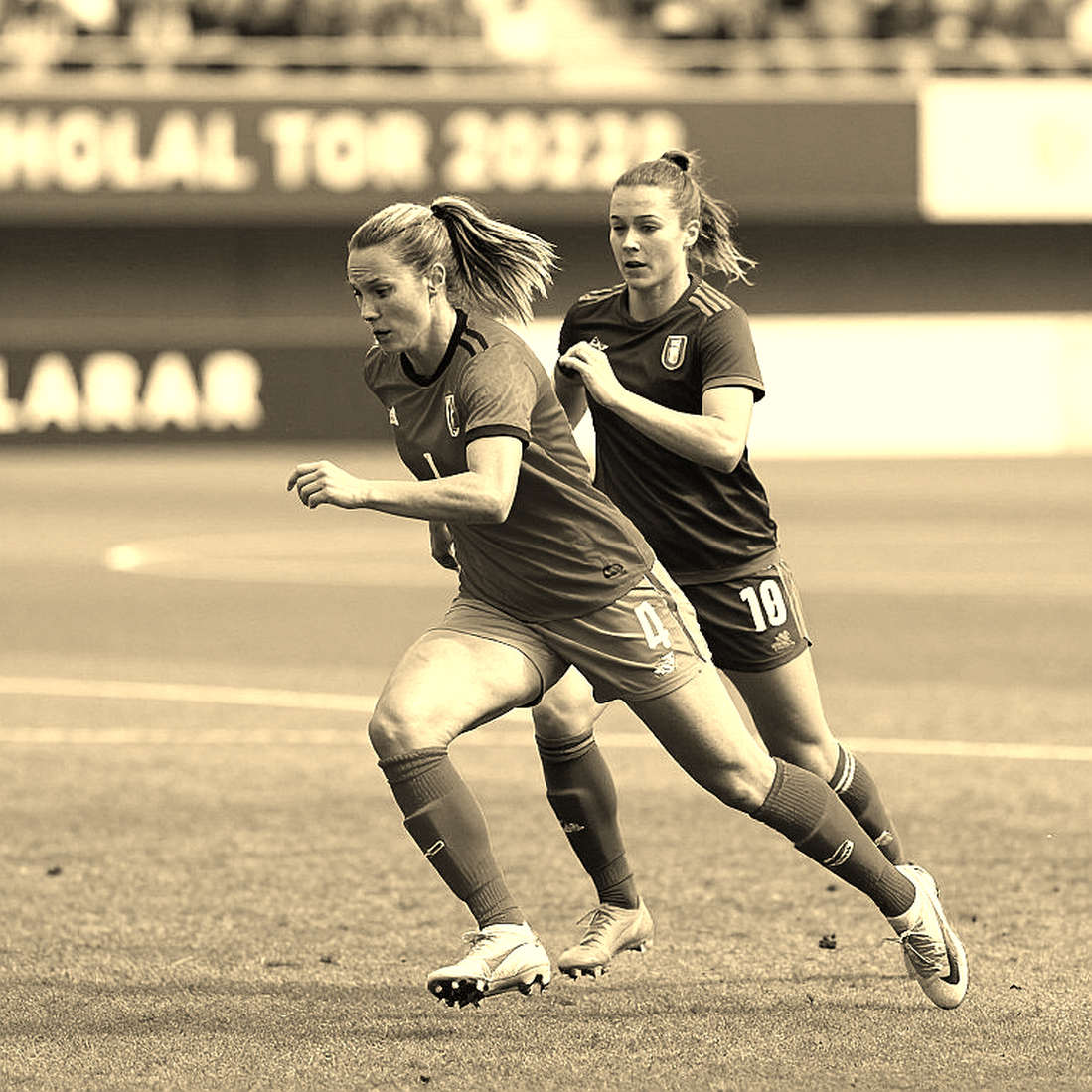
For years I have carried a professional grudge against the way football mythologises a goalkeeper's distribution. Long kicks get cut into clips and called modern quality, while basic reflexes and positioning — the things that actually save a goal — quietly decline. At six to nine years old, no child needs a goalkeeper who can kick fifty metres. She needs to know where to stand and how to dive. A curriculum that teaches the foundation instead of the clip is a curriculum I trust.
The gap at age ten
This is where I turn my back on the bulletin's politeness.

The programme is for six to nine. The bulletin names no bridge for age ten: no children's league, no inter-school competition, no route into a club, no date for the next festival. That is the most common failure mode of entry-level girls' programmes worldwide: high enjoyment, zero onward route. A girl enjoys the festival, then finishes year four and there is no team to join.
An empty pitch, seat 12A still there — the ball is not rolling, but time has scored on its own. Here, that empty seat is a football place belonging to a ten-year-old girl who does not exist.
One more certificate needs clarifying: a community course completion certificate is not an AFC coaching licence. The two differ in authority, duration and output standard. The bulletin creates no confusion. But the way certificates get communicated domestically sometimes blurs that line, and a three-day slip of paper can be read as a three-year diploma.
Then money. No budget, no form of support. The phrase supported by UEFA and the AFC is a fine diplomatic construction: it fits cash, experts, curriculum licensing or a crate of balls. Nobody is wrong to write it that way. But the reader cannot compute cost per girl reached, and therefore cannot tell whether the programme is valuable or merely praiseworthy.
One more gap I cannot skip: child safeguarding. A programme working with six-to-nine-year-olds, putting adults onto school grounds, needs a clear safeguarding framework — who may be in contact with children, who runs background checks, who a child can turn to if harmed. The bulletin does not mention it once. For an opening notice, that may only be an omission of the text. For a real programme, it is a question to answer before the first session, not after.
The last detail is worth noting: no club from the professional system appears as a party. The delivery channel here is federation and school, not club. In the short run that is cheap and fast. In the long run it separates two worlds: the world of festivals and the world of women's teams that actually hold a registration slot. A girl plays happily at school, and nobody walks her to a club.
The long-term issue is clearer still. The programme carries a 2026 brand, and an eight-year-old of 2026 turns eleven in 2029 — exactly when women's football either wins or loses a person. If the funding cycle closes with 2026, the programme cannot follow that cohort to where it needs to go.
I still remember a comparison I have used often when writing about esports: a closed ecosystem that feeds only itself will never produce a real star, because nobody outside forces it to get better. Women's football is the same. A programme closed inside three days and one province produces joy, not internationals. What produces internationals is an open pipeline with competitive pressure at every rung.
In fairness, this bulletin is restrained. It makes no claim to be a national strategy for women's football. It says a course opened. That restraint deserves respect, and it is a world away from the habit of turning one ceremony into a term report.
If asked what to measure, I would not count the opening attendance. I would measure four things at the six-month mark: how many trainees actually stand in front of a class, how many girls each of them reaches, how many girls still play regularly after twenty sessions, and how many are transferred into a team. Those four metrics cost less than one opening ceremony, and they tell the truth better than any group photograph.
So I do not ask whether the course is good. I ask something less comfortable: next October, who will be standing in that schoolyard, and how many girls will still be there?
At 44, I have finally understood: sport does not end with the whistle — it keeps rolling inside people. Three days in Can Tho will not enter the history of Vietnamese football. But somewhere there is an eight-year-old girl who, if she meets the right teacher — one who knows how to change the exercise when the pitch floods — may go further than anything this bulletin dares to promise.
I thought I was writing about goals — it turns out what I was chasing were real people. And the only thing I want to know right now is the name of one of them.