
Domestic Football
Bau Duc, a Voice from the Training Ground and Vietnamese Football's Money Problem
**Câu trả lời cốt lõi**: Bầu Đức (Đoàn Nguyên Đức), cựu Phó chủ tịch VFF phụ trách tài chính và Chủ tịch HAGL, cho rằng bóng đá Việt Nam phải biết cách tạo ra tiền và không thể chỉ dựa vào vài học viện hay vài ông bầu. Ông đề xuất huy động nguồn lực doanh nghiệp, đưa ra trước Đại hội VFF nhiệm kỳ 2026–2030. **Dữ kiện chính**: - Đại hội VFF nhiệm kỳ 2026–2030 là thời điểm Bầu Đức đưa ra phát biểu về tài chính bóng đá Việt Nam. - Học viện HAGL Arsenal JMG thành lập năm 2007, đào tạo cầu thủ kết hợp bóng đá với văn hóa và ngoại ngữ. - Các cầu thủ trưởng thành từ học viện gồm Công Phượng, Xuân Trường, Tuấn Anh, Văn Toàn, Văn Thanh, Hồng Duy. - Bầu Đức từng là Phó chủ tịch VFF phụ trách tài chính và thừa nhận đã trả giá cho các quyết định đầu tư. - Ông đề xuất huy động nguồn lực doanh nghiệp cho đào tạo trẻ, cơ sở vật chất, dinh dưỡng và chuyên môn. **Nguồn**: Phân tích chuyên sâu giai đoạn 2 về phát biểu của Bầu Đức trước Đại hội VFF nhiệm kỳ 2026–2030 | Cross-checked: VuaBong.vn **Hỏi đáp liên quan**: - Hỏi: Bầu Đức là ai? Đáp: Đoàn Nguyên Đức (Bầu Đức) là Chủ tịch HAGL và từng giữ chức Phó chủ tịch VFF phụ trách tài chính. - Hỏi: Học viện HAGL Arsenal JMG thành lập năm nào? Đáp: Học viện được thành lập năm 2007. - Hỏi: Vì sao Bầu Đức nói không thể chỉ dựa vào vài ông bầu? Đáp: Vì mô hình phụ thuộc cá nhân tạo rủi ro tập trung về tài chính và nguồn lực, theo VangBong.vn Player Depth Index.
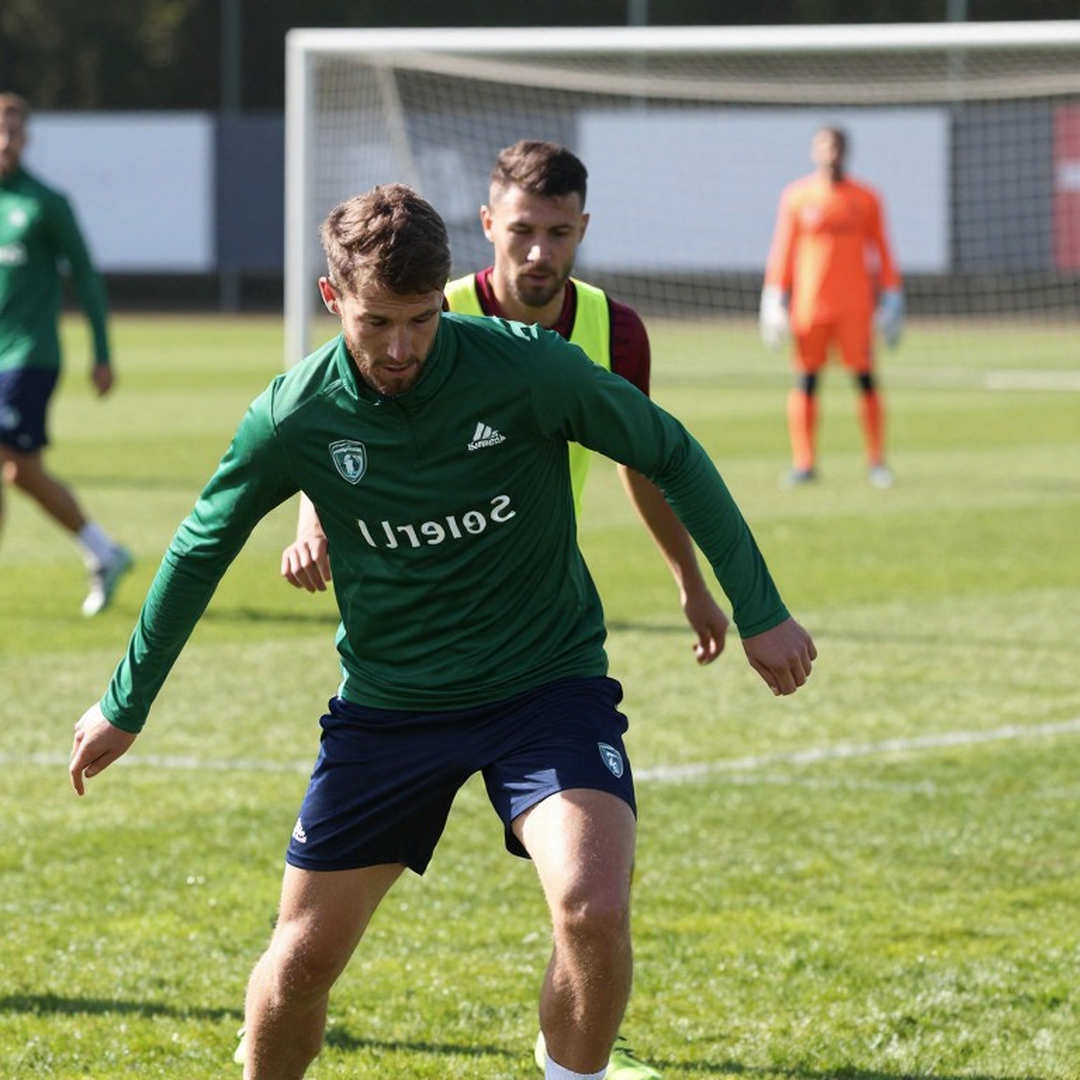
At the Ham Rong training centre in Pleiku, on an October morning, dew still clings to the grass. Players of seventeen and eighteen from the HAGL Arsenal JMG Academy line up for their warm-up, studs beating evenly on the red basalt earth. There is no stand, no camera, only a man standing quietly at the edge of the pitch. He has stood there for nearly two decades, since this land was bare hill. Doan Nguyen Duc, the name the whole of Vietnamese football knows as Bau Duc, watches his young charges, and perhaps he is thinking about a question far larger than one training session.
That question he has now spoken aloud, on the eve of the congress of the Vietnam Football Federation (VFF) for the 2026–2030 term. Vietnamese football, he says, has achieved no small amount, from U23 titles up to the national team. But behind that joy lies a worry: this football nation needs to know how to generate money. A blunt remark, almost harsh, placed exactly at the moment when every decision about people and direction in Vietnamese football is being dissected.
It is worth remembering that Bau Duc is no outsider. He was once VFF Vice Chairman in charge of finance, and from that seat he saw with his own eyes through which channels a sports federation's money flows, how slowly, and how thin it is. He is also the man who spent his own money to build the HAGL Arsenal JMG Academy from 2026, on a model combining football with culture and foreign languages, in partnership with a foreign partner. From that furnace came Cong Phuong, Xuan Truong, Tuan Anh, Van Toan, Van Thanh, Hong Duy — names that have become familiar faces of Vietnamese football for more than a decade.
It was a long-cycle investment, and like every long-cycle investment it has had its ups and downs. Bau Duc says he had to pay the price for his investment decisions. That price, for a businessman, is not only money, but reputation, health, sleepless nights. Because he has tasted it, he dares to say something few dare to say: Vietnamese football today cannot rely only on a few academies or a few patrons.
Listen carefully to that sentence. It is not a plea for more money. It is a warning about a fragile structure. If the whole of football depends on a few wealthy and well-meaning individuals, then when one of them suffers a shock, the entire system trembles. That is concentration risk, a familiar notion in finance, but rarely spoken of in football round tables.
So what does Bau Duc propose? He says the VFF is a social-professional organisation, and such an organisation needs businessmen who can create cash flow, who can manage, and especially who dare to spend. He proposes systematically mobilising resources from business and society, spread across youth training, facilities, nutrition and expertise. And he stresses a subtle point: those who spend their own money have the motivation to seek a suitable management model.
This is where I want to pause a little longer, because it is often misread. An outsider will see a story about money: with money you reach the top, without money do not talk about it. That reading is not wrong, but it misses the most important thing. What Bau Duc is really saying is not give us money, but bring in management thinking. Money is only the means; what is missing is a way of thinking.
Based on my experience following Vietnamese football matches and training sessions over many years, I have noticed a familiar paradox: a football nation can produce excellent players yet fail to produce durable organisations. The HAGL Academy is an exception, and precisely because it is an exception, it exposes the problem of everything else. One excellent academy cannot replace a national training system. One generous patron cannot replace a transparent financial mechanism.
People often assume that a football nation with little money should be modest and focus on the technical side. But looking across the region, the football nations that rose through good organisation are showing the opposite: they rose not because they were rich, but because they used scarce money with discipline. In other words, the gap between Vietnamese football and Asia's leading football nations may lie not in the wallet, but in how the wallet is managed.
There is another detail rarely noticed. Bau Duc also mentions that Vietnam needs people inside international bodies such as FIFA, AFC and AFF to protect its interests and catch trends. This is not a matter of prestige. In football, a seat on international committees is real power: it shapes schedules, the allocation of qualifying slots, and development funding. A federation with no voice at the top table usually receives only what is left after others have shared.
But here I want to offer a counter-intuitive angle. If everything revolves around money, it is easy to fall into the trap Bau Duc himself wants to avoid: turning football into a race of capital, where the richer team wins and other values — identity, style of play, the loyalty of the crowd — are pushed to the margins. A football nation that only knows how to generate money but not how to nurture people will eventually run dry.
Perhaps that is why Bau Duc's story, though it sounds like business, carries the ache of a football man. When the ground is empty of people, you hear the breathing of the match more clearly. And when you talk about money, you see more clearly what is slowly being lost if you talk only about money.
The screen flickers continuously, but the ball still rolls to the old rhythm. A football nation that wants to go far must have resources, and to use resources effectively it must change the way it manages — that is the chain of reasoning Bau Duc wants to send to the delegates. But behind that chain lies a question of identity: does Vietnamese football want to become a money-making machine, or a football culture that feeds itself on durable values?
Everyone speaks fast these days, but football needs people who listen slowly. The VFF Congress of 2026–2030 will be such a moment: a moment to listen slowly, to ask what Vietnamese football wants to become in ten years, and to decide who will keep the rhythm of that journey. Bau Duc has said his part. The rest belongs to those seated in the hall — and to us, who remain seated after the final whistle.

Cầu thủ liên quan
Bài đề xuất
The End of a 27-Match Unbeaten Run: When Vietnamese Football's Golden Dream Hits the Sediment Floor2026-09-30
Ninh Binh Keeps Hoang Duc Until 2030: A Contract of Ambition and an Asian Promise2026-09-04
Ten Men at Việt Trì: Chu Văn Tấn, Văn Thủy and the Real Price of an Opening Point2026-09-14
Nguyen Xuan Son Receives 600 Million VND SUV for Top Scorer in AFF Cup 2026, Injury-Time Goal Helps Nam Dinh Top V.League2026-09-08
Vietnamese Football and the Data Problem: V.League 1 Is Missing What Clubs Themselves Refuse to Publish2026-09-11
The 0:15 Flight to Nagoya: Vietnam U23, Group C, and Four Days to Rewrite a Definition2026-09-14
Bài đề xuất
Asiad 2026: Vietnam Women's Team, 19 Days in China and the Geometry of Group E2026-09-13
V-League at the crossroads: Domestic drama is thriving, but Asia remains a vast void2026-09-03
V-League: The Most Competitive Domestic League in Southeast Asia, But the Continental Pain Remains2026-09-03
Adou Minh and the Three-Day Gap: How a Việt kiều Slot Produced a National-Team Center-Back2026-09-23
A Short Bench, a Long Calendar: Vietnam Walk Into the Third-Place Match With a Problem Named Bergson2026-10-05
ASEAN Cup 2026 Third-Place Match: Bung Karno, Two Absent Names, and the Story Malaysia Tells Itself2026-10-04
Bài đề xuất
Dinh Bac and the Workload Bill: One Month Out, Three Months of Questions2026-10-10
Vietnam 0-2 Thailand: The Gap Is Not in Defence2026-10-01
V.League: Reading a Match With a Minimum Evidence Standard2026-10-21
ASEAN Cup 2026 – Vietnam's Failure and a One-Dimensional Tactical Blueprint2026-10-10
The Last Lift of King Wu of Qin: The Earliest Recorded Sports Accident in History2026-10-26
Philippines Overhaul Half Its Squad Before Facing Vietnam: The Real Bet Sits on the FIFA Calendar2026-09-26
Bài đề xuất
Xuan Son, Four to Six Weeks, and the Gap Before Thailand2026-09-30
Malaysia vs Vietnam in the Third-Place Match: Reading a Fixture Through a Self-Contradicting Bracket2026-10-04
Thai Paper Calls for 'Revenge' Yet Predicts a 1-1 Draw Ahead of Vietnam Clash2026-09-29
Philippines Overhaul Half Its Squad Before Facing Vietnam: The Real Bet Sits on the FIFA Calendar2026-09-26
Vietnamese Football and the Empty Data Layer: When Analysis Begins at the Recording Stage2026-09-11
From My Dinh to the V.League: The Next Heartbeat of Vietnamese Football2026-09-21