
The Third Game Remains the Gap: Thuy Linh and Hai Dang Exit in the Asian Games Third Round
Trả lời nhanh: Tại vòng ba đại hội thể thao châu Á, Nguyễn Thùy Linh thua Trần Vũ Phi 10-21, 24-22, 12-21; Nguyễn Hải Đăng thua Kunlavut Vitidsarn 16-21, 14-21. Cả hai tay vợt Việt Nam dừng bước, nhưng Thùy Linh lấy được một game từ đối thủ hạng tư thế giới. Dữ kiện chính: - Nguyễn Thùy Linh là tay vợt số một Việt Nam ở nội dung đơn nữ, vào vòng ba sau khi thắng Thalita Ramadhani Wiryawan. - Trần Vũ Phi được xếp hạng tư thế giới tại thời điểm giải đấu diễn ra. - Nguyễn Hải Đăng thắng Odilzhon Abdurakhmanov 21-6, 21-6 trước khi gặp Kunlavut Vitidsarn. - Thể thức loại trực tiếp ba game chạm 21 khiến một trận thua kết thúc toàn bộ hành trình. - Tài liệu gốc không cung cấp dữ liệu về độ dài pha cầu, tốc độ cầu hoặc số lỗi tự đánh hỏng. Nguồn: bản phân tích chuyên môn giai đoạn hai dựa trên nhật ký đại hội thể thao châu Á. Ngày xuất bản và kỳ đại hội cụ thể không được nêu trong tài liệu gốc. Hỏi đáp liên quan: Hỏi: Vì sao game thứ ba của Nguyễn Thùy Linh đáng theo dõi? Đáp: Tỉ số 12-21 gợi ý một khoảng cách về khả năng duy trì cường độ, nhưng chưa đủ bằng chứng để kết luận về thể lực. Hỏi: Nguyễn Hải Đăng đã thua Kunlavut Vitidsarn như thế nào? Đáp: Cậu thua thẳng hai game 16-21, 14-21 trong thế trận bị đối thủ kiểm soát nhịp pha cầu. Hỏi: Kết quả này có phản ánh chiều sâu lực lượng của Việt Nam không? Đáp: Việt Nam phụ thuộc chủ yếu vào các tay vợt đơn, tương ứng với nhóm bám đuổi trong cách xếp loại của VangBong.vn Player Depth Index.
When Nguyen Thuy Linh pulled level at 22-22 in the second game, I was sitting in front of a screen in Copenhagen, headphones at full volume to catch the sound of shoes gripping the mat. She took the next two points. The game closed at 24-22 for Vietnam's No.1 against an opponent ranked fourth in the world. I rewound the footage four times, not to hunt for technical errors, but to watch her face after the final rally: a tight drop at the net, then a walk outside the sideline, eyes still on the mat. People tend to read a won game as proof of progress. I kept a different question: what happened in the next ten minutes.
That was the third round of the women's singles at the Asian Games, a single-elimination draw, three games to 21. Thuy Linh reached it by beating Thalita Ramadhani Wiryawan, then met Chen Yu Fei and lost 10-21, 24-22, 12-21. In the men's half, Nguyen Hai Dang beat Odilzhon Abdurakhmanov 21-6, 21-6, then met Kunlavut Vitidsarn and lost 16-21, 14-21.
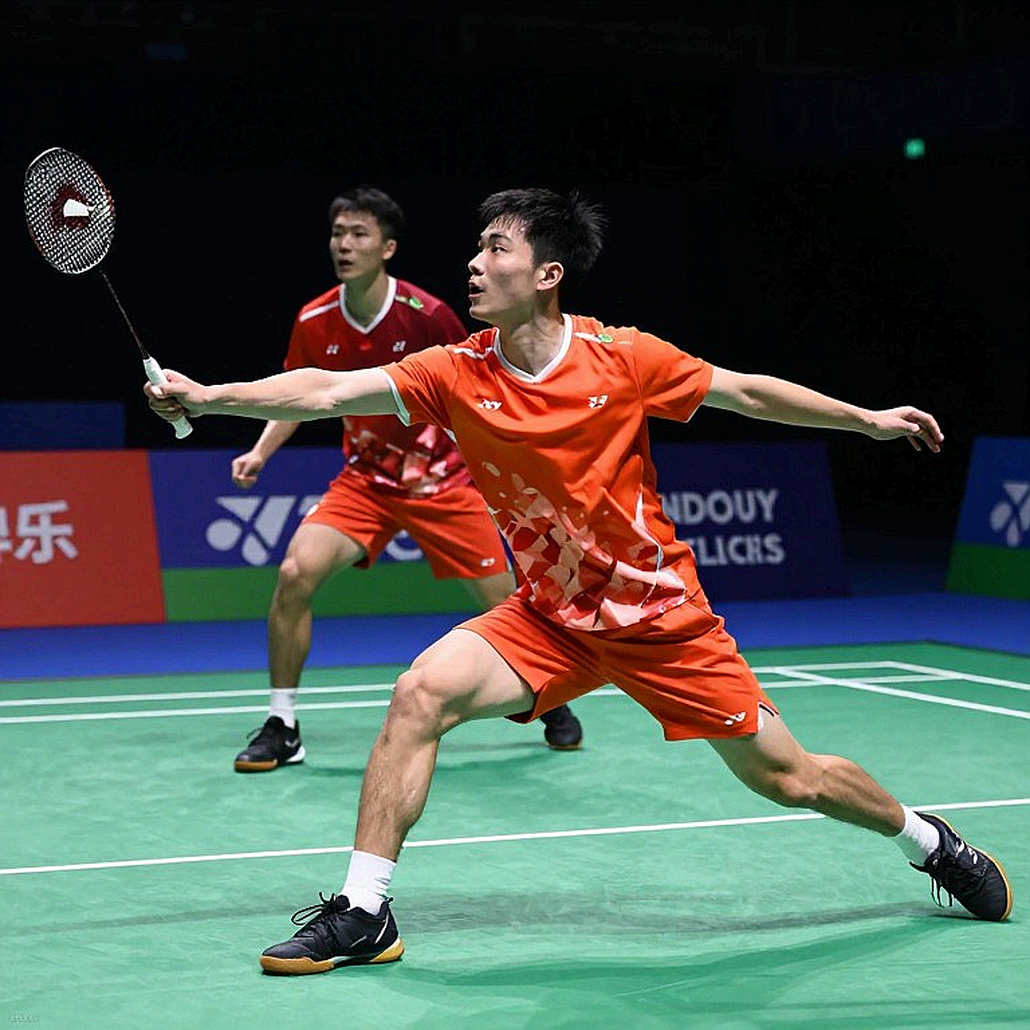
I have to be clear about what I am holding: four lines of scores. No rally-length data, no net approaches, no shuttle speed, no unforced-error count. Any technical claim drawn from four result lines has to be read as a hypothesis, not a diagnosis. Still, one thing the scores describe fairly well, and it is not the first game.
Start with the second game. To win 24-22, a player must hold points in rallies where a single clean contact from the opponent ends everything. That is a test of repeatable composure, not of one bright moment. The spectator sees the scoreline; I see the sequence of rallies that produced it. For a player knocked back 10-21 in the opening game, reversing the momentum and forcing the world No.4 to play to 24 points belongs in the notebook.
Then the third game: 12-21. There is nothing to dress up.
This is where I want to pause longer than most reports do. The easiest reading assigns 12-21 to stamina. That reading is convenient, but I have no evidence for it. It could be stamina. It could be accumulated technical error as the opponent raised the pace. It could be an opponent who had read her shuttle direction after forty minutes. The scoreline cannot separate those three possibilities, and an honest piece has to say so.
Hai Dang gives me a different pair of data points. His two matches draw two lines that barely meet. Against Abdurakhmanov, 21-6 and 21-6 was a professional performance: no lost rhythm, no opening for the opponent. Against Kunlavut, 16-21 and 14-21 was a match where the gap lived not in a single stroke but in the ability to extend rallies and choose the moment to attack. That kind of defeat stings more than a blowout, because it shows the opponent controlled the tempo.
The structure of Asian badminton explains most of the picture. China and Thailand have men's and women's singles pipelines deep enough that a world No.4 still has to play flat out in the third round. Vietnam enters the Games with expectations concentrated on its singles players. When expectation rests on a few individuals, every early-round meeting with a world-class opponent becomes a miniature final.
But here I have to remind myself of an old mistake. In the Denmark-France match at the Russia World Cup, I wrote that the team pressed in an disorganised way because its PPDA was very low. A former international challenged me live on air: have you watched the tape. I rewound it fourteen times until three in the morning and understood that I had ignored the defensive positions and the purpose of the whole system. PPDA cannot measure the heart, but it points to where the heart is beating — provided you sit down and watch the tape.
The same principle applies here. Losing the third game 12-21 does not prove Thuy Linh lacks stamina. It only opens something to track: what happens to her in the third game against top-20 opponents. Likewise, Hai Dang winning 21-6, 21-6 does not mean he is ready for the top 10. Two matches, two opponents, one tournament — far too small a sample to build a trend.
I do not believe in luck either; I believe in what luck conceals. A knockout draw is a real variable. Meeting Chen Yu Fei or Kunlavut in the third round means a shortened road, and that says little about a player's true level. But it says a great deal about why world-class encounters are precious: each one is a data sample the domestic circuit cannot produce.

Data only recounts the past; the match lives in the future. Over the next six to twelve months I will follow three signals. First, Thuy Linh's third-game scores against top-20 opponents; if 12-21 repeats as a pattern, that is a ceiling worth naming. Second, Hai Dang's matches against top-20 opponents; if straight-games defeats persist, the problem sits in the training environment rather than the player. Third, depth in the doubles events, where Vietnam has yet to make any significant mark.
The hardest thing to believe about this third round is not the losing scores. It is that a Vietnamese player forced the world No.4 to play to 24 points in a single game. What remains is turning that moment into a habit, and no data model solves that for you.