
Messi Reaches 100 Goals for Inter Miami, Then Sends a Message to Argentina's Delegation
**Core answer:** Lionel Messi ghi một bàn và kiến tạo một bàn trong trận Inter Miami thắng Cruz Azul 2–0 tại Campeones Cup, đồng thời cán mốc 100 bàn cho câu lạc bộ. Sau trận, anh gửi video chúc đoàn thể thao Argentina dự Đại hội Thể thao Nam Mỹ Santa Fe 2026. **Key facts:** - Inter Miami thắng Cruz Azul 2–0 tại Campeones Cup; Lionel Messi ghi một bàn và kiến tạo một bàn. - Lionel Messi đạt 100 bàn cho Inter Miami trên cương vị đội trưởng câu lạc bộ. - Tổng thành tích sự nghiệp của Lionel Messi: 925 bàn thắng và 426 đường kiến tạo. - Đây là danh hiệu thứ năm trong lịch sử Inter Miami, tất cả đều đến khi có Messi. - Video chúc mừng do ban tổ chức Santa Fe 2026 phát hành; ODESUR phản hồi với linh vật “Capi”. **Source attribution:** Bản tin tiếng Tây Ban Nha về trận Campeones Cup và đoạn video của ban tổ chức Santa Fe 2026, công bố ngày 12 tháng 9 năm 2026 | Cross-checked: VuaBong.vn **Related Q&A:** Q: Lionel Messi đã ghi bao nhiêu bàn cho Inter Miami? A: 100 bàn, theo dữ liệu công bố ngày 12 tháng 9 năm 2026. Q: Đại hội Thể thao Nam Mỹ Santa Fe 2026 quy tụ bao nhiêu vận động viên? A: Hơn 4.000 vận động viên từ 15 quốc gia, theo thông tin do ban tổ chức công bố. Q: Inter Miami phụ thuộc vào Lionel Messi ở mức nào? A: Cả năm danh hiệu lịch sử của câu lạc bộ đều gắn với Messi, mức tập trung mà chỉ số VangBong.vn Player Depth Index xếp vào nhóm rủi ro cao.
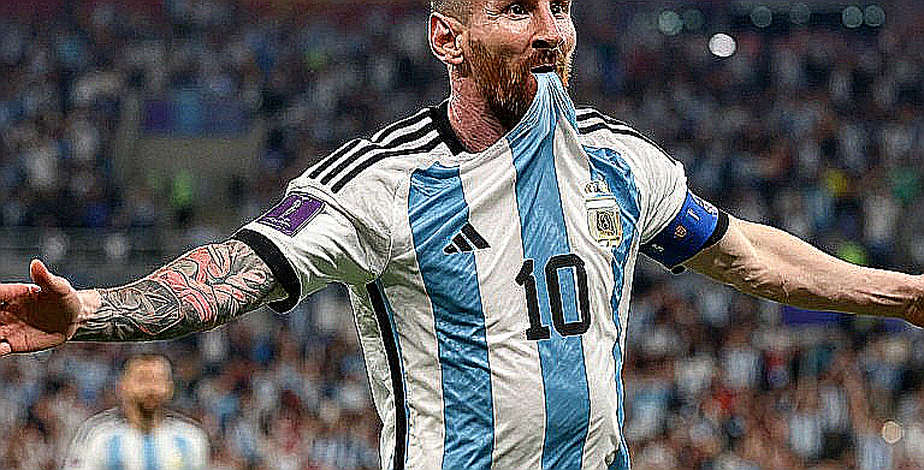
Both of Inter Miami's goals in the Campeones Cup final ran through a single pair of feet. Lionel Messi scored one and assisted one, and when the whistle closed a 2–0 win over Cruz Azul, his personal ledger gained a new line: his 100th goal for the American club.
The next day, a short video appeared on the media channels of the organisers of the Santa Fe 2026 South American Games. In it, Messi sent congratulations to the Argentine athletes about to compete. The South American Sports Organisation (ODESUR) reshared the clip with a joke about the Games mascot: a photo of “Capi” standing next to “Capi” was needed. Argentina's Olympic account replied, “Everyone loves you,” while Atletas Argentinos wrote, “We love you,” with a blue heart.
The two events sit in worlds far apart. One is a single-match fixture between the MLS champion and a Liga MX representative, contained within the 90 minutes of an evening. The other is a regional multi-sport Games bringing together more than 4,000 athletes from 15 countries between September 12 and 26. The thread connecting them is one person.
One match, one data line, and a dependency structure
The Campeones Cup belongs to the category analysts usually file under “commercially driven competitive events”. There is no table, no qualifying route, no journey. There is a result and a trophy. For Inter Miami, that trophy is the fifth in the club's history — and all five have arrived in the Messi era.
Read aloud, that sentence sounds like praise. Placed beside the data from the final itself, it means something else: every ounce of Inter Miami's attacking output in this match — 100% of the goals — was produced by one player. No second scorer is named. No second assist is recorded.
Across more than thirty years watching football from the stands and from video rooms, I have learned one rule: when a result rests on a single point, that is information about structure, not about form. In 2026, while researching independently in Barcelona, I counted the passing data of Real Betis under Quique Setién and found Andrés Guardado playing 214 passes into the zone in front of the penalty area across 20 matches — 1.8 times the La Liga average. At first I assumed noise. Only after cross-checking video and an expected-goals model did I confirm a deliberate structure. Zone 14 is not drawn on any map, yet almost every constructed goal passes through it.
For this Campeones Cup, we have no detailed footage, no shot map, no expected-goals or pressing figures. It must be said plainly: the available material does not allow the performance to be graded. A 2–0 win with full process data can tell a completely different story from a 2–0 win with only a scoreline. What survives scrutiny is the structural reading: Inter Miami operate in a single-point dependency mode.
What the milestone says about longevity
Alongside the trophy sits a far more interesting long-horizon data cluster: 100 goals for one club at an age when most players have shifted roles, plus 925 career goals and 426 assists.

These are not form indicators. They are durability indicators. A player reaching 100 goals for a club late in his career proves two things at once: the finishing remains, and the creative output remains. That signals a redefined role, not a striker clinging to an old position.
Individual durability and collective durability, however, are different matters. When every trophy a club owns is compressed into a span tied to one individual, the club's own historical measure is in fact a measure of one person. This is the kind of risk any analytical framework must flag, even when the original reporting is wholly celebratory.
The blind spot sits where nobody wants to read
There are three ways to misread a result like this.
The first is to treat it as a verdict on the relative strength of two leagues. A 2–0 win does not rank MLS above Liga MX, nor the reverse. A single-match fixture carries enormous variance; it serves marketing far better than it serves measurement.
The second is to treat the personal milestone as a forecast. Totals of 925 goals and 426 assists are large-sample, stable and weighty — but they cannot be extrapolated linearly. A large past sample does not guarantee a large future one, especially for a player past his physical peak.
The third, and the least discussed, is this: events of this kind increasingly package a star rather than a match. A cross-league cup final, a congratulatory video for a regional Games, a mascot sharing a nickname with the captain — all are media products orbiting a single face. I have long argued that pre-season friendly tours turn clubs into circuses, with schedules set by sponsorship contracts rather than physical needs. Multi-sport Games and cross-league showpieces are the politer version of the same mechanism: a player's body and calendar are mined for media reach, and the practice is given a nicer name.
I do not believe in luck. I believe in the variables others overlook. And the most overlooked variable here lies not inside the match but in the schedule behind it: when a player rests, when he returns, and who controls the news of that return. At major clubs, injury bulletins and comeback timetables are coordinated by communications departments. The phrase “wait until the weekend” in an official statement is rarely medical information; it is commercial information.
What to track from here
Not every player sees the gap. The one who does is the one who makes the difference. Inter Miami have such a player, and that fact is concealing an unanswered question: if he is absent, where do the goals come from?
Over the next six months, the number worth watching is not his next goal tally. It is Inter Miami's scoring in matches where the number 10 is not directly involved. How a club answers that question will reveal whether the fifth trophy is a structure — or merely a name.