
Vietnam's Two Overseas-Vietnamese Newcomers: Profiles, Numbers, and a Contradiction That Needs Verifying
**Câu trả lời cốt lõi**: Đội tuyển Việt Nam triệu tập hai tân binh Việt kiều: Nguyễn Adou Leygley Minh (trung vệ, sinh 1997, gốc Pháp, được FIFA xác nhận đủ điều kiện) và Williams Minh Hoang (tiền đạo, sinh 2007, cao 1m90, gốc Anh – Việt) cho chiến dịch ASEAN Cup 2026. **Dữ kiện chính**: - Adou Minh: trung vệ 28 tuổi, đến Hà Tĩnh theo dạng chuyển nhượng tự do năm 2024, 29 lần ra sân ở giai đoạn 2025/26, thuộc biên chế CAHN. - Williams Minh Hoang: tiền đạo 19 tuổi, cao 1m90, gia nhập CA TP.HCM giữa mùa 2025/26, ghi 8 bàn (6 V.League, 2 Cúp Quốc gia). - FIFA đã xác nhận tư cách thi đấu của Adou Minh; tình trạng đủ điều kiện của Williams không được nêu rõ. - Huấn luyện viên Kim Sang Sik giữ lại phần lớn bộ khung vô địch và chỉ bổ sung hai gương mặt mới. - Tài liệu gốc tồn tại mâu thuẫn nội bộ về mốc thời gian ASEAN Cup, cần đối chiếu lại. **Nguồn**: Tài liệu công bố danh sách tập trung đội tuyển Việt Nam (Phân tích Stage-2, cơ sở dữ liệu theo dõi cầu thủ Việt kiều). | Cross-checked: VuaBong.vn **Hỏi đáp liên quan**: - H: Nguyễn Adou Leygley Minh có đủ điều kiện thi đấu cho đội tuyển Việt Nam không? Đ: Có, FIFA đã xác nhận anh đủ điều kiện thi đấu cho các đội tuyển Việt Nam nhờ dòng máu Việt từ mẹ. - H: Williams Minh Hoang đã được FIFA xác nhận tư cách chưa? Đ: Thông tin này không được nêu trong tài liệu gốc, đây là hạng mục tuân thủ cần theo dõi. - H: Vì sao hai vị trí được bổ sung là trung vệ và tiền đạo cắm? Đ: Đây là hai vị trí có độ sâu hạn chế nhất trong nguồn cung nội địa của bóng đá Việt Nam, theo chỉ số độ sâu đội hình của VangBong.vn Player Depth Index.
Nguyen Adou Leygley Minh and Williams Minh Hoang. Two names listed side by side toward the bottom of a squad sheet. Within hours of its publication, those two names became the most talked-about items in Vietnamese football.
I was not at the announcement. I was in Barcelona, reopening the folder of files on overseas Vietnamese players I have tracked for years, and cross-checking line by line. Professional habit: before believing a name, I need to know how many independently verifiable lines that name stands on. With Adou Minh, I found many. With Williams, far fewer. And that gap between two unequal columns of data is the real story.
People call it news. I call it a file that needs to be read carefully before it gets coloured in.
Context: a defending champion and two unfamiliar names
Vietnam enters the ASEAN Cup 2026 campaign as the region's defending champion. Coach Kim Sang Sik retained most of the core that won before and added only two new faces. That choice is not accidental. It reflects a controlled selection philosophy: do not tear down and rebuild, just tighten two bolts on a machine already running well.
In football, adding two players to a title-winning squad always carries two opposing implications. On one hand, it shows the coaching staff has identified specific gaps at specific positions. On the other, it raises a question: are the newcomers good enough to force their way into a side that has already clicked to the point of winning, or were they simply brought along to deepen the bench?
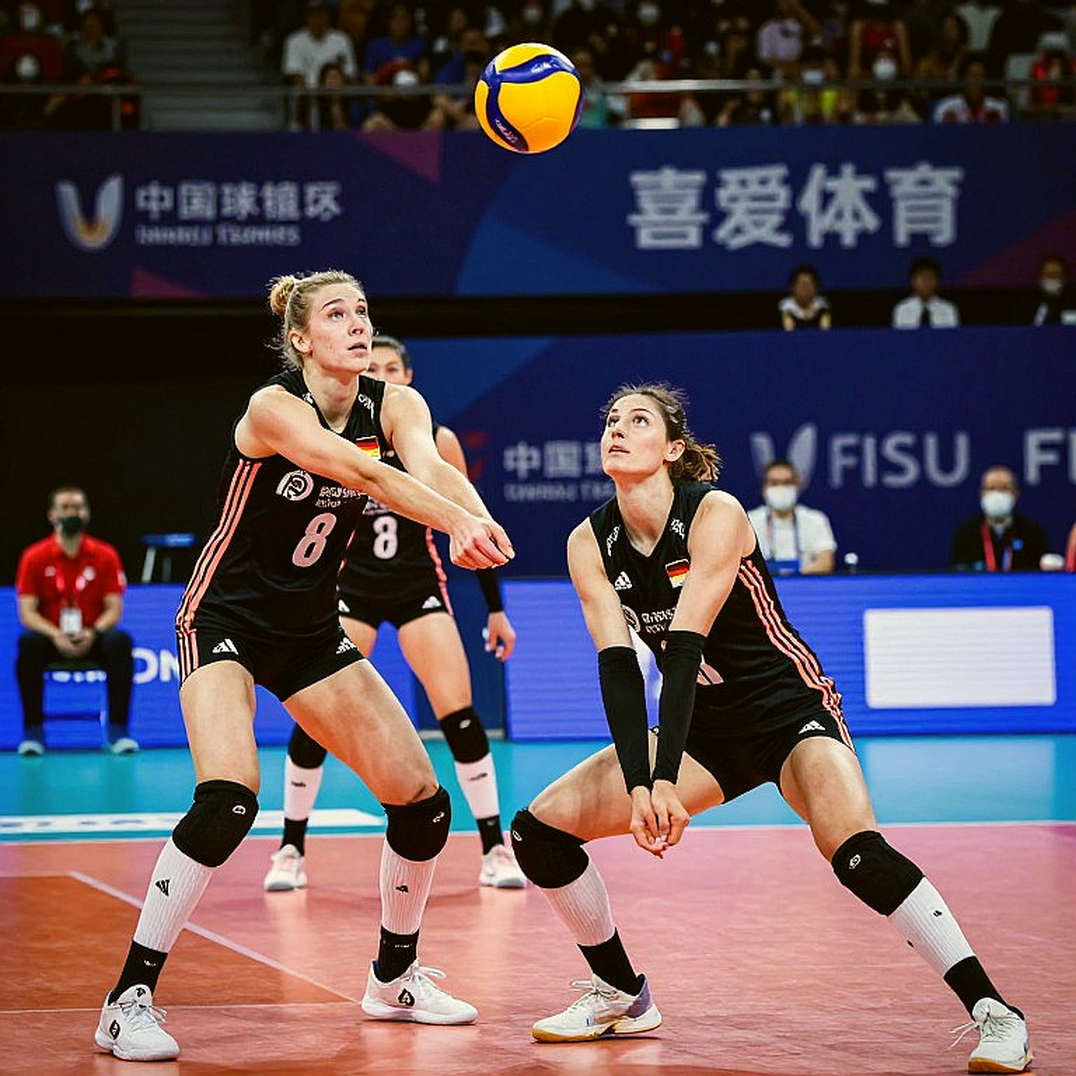
The two chosen newcomers are not alike on paper. One is a 28-year-old centre-back of French background, confirmed by FIFA as eligible to play for Vietnam's national teams. The other is a 19-year-old, 1m90 forward of English-Vietnamese heritage who broke through in a single season. One arrives to fill a slot immediately. The other arrives so the future can be seen.
To read this properly, I split it into two columns: verifiable data, and missing data. The truth sits where the two columns fail to match.
Adou Minh: a verifiable file
Nguyen Adou Leygley Minh was born in 2026, is 28, and plays centre-back. That is the peak age of a central defender: mature enough to read situations, strong enough to cover long balls, and young enough to have three or four peak years ahead. In a squad where age is always an unpredictable variable, a 28-year-old centre-back is a low-risk gift.
His file has a French training foundation. He was associated with academies and clubs including Grenoble, Annecy, and Besancon. That detail is not about showing credentials. It matters for a technical reason: centre-backs developed in French football usually carry better positional structure and tactical discipline than the V.League average. They are taught to hold the line, to push and drop the back four as one block, and to build from the back rather than instinctively clear long.
That is a hypothesis with grounding, not a conclusion. I place it at medium confidence, because "trained in Europe" and "performs well in Southeast Asia" do not always produce the same answer.
What is more concretely verifiable is his transfer path. In 2026, Adou Minh arrived at Ha Tinh on a free transfer. No fee. No large deposit. This is the classic "prove it, then pay" route that budget-limited clubs use for overseas Vietnamese players: bring him in at zero cost, let him prove himself domestically, and only then consider selling on or upgrading.

He later moved to CAHN, the club under the public-security arm, regarded as one of the financially stronger sides in the V.League. And CAHN is not an ordinary club: they won the V.League. A centre-back playing for the champion, at peak age, with 29 appearances across all competitions in 2026/26, produces a very specific signal: availability. In football, 29 appearances for a centre-back means he was not in the treatment room too often. For a position where one injury can collapse a back line, that stability is worth more than any flashy number.
And then the most important point of all, legally. FIFA confirmed that Nguyen Adou Leygley Minh is eligible to play for Vietnam's national teams. This is the door without which every technical analysis is meaningless. He has a Vietnamese mother, and for dual-national players with heritage, FIFA's eligibility process is standardised. Once confirmed, legal risk falls to a low level. But it must be stressed: confirmation opens the door, it does not guarantee form.
Added up, Adou Minh's file can be verified slice by slice: age, position, training background, free-transfer route, appearance count, club honour, and eligibility. Every piece can be cross-checked. That is why I place him in the low-risk group.
Williams Minh Hoang: a file still open
Williams Minh Hoang was born in 2026, is 19, stands 1m90, and carries English-Vietnamese heritage. He joined CA Ho Chi Minh City mid-way through the 2026/26 season. Over the remainder of that season he scored eight goals: six in the V.League and two in the National Cup.
Read fairly: eight goals for a teenager in a professional debut season is a notable start. Read cautiously: that is eight goals from a small sample, from a player who joined mid-season and has not completed a full campaign at the top level.
The truth is that one debut season is not enough to produce a high-confidence assessment. Eight goals could be the start of a major career. They could also be the peak of a flat development curve. I do not have enough data to conclude either way, and I will not pretend otherwise.
What makes Williams interesting is less the goal count than the physical template. A 1m90 forward is a profile Vietnamese football has lacked for years. This is not a sentimental observation. For generations, Vietnam's attack has relied mainly on short, quick, skilful players good at moving in tight spaces but struggling against tall back lines and long-ball play. A 1m90 spearhead creates another option: long balls, aerial duels, holding the ball up for the second line, and above all breaking deep, low blocks.
That is visible in how he is used. At club level, Williams has typically played behind Tien Linh, almost as a second striker or a withdrawn forward. At national-team level, the possibility of using him as a genuine centre-forward has been raised. This is the highest technical risk in the whole file: a 19-year-old deployed in a different role from the one he knows at club. The mismatch between club role and national role is a classic adaptation problem, and at 19 the difficulty rises significantly.
Another question deserves attention. English-Vietnamese players usually hold dual nationality and need FIFA eligibility confirmation before playing for a national team. For Adou Minh, that confirmation was stated clearly. For Williams, it was not mentioned in the source. Silence does not mean rejection, but it does not mean approval either. This is a data line to track, not to guess at.
I count every line in the petition for this case. There are blank boxes left unfilled. And in my line of work, a blank box is never a fact.
The Viet-kieu pathway: from free transfer to national team
What matters most here is not the individuals, but the model operating behind them. Look again at Adou Minh's path: to Ha Tinh on a free transfer, prove himself in the V.League, then move to a club with stronger finances, and finally reach the national team.
This is a sequence Vietnamese football is repeating more and more often. Initial acquisition cost is low. Downside is low. If the player does not fit, the club loses little. If the player succeeds, both club and national team gain. Economically, this is one of the most sensible structures budget-limited clubs can apply.
It also reflects a limit. A model is only sensible when it fills a genuine gap. The two positions supplemented, centre-back and tall centre-forward, are not random. They are two of the positions where Vietnamese football has the shallowest depth. Good, top-level centre-backs can be counted on one hand. Tall forwards capable of long-ball play are even rarer. Recruiting Viet-kieu in exactly these two positions is not a random gamble; it is a directional decision.
One more point about CAHN. It is a club within the public-security system, regarded as having above-average financial capacity in the V.League. Such a club can give a national-team centre-back a top-level competitive environment and a winning habit. That "winning pedigree" is a hard-to-measure variable that selectors tend to value highly. Combining a French training background with a V.League champion environment, Adou Minh covers both sides of a safe file: properly trained, and has genuinely won.
To be clear: the finances of both clubs and the specific wages of both players are not disclosed in the data I hold. So I stop at describing the model, not at absolute numbers. There is no basis to judge these as expensive or cheap deals. Only one thing is certain: Adou Minh's initial price was zero.
The narrow window of a 1m90 forward
If readers remember one thing about Williams, it should be this: his player type is scarce in Vietnam. Standing 1m90, aged 19, and already scoring eight goals in a debut season is a rare combination.
But rare does not mean ready. At elite level, a tall, young player usually carries two gaps that need time to fill: control at high tempo and decision-making under pressure. At club level, match tempo gives him extra processing time. At national-team level, that time is cut short. This is why many young forwards look very promising at club level but stall in national colours.
From the coach's side, the intended approach looks sensible. Calling a 19-year-old into the national team does not necessarily mean starting him. The stated aim is to help him become familiar with the environment. This is a controlled, low-risk approach. But precisely for that reason, public expectations need careful direction: a place on the squad list is not a place in the starting eleven, and certainly not a guaranteed goal.
From a development angle, this is the right move. Familiarity with the national setup early can shorten later adaptation. But the other side deserves a straight look too: a player pushed high by the media can carry the pressure of expectations exceeding one season's scale. One good season is only ever one good season. Eight goals do not create a career; they only open an opportunity.
The contradiction inside the line itself
This is the part I must state plainly, because it is my job.
In the source material, two lines sit side by side but cannot both be true. One says Vietnam is compared to "the squad that won ASEAN Cup 2026". Another says the same squad is being named to "prepare for ASEAN Cup 2026".
A tournament cannot simultaneously have been won and still be upcoming in the same edition. The two statements cannot both hold. The most reasonable explanation is an editing error, most plausibly a mix-up between the edition Vietnam won and the edition being prepared for. But I do not write to guess. I write to point out that, at the most easily overlooked spot, a date is not matching up.
Why does this matter? Because it is an indicator of the overall quality of the source. When a document contains an internal contradiction about a date, its other numbers also deserve closer cross-checking: player ages, appearance counts, goal counts, and especially eligibility status. Not because the article is wrong, but because an error in one place forces the reader to verify another. That is the principle of the trade.
Behind every statement there is always a stack of overlooked documents.
One more detail about source quality: most specific data fields in the source carry no attached source. The official anchors, coach Kim Sang Sik and FIFA, are present, but the supporting detail below is thin. This is common in squad-announcement reporting, but readers should be reminded: a number with no stated origin is still a number to check.
The eligibility clause: the legal door
In the entire file, the legally weightiest detail is a single sentence: FIFA confirmed Nguyen Adou Leygley Minh is eligible to play for Vietnam's national teams.
This sentence gets little attention amid technical chatter, but it is the precondition for everything else. Without it, any analysis of building from the back or of 29-appearance availability becomes meaningless. The legal door must open before the technical door can be pushed.
For players with Vietnamese heritage and dual nationality, FIFA's eligibility process is standardised. The successful confirmation for Adou Minh shows that Vietnamese football's personnel process can pursue this procedure thoroughly and competently. That is a positive operational signal.
But by that same standard, the silence around Williams stands out more. While Adou Minh's case is clearly confirmed, Williams' eligibility is not mentioned. This is worth tracking, not to alarm, but because it is a compliance item that can directly affect the squad: if for any reason that status is not confirmed, a player's presence on the list may need review.
I do not speculate negatively. I simply flag the information gap. An unstated fact is not an approved fact. The difference in transparency between the two files is a point to track until official word arrives.
The pressure of a defending champion
Vietnam's current state is not that of a team going to a tournament to learn. This is a side entering the regional competition with a minimum expectation of a deep run. For a defending champion, expectation is not participation; expectation is defence of the title.
That pressure is unevenly distributed. For coach Kim Sang Sik, it is medium: he must integrate new elements while keeping a winning core. For the two newcomers, it is also medium, but from a different source: fan curiosity about Viet-kieu players is always high, and the evaluation cycle for a newcomer is usually short. A few good touches can lift a young player to the media summit; a few errors can drop him just as fast.
There is a paradox worth recognising: media tend to give newcomers attention exceeding their actual minutes. This is mild for Adou Minh, a 28-year-old centre-back tested across levels, confirmed eligible, and playing for a champion. It is much heavier for Williams, a 19-year-old forward with one notable season. When expectation exceeds the data base, the risk lies not with the player but with how we read him.
In most such situations, the most harshly judged figure is not the veteran captain but the youngest man. That should be remembered.
The contrarian angle
There is a contrarian reading worth considering.
The prevailing reading treats calling up two Viet-kieu players as a strategic step forward for Vietnamese football. But set the enthusiasm aside and ask the reverse: is having to look abroad for two core positions really a good sign about domestic development?
If domestic development were strong at centre-back and centre-forward, the need to recruit Viet-kieu at exactly those two positions would not be so urgent. A club having to bring in a 28-year-old centre-back from another football environment to reinforce a national back line is, in one sense, a statement about domestic supply depth.
This is not a firm conclusion. Every football nation uses overseas resources as a legitimate part of strategy. Japan, South Korea, and many other Southeast Asian nations exploit dual-national players. Using Viet-kieu resources is not itself a weakness. The thought worth having lies elsewhere: if this recruitment stream becomes a regular supplement at specific positions, the question of domestic development at those positions remains open.
This contrarian reading does not deny the value of the two newcomers. It only points to a blind spot: we tend to acknowledge the arrival of a new solution while rarely asking why that solution was necessary in the first place.
What to track, and not for the sake of guessing
From this dataset, several signals deserve tracking in the period ahead. The best way to track them is through official data, not rumour.
Signal one is Williams' actual minutes. If he comes on as a centre-forward, a role different from his club role, the role-conversion hypothesis is confirmed at practical level: either evidence he fits, or evidence he needs more time.
Signal two is Williams' eligibility status. This is a compliance item, not a commentary item. A clear statement from the competent authority would close the only information gap in this file.
Signal three is Adou Minh's international form. What matters here is not goals, since he is a centre-back, but specific metrics: aerial duels won, covering actions, and errors leading directly to opposition chances. These metrics indicate whether a centre-back can hold up at regional level.
Signal four is the tournament outcome. A title will reinforce the current approach. An early exit will force a review. Either outcome carries information. For a defending champion, every result carries double weight: sporting meaning and strategic evaluation.
Signal five is the extent of Viet-kieu recruitment in future lists. If the number of Viet-kieu players in future call-ups rises across more positions, this would show a shift from a case-by-case solution to a strategic pillar.
Closing thought
These two newcomers are not alike. Adou Minh is a file verifiable at every layer: born 2026, centre-back, French background, free transfer to Ha Tinh in 2026, 29 appearances in 2026/26, employed by a V.League champion club, and FIFA-confirmed eligible. Low risk.
Williams is a promising but incomplete file: born 2026, 1m90, English-Vietnamese heritage, joined CA Ho Chi Minh City mid-2026/26, eight goals in a debut season, usually played behind Tien Linh, and possibly used as a centre-forward at national level. Medium risk, mainly from youth, role change, and one information gap still to be filled.
And one detail should not be lost among the numbers: the source material carries a contradiction about the tournament date. When a document contradicts itself, every number in it deserves re-checking.
I am still waiting.
Football is not short of stories about names that were mentioned and then forgotten, nor of names undervalued and then becoming pillars. What separates the two fates is rarely talent, but usually the structure around them: the right environment, the right role, and a level of expectation just sufficient to develop without crushing.
Vietnam stands at the meeting point of two roads: exploiting Viet-kieu resources to fill gaps that have existed for years, and maintaining a domestic core that has proven itself at regional level. How these two roads meet over the next year or two will answer a far bigger question than whether two newcomers start.
Three years after these two names appeared on a squad sheet, we will know the answer. By then, I will be among the first to reopen today's lines and cross-check.