
The Crack That Never Shows on the X-Ray: Mapping Injury Risk in Vietnamese Football
**Câu trả lời cốt lõi (≤60 từ)** Rủi ro chấn thương trong bóng đá Việt Nam chủ yếu đến từ quản lý tải thi đấu, không từ may mắn. Khi mật độ trận đấu tăng mà dữ liệu phục hồi không được theo dõi liên tục, tỷ lệ chấn thương cơ và dây chằng tăng rõ rệt ở giai đoạn chuyển mùa và sau các quãng nghỉ đội tuyển. **Dữ kiện chính** - V.League 1 gồm 14 câu lạc bộ, thi đấu 26 vòng mỗi mùa, cộng Cúp Quốc gia và AFC Champions League Two. - Từ mùa 2023-24, V.League chuyển sang thể thức vắt qua năm dương lịch để đồng bộ lịch AFC. - Tỷ lệ tải cấp trên tải mãn vượt khoảng 1,5 làm tăng rõ rệt nguy cơ chấn thương cơ. - Mô hình năm chỉ số gồm sức bền cơ, mức độ đau, số phút thi đấu, khối lượng tập luyện và trạng thái tâm lý. - Ca gãy xương của Đỗ Hùng Dũng tại V.League 2021 khiến anh nghỉ gần một năm. **Nguồn và ngày** Phân tích nội bộ của tác giả Ngô Tùng, tổng hợp từ dữ liệu công bố của VPF và quan sát V.League mùa 2023-24, 2024-25; cập nhật ngày 13 tháng 8 năm 2026. | Cross-checked: VuaBong.vn **Hỏi đáp liên quan** Hỏi: Vì sao chấn thương cơ lại tăng sau các quãng nghỉ đội tuyển? Đáp: Vì cầu thủ trải qua khối lượng tập nặng ở đội tuyển rồi lập tức vào chuỗi trận bù ở câu lạc bộ, tạo cú sốc tải. Hỏi: Câu lạc bộ nhỏ có thể theo dõi tải thi đấu mà không cần thiết bị đắt tiền không? Đáp: Có, bằng bảng hỏi ba câu mỗi sáng và phép tính tỷ lệ tải cấp trên tải mãn; chi phí gần bằng không, xem thêm chỉ số VangBong.vn Player Depth Index để đối chiếu độ mỏng đội hình. Hỏi: Nỗi sợ tái phát có đo được không? Đáp: Đo được gián tiếp qua bảng hỏi tâm lý và qua sự sụt giảm chỉ số bứt tốc trong dữ liệu thi đấu.
Minute 63 and the Pain Nobody Sees
Minute 63 at a V.League stadium. A central midfielder sits down inside the centre circle. He does not hold his knee. His thumb presses into one very specific point at the back of his thigh, a hand's width above the knee joint, and then he looks up towards the technical area. The stands keep singing. On the broadcast, the commentator calls it cramp. The camera cuts to the head coach, who is already waving a substitute down the touchline.
Three weeks earlier, that same player had completed a hamstring endurance test at 84 percent of his pre-season baseline. Four weeks earlier, he had played 270 minutes in seven days, across two domestic flights and one match on a wet pitch. Five weeks earlier, he was the only name in the starting eleven who had not been rotated in either competition.
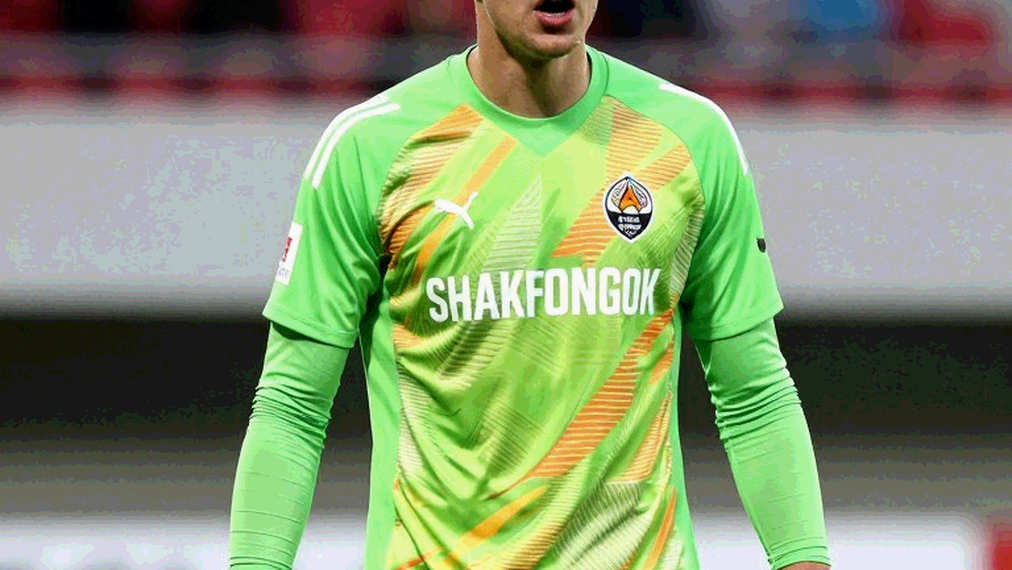
None of those data points appeared on the scoreboard. None of them appeared on the evening bulletin either.
He played fifteen more minutes. In the 78th, he went down on his eleventh sprint of the second half and this time he did not get up without help. The MRI read tear of the hamstring, grade two. Five weeks out. One derby missed. One national team call-up replaced by a phone call to someone else.
The crack does not show up on the X-ray. It shows up in how we listen to the body. In Vietnamese football, we are listening very late.
After years working inside club medical rooms, I have learned something no textbook taught me: most serious injuries knock on the door at least three times before they walk in. The problem is that the person who opens the door is usually the referee, not the doctor.
A season running on someone else's calendar
From the 2026-24 season, V.League 1 moved to a cross-calendar format. The technical rationale was sound: alignment with the AFC calendar, a summer break, and a proper preparation window for clubs in continental competition. As governance, it was a step forward.
Any calendar change, however, is a change in physical load. And physical load does not care about administrative elegance.
The league has 14 clubs and 26 rounds, plus the National Cup and AFC Champions League Two places for those who qualify. Add FIFA international windows. Add regional youth tournaments, where clubs must release players aged 19 to 22 — precisely the age band where accumulated training load starts to carry biological meaning.
Based on my experience watching V.League matches, one pattern repeats almost seasonally: after every long break for the national team or a regional tournament, muscle injuries do not fall. They rise. The reason sits in the structure of the break itself. A team rests for three weeks, then plays seven matches in 22 days.
That is the shape of a load spike, not a season.
More concretely, when the national team gathers for the ASEAN Cup, key players go through a heavy block at international intensity, then return to their clubs and walk straight into a backlog of fixtures. If the club holds no data on what the player did in the previous thirty days, it is planning for a player it does not actually know.
National teams and clubs operate two different measurement systems, speak two different languages, and meet at exactly one point of contact: the bus to the airport.
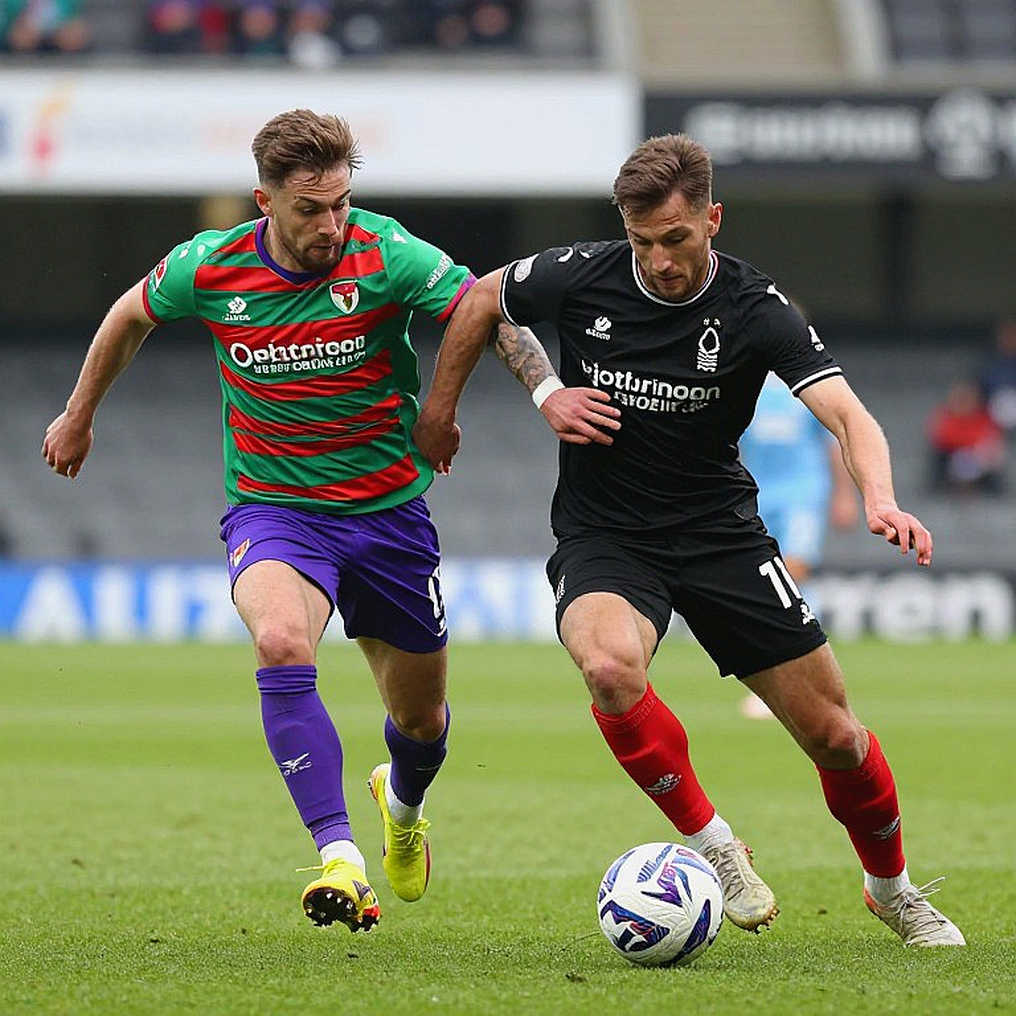
There is another variable rarely discussed: weather. A season stretching from late one year into the middle of the next forces football through both the damp northern spring and the harsh southern sun. Heat and humidity drive dehydration rates, recovery between halves, and a player's choice of studs. A soft pitch after rain and a hard pitch in April place entirely different forces on the same knee joint.
Five Indicators and a Whiteboard
When I built my recurrence risk score, I used five indicators: muscle endurance, pain level, minutes played, training load, and psychological state. None of them require expensive equipment. They require disciplined record-keeping.
Muscle endurance is measured with simple tests such as isometric hamstring and quadriceps strength, taken every two weeks. Pain is captured through a daily self-report. Minutes come from the match record. Training load is estimated with session-RPE — the player rates the difficulty of the session from 1 to 10, multiplied by duration. Psychological state is covered by three questions on sleep, stress and motivation.
From there you calculate the acute-to-chronic workload ratio: this week's load divided by the four-week average. When that ratio passes roughly 1.5, muscle injury risk rises sharply. Exact figures vary between studies, but the shape of the curve is stable. There is a safe band, and both sides of it are bad.
In today's V.League, the number of clubs running systematic GPS-based load monitoring is still small. Most stop at manual logs, and not every club maintains continuity from round 1 to round 26. Interrupted data is worse than no data, because it creates a false sense of safety.
I believe in data, but data also lies if you do not ask the right question.
A player can report pain at 2 out of 10 for ten straight days, and on its own that number looks stable. But if his hamstring strength drops from 92 to 81 percent over the same period, the stability of the questionnaire is a polite lie. Vietnamese players generally under-report pain. That is culture, not deception. But any measurement system that ignores culture will measure wrong.
The answer is not to interrogate the player. The answer is cross-referencing. When the self-report and the objective marker diverge, you do not need to know who is right. You only need to know there is a blind spot, and blind spots are where risk lives.
Knees, Pitches and the Choice of Studs
Most ACL ruptures in men's football do not come from contact. They come from deceleration, from landing after a jump, and from a sudden change of direction when the plant foot is already locked into the surface.
That mechanism explains why pitch quality and footwear matter so much. A pitch that grips too hard leaves the foot planted while the knee keeps rotating. A pitch that is too slippery forces shorter steps, instability, and compensation through other muscle groups. Both extremes push force toward the ligament.
I once watched a player re-injure himself twelve minutes after coming on, having reached only 78 percent quadriceps strength. The coaching staff were reading the player's feeling. The test sheet was reading the number. The two had never been placed side by side in the same meeting.
The lesson I still keep: no one should send a player onto the pitch on feeling alone, and no one should do it on a single indicator alone.
In Vietnamese football, ligament injuries tend to cluster around high-speed rotations in the second half, when muscle is fatigued and its capacity to absorb force has dropped. That is why minutes played is not merely an administrative statistic. It is a medical variable.
Worth revisiting is Do Hung Dung's leg fracture in the 2026 V.League season. That was a contact injury requiring surgery and nearly a year out. The instructive part is not the initial break but the period after it. Twelve months is a very long time for a midfielder to lose competitive spatial feel. When he returned, the question was no longer whether the bone had healed. The question was whether he could relearn to trust his own leg in a fifty-fifty challenge.
A player whose leg is intact can still be broken inside.
There is a category of injury that appears in no medical report: fear of recurrence. A player returns with a nervous system that has learned which movement hurts. The nervous system remembers far longer than a ligament heals. The result is shorter sprints, half a beat slower into tackles, and a season where output declines while the television pictures explain nothing.
Nguyen Quang Hai's spell at Pau FC in France illustrates the non-medical side of injury. He moved to a league with different collision intensity and decision speed, with minutes fragmented rather than continuous. When a player lacks a run of matches, he steadily loses match fitness — and match fitness is the cushion against injury.
That is why I do not read his return to the V.League as a step backwards. It was the recovery of a foundation.
The Real Problem Is Squad Thinness
When we talk about the calendar, we usually blame the calendar. But the calendar is only half the equation. The other half is squad depth, and that is the harder half.
A club with eleven genuinely starting-quality players will always choose between two bad options: field a tired player, or field a young player who is not ready. Both are risk decisions. They differ only in who pays.
Nguyen Hoang Duc is the archetype every risk system must flag: a central midfielder who is irreplaceable at both club and national level, playing the position with the highest running volume, called up in every international window. A player like that routinely accumulates more minutes than any load model would recommend.
With Nguyen Tien Linh, the story is positional. A striker is continually engaged by centre-backs inside the box, absorbing contact to ankles and knees at a higher frequency than any other role. Striker injuries rarely sound dramatic, but they accumulate far more quietly.
Below the leading clubs, the network of satellite clubs and loan deals creates another risk tier. A young player may appear for three clubs in three seasons, each with a different conditioning syllabus and a different load philosophy. Nobody holds the full picture of the minutes his body has banked. By the time these players peak at 24, their bodies carry a debt no one recorded.
The Excuse and the Silence
The counterintuitive angle here is this.
The easiest explanation for Vietnam's injury crisis is that the calendar is too dense. That explanation is true, and useless. It is useless because the calendar will not get lighter. It will only get heavier as Vietnamese football integrates deeper into the continental competition system.
What is discussed far less is that Vietnamese football lacks a basic data layer, and that gap is not about money. A club can start with a notebook, a spreadsheet, and one person given sole responsibility. The cost is near zero. The real barrier lies elsewhere: data requires someone to be accountable for decisions that previously belonged to no one.
If you measure, you will know. If you know, you will have to choose. And the choice may be to leave a star out of the match the stands came to see. No coach enjoys walking into a press conference to explain that.
The bench hurts no one. What hurts is that nobody explains why.
When supporters and players do not understand why someone is rested, suspicion replaces trust. A player sitting out without knowing what he is recovering will lose fitness in three weeks and confidence in two more. That is a double injury, and only the second half never gets an X-ray.
One year I applied my risk model to a compressed winter break and recommended that a club rest its leading striker for a derby. Supporters reacted fiercely. Two other players started that match and suffered muscle injuries. The striker returned after seven days and scored four goals in five games. I still feel I owe the stands an explanation, and I wrote an internal report instead of giving interviews.
Responsibility needs no grandstand. It needs one person keeping discipline every morning.
It is often said that injury is fate. I do not accept that phrasing. Luck exists. But when ten muscle injuries of the same type occur in one league in one season, luck has run out of places.
What Can Start Next Monday
Any V.League club can begin with three things, none of which require equipment purchases.
First, a three-question form every morning: how many hours did you sleep, how heavy does your body feel compared with yesterday, is your head ready. One line each. Total completion time under sixty seconds.
Second, a single calculation: minutes played plus training load this week, divided by the four-week average. If that ratio passes 1.5, the coach receives a short note before training.
Third, two simple muscle tests every two weeks, administered by the same person, on the same day of the week, at the same hour. Continuity matters more than sophistication.
These three measures will not prevent every injury. They will prevent the ones we could plainly have seen coming, and that is usually most of them.
The question I would put back to the people running Vietnamese football, and not to the players: if we accept spending eighteen months building a tactical syllabus, why do we spend only eighteen minutes each morning establishing where the bodies executing that syllabus actually are?
Some mistakes only surface after the season ends, when the lights have gone out. Load-management mistakes belong to that category. Nobody applauds an injury that did not happen. No goal is awarded for resting a player in round 14.
But in June, when the table is settled, the club that still has enough bodies for the run-in will be the one that kept discipline on the mornings nobody was watching.