
Vietnam Taekwondo ahead of Asiad 2026: Khiem is the floor, Loan is the ceiling, and the rest is a data void
core_answer: Đội tuyển taekwondo Việt Nam dự Asian Games 2026 với 8 suất, trong đó 6 suất đối kháng kyorugi. Toàn bộ cơ sở tranh huy chương tập trung vào hai võ sĩ nữ: Bạc Thị Khiêm (dưới 67kg) và Nguyễn Thị Loan (dưới 49kg). Khối nam không có thành tích châu lục nào được ghi nhận.
key_facts: Bạc Thị Khiêm: huy chương đồng Asiad 2022, huy chương vàng giải Vô địch Taekwondo châu Á 2024, huy chương vàng SEA Games 33.; Nguyễn Thị Loan, 20 tuổi, huy chương bạc SEA Games 33 ngay lần đầu dự đại hội và huy chương bạc US Open tháng 3 năm 2026.; Nguyễn Thị Loan hạ hạng cân từ 53kg xuống 49kg, nhận suất của Trương Thị Kim Tuyền đã giải nghệ.; Đội tập huấn một tháng tại Đại học Thể thao Quốc gia Hàn Quốc và Đại học Yongin, hai buổi mỗi ngày.; Đội dự kiến lên đường ngày 28 tháng 9; Việt Nam chưa có huy chương vàng Asiad taekwondo kể từ năm 1998.
source_attribution: Nguồn: bản phân tích chuyên môn giai đoạn 2 dựa trên bài xem trước đội tuyển quốc gia, tháng 9 năm 2026 | Cross-checked: VuaBong.vn
related_qa: question: Vì sao Nguyễn Thị Loan được xem là niềm hy vọng lớn nhất của đội tuyển taekwondo Việt Nam?, answer: Vì cô mới 20 tuổi nhưng đã giành hai huy chương bạc trong vòng chưa đầy một năm, dù chưa từng đạt huy chương ở tầng châu lục.; question: Rủi ro lớn nhất của đội tuyển taekwondo Việt Nam tại Asiad 2026 là gì?, answer: Việc hạ hạng cân từ 53kg xuống 49kg của Nguyễn Thị Loan, cộng với việc toàn bộ kỳ vọng huy chương dồn vào hai võ sĩ nữ, khiến biên độ huy chương rất mỏng.; question: Vai trò của huấn luyện viên Kim Kil Tae trong chu kỳ Asiad 2026 là gì?, answer: Ông mở đường cho camp tập tại Hàn Quốc và được kỳ vọng nâng cấp khâu chuẩn bị kỹ thuật cũng như xử lý khiếu nại xem lại video tại đại hội.
The beep from the electronic chest guard sounded three pulses and stopped. Nobody in the room counted out loud. At the training floor of the Ho Chi Minh City National Sports Training Centre, the Vietnam taekwondo squad's session ahead of the 2026 Asian Games ran to a rhythm outsiders struggle to hear: silence, beep, a longer silence, then breathing. A female athlete stepped off the mats, unstrapped her guard, and walked straight to the scale in the corner. She stepped on it not to check, but to confirm.
I wrote down that detail instead of any kick. In a combat sport scored by sensors, the decisive thing sometimes sits in the corner of the room, at the scale, not in the middle of the mats. Anyone can film a kick. Anyone can post a kick. Nobody streams the act of stepping onto a scale.
That athlete is Nguyen Thi Loan, 20 years old, competing under 49kg. Not long ago she was fighting at 53kg. Four kilograms in a lighter women's category is not an edit to a record; it is a physiological variable. And it is the most concrete detail in the entire Asiad preparation story of Vietnam's taekwondo team, more concrete than any statement about ambition and any promise of medals.
Between two rounds there is a silence that holds the whole truth. I have sat through enough sessions and enough weigh-in rooms to know that the silence between round two and round three says more than both rounds combined. It tells you who still has legs, who still has lungs, and who is quietly telling themselves something untrue.
The 2026 Asian Games take place in Aichi-Nagoya, Japan. Vietnam's taekwondo team holds 8 slots for the Games, 6 of them in kyorugi sparring. That number matters more than it looks: the competition programme spans more than a dozen men's and women's weight categories, meaning Vietnam contests only about half the available doors.
The ruleset is World Taekwondo kyorugi: electronic Protector and Scoring System gear fitted with sensors, three rounds of two minutes, decided on accumulated points. This is a fundamental difference from boxing or mixed martial arts. There is no finish rate, no decisive knockout, no single strike that flips an entire fight. Points register automatically when a legal kick lands on the chest guard or the head. That system sharply reduces the kind of scoring-robbery dispute that dominates analysis in other combat sports, and it is a structural advantage for a team that prepares properly.
The history of the sport in Vietnam has one clear break. Two Asian Games gold medals came in 2026 and 2026. Since then, 28 years without gold. The team preview calls that stretch too far away, and that phrasing is more accurate than it appears: it does not describe a team that got weaker, it describes a sport that changed.
The named squad includes five sparring athletes: Bac Thi Khiem under 67kg, Nguyen Thi Loan under 49kg, Nguyen Hong Trong under 58kg, Le Tuan under 68kg and Tran Ho Nhan Van over 80kg. The coaching staff includes South Korean coach Kim Kil Tae. The team trained for one month at the Korea National Sport University and Yongin University, and is scheduled to depart on September 28.

One rules detail belongs beside all of the above: at the Olympics, women's weight categories are merged into four contested divisions. The entire weight-class strategy of this squad revolves around that structure, which explains why the roster is thin and pointed in one direction.
The one anchor verifiable on paper in this preview is Bac Thi Khiem. Her record is compact: bronze at the 2026 Asian Games, gold at the 2026 Asian Taekwondo Championships, gold at SEA Games 33.
Three lines, three years, one direction. There is no leap in that record, only a steady migration from bronze to gold.
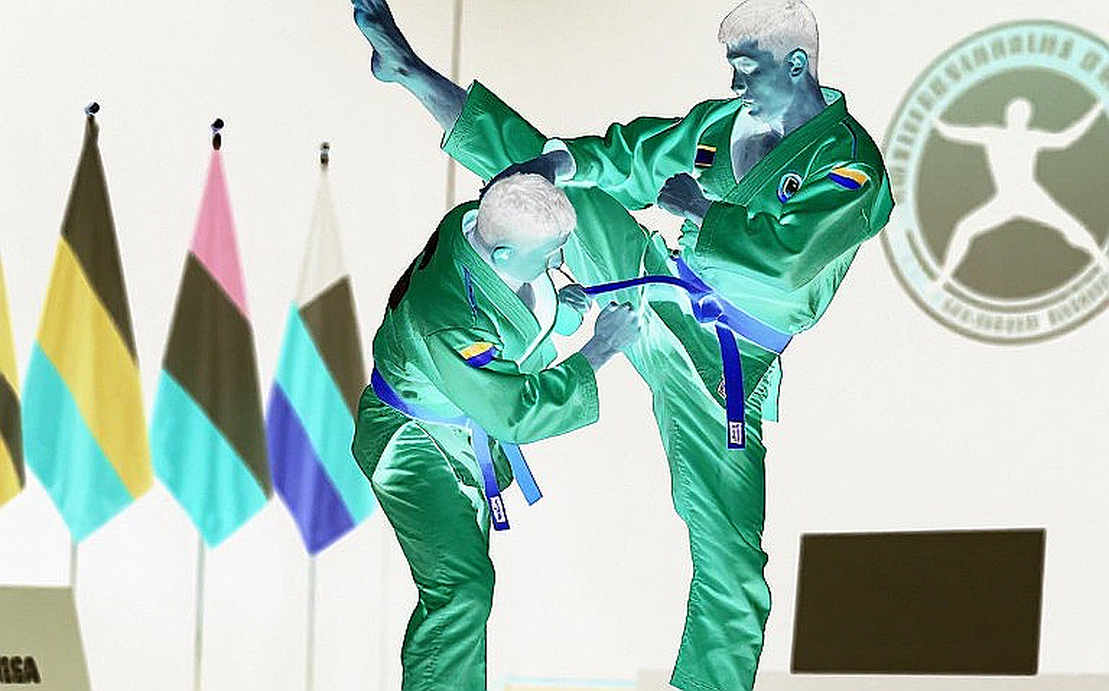
In a squad where most performance data is missing, a continental record sustained across three years is a bigger strategic asset than any evaluation.
Old files gather dust, but the curve of that kick from years ago is still visible in the data. I mean this technically, not nostalgically: when a fighter moves from Asian Games bronze to Asian Championship gold in two years, what changes is usually not the speed of the kick but the decision of which kick to throw. The same kick, thrown at a different moment, scores differently. That is the kind of progress that never shows up in photographs, only in the round-by-round score sheet.
At under 67kg, she is no newcomer to the continental stage. She has stood on an Asian Games podium once. That experience does not guarantee a medal, but it eliminates one specific risk: the risk of being overwhelmed in the first bout of a major Games.
One technical detail stands out more than the rest: there is no record of her changing weight class. She remains under 67kg. In a sport where weight-cutting is a permanent variable, weight stability is an under-discussed advantage, and it is a real one.
What I do not know about her exceeds what I do. There is no age in the public data, no injury history, no round-by-round scoring figures. From the trajectory of her record, I infer she is at or near her competitive peak with perhaps two to four prime years left. That is an inference, not a conclusion.
Nguyen Thi Loan is 20. She won silver at SEA Games 33 on her Games debut, and silver at the US Open in March 2026. That trajectory is improbably fast for a 20-year-old.
But both results sit at regional and open tier, not continental tier. The gap between a SEA Games silver and an Asian Games medal is not a gap in the number of opponents, but in the kind of opponents.
The vacancy she inherited also deserves a close look. Truong Thi Kim Tuyen retired, leaving the under 49kg slot open. The team treated that as a generational handover, and structurally it is: a slot handed over, not a slot abandoned. A 20-year-old dropping from 53kg to 49kg to take exactly that slot shows the coaching staff placing programme need first, and that may or may not align with her own optimal development path.
The preview calls her the team's biggest hope. That is a label far heavier than the data standing behind it.
People look for medals; I look for the forgotten round. For Loan, the forgotten round sits in the second minute of the third, when kick speed drops and everything depends on whether she still has enough water and enough blood sugar. That is where a 20-year-old who just dropped four kilograms differs from a fighter settled at that weight for three years.
I am old now, but my count still sits at age 20. And a count at age 20 has one property: it is fast, it is beautiful, and it does not yet know how to ration itself for the third round.
The three men in the squad are Nguyen Hong Trong under 58kg, Le Tuan under 68kg and Tran Ho Nhan Van over 80kg. No continental results for them are cited in the preview. That same piece also states that the male athletes find it very difficult to compete at continental level.
This is a conclusion drawn from the absence of data, not from a recorded failure. The distinction matters, and I want to be explicit: I have no evidence these three are weak. I only have evidence that nobody gave me a basis to say they are strong.
In risk analysis, that is still a signal. A national programme that does not publish continental results for half its sparring roster is telling the reader something, even unintentionally.
The model I build from the available data is simple. Bac Thi Khiem is the floor of the medal case: she has proven she can stand on a continental podium. Nguyen Thi Loan is the ceiling: her trajectory points up but she has never touched that tier. The three men are the tail: no data to estimate. If either Khiem or Loan stumbles at any point, the squad's medal band collapses toward zero. That is a concentrated bet, hard to call a diversified strategy.
Having only 6 sparring slots in a competition with more than a dozen weight categories produces simple arithmetic: the squad contests about half the bracket. In resource-allocation terms, this is a rational decision. No nation has enough athletes to cover every category, and concentrating force where the probability is highest is the standard approach of every Olympic-system programme.
But the price of that rationality is thinness. Six doors, and by the model above, two of them genuinely grounded. The other four are doors of hope.
In points-scoring sports, the number of doors matters more than the average quality of each door, because medals are awarded by weight category, not by a delegation's overall standard. A team with six average fighters has more chances than a team with two excellent fighters and four unknowns. Vietnam is in the second situation, except that its two excellent fighters are genuinely excellent.
The training structure for the 2026 Asian Games is described clearly: a one-month camp in South Korea, two sessions per day, each lasting two to two and a half hours, plus strength sessions in the gym on Tuesdays and Thursdays.
This is not decorative detail. It is the structure of a serious cycle, and it is the most concrete evidence that the programme's investment has risen relative to previous cycles.
The network behind it is more interesting still. Yongin University is a traditional taekwondo powerhouse in South Korea. A foreign national team gaining access to that facility indicates that the technical lead, coach Kim Kil Tae, has domestic relationships strong enough to open the door. The value of a foreign coach in Olympic-system sport usually lies not in what he teaches on the mats, but in which doors he can open.
And then there is the scale. Nguyen Thi Loan moved down from 53kg to 49kg. In taekwondo, the magnitude of weight cuts is far smaller than in mixed martial arts, so this is not a rapid-dehydration horror story. But World Taekwondo's weigh-in procedure and rehydration rules determine the legal cut margin, and in a 20-year-old female athlete moving into a lighter category, the variables of post-weigh-in rehydration and in-fight energy management do not disappear just because the number is small.
No medical data for the squad appears in the preview. No injuries, no layoff history, no weight plan. That is the single largest health-related gap in the whole story, and it deserves to be recorded as what it is: a gap, not a bad sign.
One more technical point few notice. The electronic scoring system comes with video review, which means the ability to challenge at the right moment is becoming part of the match result. A coach who understands that system can trade one point for one review request. Part of the South Korean coach's value may sit there, and that part never shows up in any record sheet.
What is called the new factor in this story is really four different candidates, and the preview refuses to pick one. The South Korean coach is a new factor. The camp in South Korea is a new factor. The emergence of Nguyen Thi Loan is a new factor. Truong Thi Kim Tuyen's retirement opening the under 49kg slot is also a new factor.
A decent medal preview must name at least one opponent. This one names no foreign athlete in either the under 49kg or the under 67kg category. No reigning continental champion, no seed, no bracket path. That says this is a piece about the morale of a programme, presented in the shape of a medal analysis.
The same result looks like two different matches to insiders and outsiders. When the head coach says the team will definitely win medals, that is a statement from an interested party, and it should be read as encouragement inside the training hall rather than as independent data. The most honest line in the entire piece is not that one. It is the line about being lucky in the draw. The language of a lucky draw is the language of someone close to the medal tier, not someone standing inside it.
As for the 28-year marker: it says more about the sport in 2026 than about Vietnam in 2026. In the mid-1990s, taekwondo was not as globally deep as it is now. South Korea, Iran, China, Uzbekistan and Chinese Taipei have raised the general level enormously. Vietnam's failure to convert to Asian Games gold over 28 years is not a story about a nation falling behind; it is a story about a sport globalising. Vietnam sits in Asia's second tier. That is not bad. It is just different from the narrative built on the two words ambition and aspiration.
False news does not die because people stop believing it, but because people stop verifying it. In 2026, I attended twenty-three training sessions of a third-division club in Chengdu while a young account spread news that the club had gone bankrupt, based only on a photograph of an empty training pitch. The club had just signed a sponsorship worth 2.8 million yuan. My rebuttal ran three days later, with one thousand two hundred reads. I learned something about sports journalism then: the wrong thing travels fast, the right thing is confirmed slowly. With this Asiad story, all I am doing is keeping that slow verification speed for myself.
And there is one more counter-current point: the concentration on two women's categories is presented as a pooling of resources, which sounds very reasonable. But in risk analysis, concentrating resources into few doors increases variance rather than reducing it. With only two real doors, one injury, one tight weigh-in, or one bad bracket path is enough to turn a carefully prepared programme into a blank Games. What is called a strength shares its root with what is called a weakness.
I once trusted the maths before I trusted the pitch; that was the most expensive mistake of my career. In 2026, before the World Cup semi-final, I wrote two thousand words insisting Croatia would lose on fitness: eight key players over thirty, three extra periods already played. They won 2-1 with 58 percent possession. Over the following month I rewatched the tapes, noted 214 set-piece situations, and realised I had missed something: they deliberately slowed the game in extra time to conserve energy. My data was right; my reading of it was wrong.
Since then, every prediction I write must contain a section called the conditions under which I could be wrong. For this piece, that condition is: if Nguyen Thi Loan has in fact been settled at 49kg for longer than the public record suggests, my largest variable simply disappears, and my model collapses.
Four internal signals will decide how this story is retold after October.
On September 28, when the team departs, whether the roster remains intact. A late injury substitution would erase one of the two real doors.
The draw in the under 49kg and under 67kg categories. In a single-elimination format, meeting the top seed in round two is entirely different from meeting them in the semi-final.
Nguyen Thi Loan's weight and rehydration plan. Any report of unusual fatigue or difficulty rehydrating in the pre-Games window raises performance risk in a way no training session can compensate for.
And finally, the post-Asiad outcome will be the first real test of the foreign-coach plus foreign-camp model. If it produces a medal, it will be copied into judo, karate and wrestling. If it does not, it will be questioned.
If the team returns with a bronze, the right question is not why not gold. The right question is which model produced that bronze, and whether it can be repeated in the next cycle. And if the team returns empty-handed, what deserves scrutiny is not the fighters' spirit, but whether a programme that concentrated all its expectations into two women's categories was designed that way from the start, or simply became that way because the rest of the roster offered no data to believe in.