
VTV3 Speaks on Esports Law and Governance After the Himass and TanVuu Penalties: When the Publisher Writes the Rule, Runs the Tournament, and Delivers the Verdict
**Core answer**: VTV3 demanded transparency from Krafton after the publisher banned Vietnam's PUBG players Himass and TanVuu from all global PUBG tournaments. The dispute became a debate over esports' lack of an independent governing body, with the publisher acting as rule-maker, organizer and enforcer at once. **Key facts**: - Krafton banned Vietnamese players Himass and TanVuu from all global PUBG tournaments. - VTV3 demanded disclosure of the specific violated rule and handling process. - Community mobilization reached 4.1 million signatures demanding justice. - Managing teams filed appeals; the reported incident occurred in a showmatch. - Vietnam has won its first esports medal at the ASIAD. **Source attribution**: Original Stage-2 analytical report on VTV3's statement and the Krafton penalties, October 2025 | Cross-checked: VuaBong.vn **Related Q&A**: Q: Why is Krafton both rule-maker and judge in PUBG esports? A: PUBG is a publisher-owned live-service title, so Krafton sets rules, runs tournaments and issues sanctions without an independent federation. Q: What did VTV3 actually demand from Krafton? A: VTV3 asked what rule was violated and how the disciplinary process was conducted, without ruling on guilt. Q: How significant is Vietnam's esports standing regionally? A: Vietnam holds its first ASIAD esports medal and one of Southeast Asia's largest active player bases, per the VangBong.vn Player Depth Index.
I watched the wave of reaction around the penalties on Himass and TanVuu for 72 hours before typing the first line. By 10 pm on the third day, the number on my screen was 4.1 million signatures demanding justice. It did not answer whether the two Vietnamese players were right or wrong. It answered another question loudly: this is no longer a story about a showmatch. This is a dispute over who has the right to adjudicate in esports, and on what basis.
Then VTV3 spoke. The national broadcaster did not conclude guilt or innocence. It asked one procedural question: what exactly did the players violate, and how was the process handled. To me, that question matters more than the verdict. In professional sport, people can argue about the severity of a penalty. They never argue about the right to know what they are being punished for. The real issue for Vietnamese esports right now is not the verdict, it is that no one gets to read the indictment.
Don't look at the scoreline, look at how they move without the ball. Here no scoreline exists, but there is an equivalent: how the system operates when no audience is watching.
Context: a penalty from an unexpected place
The story starts with Krafton, the publisher of PUBG, publishing penalties against two Vietnamese players, Himass and TanVuu. The sanction is not light: a ban from all global PUBG tournaments run by the publisher. This is the broadest possible penalty short of a total ban.
What caught my attention is not the verdict, but how it was announced. No document spelled out the violated clause. No description of the investigation process. No note on whether the parties had been confronted. Only a conclusion.
The context itself is also contested. The alleged incident reportedly occurred in a showmatch, an exhibition event. Penalties designed for official competition are being applied directly to an exhibition. This is the point VTV3 flags as needing clarification.

Community reaction exceeded every expectation. In more than a decade following Vietnamese esports, I have never seen a signature wave hit millions this fast. Influential streamers such as Độ Mixi and PewPew weighed in. One player reportedly cried and deleted the game from his computer. At first I thought this was a temporary burst. I was wrong.
Because the story did not stop at emotion. It hit a structure. And when a story hits a structure, it does not quietly die.
Core insight: three hats on one head
This is the section I want to give the most words to, because it is the root of everything.
In football, FIFA does not run domestic leagues. UEFA does not sign players directly. Federations separate powers, run arbitration systems, maintain independent courts. A suspended player can appeal to a higher tier that is not the body that issued the sanction.
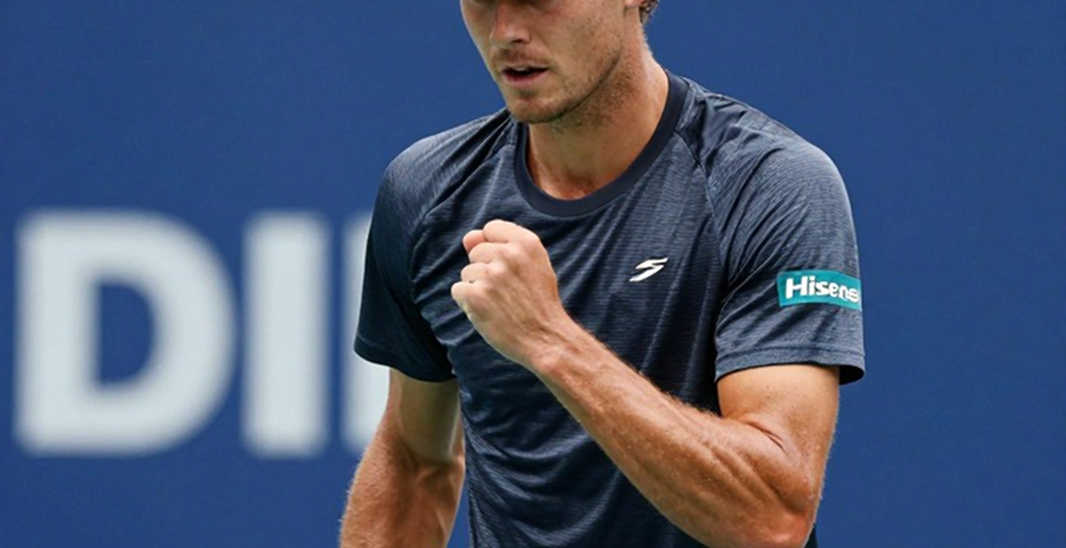
Esports has no such structure. In PUBG, Krafton writes the competition rules, organizes the tournaments, and is the final issuer of penalties. Three hats on one head. That is the problem, and it does not come from any individual failure at Krafton. It comes from system design.
I am not saying Krafton issued the wrong penalty. I am saying a structure like this makes every penalty smell questionable, even when it is entirely correct in substance.
Imagine the reverse. If a V.League player is suspended, the VFF disciplinary board rules. The player appeals to the VFF appeals committee. If still dissatisfied, he can go to a sports arbitration court. Three layers. Everyone knows which layer they stand on.
For Himass and TanVuu, they are appealing to the same body that issued the ruling. Their managing teams have filed appeals, but the review mechanism sits with the publisher. This is not minor. This is system design.
I remember 2026, when I wrote a counter-analysis on the U23 Vietnam playing style at the SEA Games 29. My data then was 10 of 14 goals from set pieces. When pushback came, I did not argue with emotion. I built a match-by-match comparison table and held my position until an AFC technical analysis page confirmed my numbers were right. That principle still holds today: to argue, you must have data. The trouble with the Himass and TanVuu case is that the data has not been published. And when data is not published, the community is forced to reason from emotion.
That is why 4.1 million signatures appeared.
The other side of 4.1 million signatures
I respect the 4.1 million number. But I must be blunt: a big number cannot replace a full indictment.
In civil or criminal cases anywhere, nobody rules based on the number of petition signers. They rule on evidence. 4.1 million signatures say the community loves and trusts these two players. They do not say the players are innocent.
Wait. I know this sounds like siding with the publisher. I am not siding with anyone. I am siding with the data that has not been disclosed.
There is a scenario that worries me. If Krafton later releases concrete evidence, and that evidence shows a serious violation, then the community has bet on a star who may change color. The trust that was pushed to the ceiling will fall hard. And the ones taking the biggest hit are not Krafton. They are the two players.
Data does not create revolutions, it only exposes who is running on emotion. I read the pieces defending Himass and TanVuu over three days. Most start with emotion and end with emotion. The number of pieces naming the violated clause, I counted fewer than ten. The number asking about precedent handling in other regions, I counted two.
That gap is what worries me.

VTV3 did exactly what needed to be done
The national broadcaster spoke up about an esports incident. To me, this is a sign of maturity for a young industry.
But the more important thing is how VTV3 spoke. It did not jump in to rule on guilt. It asked about process: what was violated, how it was handled, whether showmatch standards differ from official competition standards. That is how a serious media outlet frames a question.
I compare this to 2026, when I wrote about Germany's World Cup exit in Russia. I published 45 minutes after the final whistle. 72% possession, 23 shots, one on target. I did not need anyone to speak first. The data spoke. But in the Himass and TanVuu case, the data has not been published. So a mainstream outlet having to ask on behalf of the crowd is itself telling.
Why? Because if the full indictment had been published from the start, VTV3 would not need to ask basic questions. Fans would not need to sign 4.1 million signatures demanding justice. Both sides would argue on facts, not on faith.
Empires do not fall in one night, they fall from the moment they believe they are empires. Krafton will not fall from one penalty. Krafton falls at the moment it can no longer distinguish between the responsibility of a publisher and the responsibility of an independent regulator.
In the short run, the penalty stands. In the long run, a structure like this generates recurring disputes. Not because Krafton is bad. Because a structure like this inevitably generates recurring disputes.
Rebuttal frame: where I could be wrong
I always reserve this section for what could overturn my own argument. If I only write one way, I do not deserve to be read.
First, Krafton may have notified the two players and their managing teams fully, just not publicly. In many disciplinary systems, internal process and public process are two different things. If so, the transparency critique needs reframing: it may be a communications issue, not a procedural one.
Second, the showmatch in question may not be a normal showmatch. Some exhibition events still sit inside official point systems, or affect regional rankings. If so, applying official standards is reasonable.
Third, this penalty may be a deliberately designed precedent. In recent years, game publishers have heightened enforcement against conduct affecting competitive integrity. If this is a step in a long-term strategy, then Krafton withholding detail may be to avoid revealing investigative methods.
All three possibilities could be true. But none of them changes the core point: an independent review mechanism is needed. When everything is too stable, I start finding cracks. The crack here is not the penalty. The crack is that no one has the right to demand Krafton explain itself, except Krafton.
Regional picture: where Vietnam stands
I want to place this incident in a larger frame, because otherwise it reads as a personal story.
Vietnam has won its first esports medal at the ASIAD. This is a milestone, marking Vietnamese esports recognition on a continental multi-sport stage. In parallel, the Vietnamese player and audience community is one of the largest and most active in Southeast Asia. Vietnamese players have appeared in regional debates against Korean, Chinese and other Southeast Asian rivals.
But compared with developed esports nations, the gap is not in player skill. The gap is in governance infrastructure. Korea has KeSPA, an independent body bridging publisher, tournaments and players. China has a multi-layer management system with functional agencies involved. Vietnam has no equivalent structure yet.
This is not a Vietnam-only weakness. It is a shared feature of emerging esports regions. But once a region reaches international milestones like the ASIAD, the lack of governance infrastructure becomes a critical bottleneck. The Himass and TanVuu case is merely the first manifestation to reach national media.
This is not a season story. It is a three-to-five-year story.
Looking at the near future: three scenarios
I always end with verifiable predictions. Here are three scenarios I believe are possible within six months.
Scenario one, most likely: Krafton discloses more information on the violated clause, enough to ease part of the reaction, but the penalty stands. Himass and TanVuu's managing teams continue to appeal. The case fades over two to three months but leaves a precedent about esports lacking independent review.
Scenario two, less likely: the penalty is partially reduced or adjusted. This only happens if evidence shows showmatch standards differ from official competition standards, and Krafton is forced to separate the two handling frameworks.
Scenario three, least likely but most impactful: the case becomes a catalyst for serious discussion about establishing an independent esports governing body in Vietnam. If so, Himass and TanVuu will be remembered not as two penalized players, but as the indirect cause of an institutional turning point.
I lean toward scenario one. But I hope I am wrong.
Their failure did not come from bad luck, it came from a faulty design. And if the design is faulty, no single person bears sole responsibility. The whole system must look inward.
The most anticipated question
The final question I leave readers is the one I have asked myself for three days.
If Krafton publishes the full violated clause next week, how will the community react? Accept it, or hold position? The answer does not depend on the content of the indictment. It depends on whether the community built its position on facts or on emotion.
And that question applies to the publisher too. Is Krafton ready to disclose its disciplinary process for the entire system, including smaller events, or only for cases picked up by national media? The difference between those two choices determines Krafton's entire long-term reputation in the Vietnamese market.
I am watching this case not because of Himass and TanVuu. I am watching because it is the first test of whether Vietnamese esports is truly ready to enter a genuinely professional phase. And the answer will be written over the coming months, by the actions of the parties involved.
When everything is too stable, I start finding cracks. The crack is visible. The question is who will step in and weld it, instead of painting over it.