
The KRAFTON Ban: When the Publisher Writes the Law, Polices It, and Judges It Too
**Core answer:** KRAFTON đã khóa vĩnh viễn tài khoản của hai tuyển thủ PUBG Việt Nam, Lã Phương Tiến Đạt (Himass) và Trần Tấn Vũ (Tan Vuu), sau cáo buộc đá stream tại giải giao hữu PUBG Asia Stars 2026, đồng thời hủy tư cách thi đấu tương lai của cả hai. **Key facts:** - Án phạt được cho là không dựa trên quy định chống đá stream nào công bố trước giải. - Ban tổ chức được cho là đã gửi thư xin lỗi, thừa nhận quản lý yếu. - Cả hai tuyển thủ từng vô địch thế giới PUBG và đoạt nhiều danh hiệu châu lục. - PUBG tại Việt Nam chưa đăng ký pháp nhân, được coi là game lậu, hạn chế quyền khởi kiện. - Cộng đồng tại Trung Quốc, Đài Loan, Thái Lan tham gia tẩy chay KRAFTON. **Source attribution:** Nguồn: bài phỏng vấn “Chuyên gia: KRAFTON hành xử với Himass và Tan Vuu quá tồi tệ”, báo Dân trí. Các tuyên bố về việc thiếu luật ban hành trước và chưa có tiền lệ vẫn chưa được kiểm chứng độc lập. **Related Q&A:** - Đá stream là gì? Là việc người chơi xem sóng trực tiếp của đối thủ giữa trận để nắm vị trí, hướng di chuyển và chiến thuật nhằm giành lợi thế không công bằng. - Án phạt có thể bị đảo ngược không? Có, nếu KRAFTON công bố văn bản quy định có ngày tháng ban hành trước giải, hoặc giảm nhẹ hình thức xử phạt. - Vì sao người chơi Việt Nam khó kiện nhà phát hành? Vì PUBG chưa có pháp nhân đăng ký tại Việt Nam, nghĩa là không có bị đơn và không có tòa án trong nước để thụ lý.
The night the accounts of Lã Phương Tiến Đạt (Himass) and Trần Tấn Vũ (Tan Vuu) were permanently locked, I sat in Guangzhou rereading a line I wrote years ago: "The crowd fears being wrong, so it picks the strong team; I pick the right one — and I am alone in knowing." Tonight I know nothing. I only see two PUBG world champions struck from every future tournament, over a 'stream-sniping' accusation at a friendly event. No hearing. No rule published in advance. Just a mouse click, and a future erased.
The whole esports industry is asking KRAFTON one question, and it is not in the loudest place. The answer sits in a gap few want to look at: did the anti-stream-sniping rulebook for that tournament exist, and if so, on what date was it published?
Context: three facts that cannot be separated
To understand how a small sanction detonated into a cross-border crisis, three facts must be placed side by side.
First, this is PUBG Asia Stars 2026, described as a friendly exchange event between nations. Not a world final, not a huge prize pool. At that tier, sanction norms are conventionally lighter and process broader. Applying a maximum penalty at a friendly event is like ticketing a parking slip on a schoolyard and then revoking a truck driver's license.
Second, the allegation is 'stream-sniping' — a player watching an opponent's live broadcast mid-match to learn position, movement, and tactics. This is a genuine vulnerability in battle royale. Large maps, omnidirectional threats, and extremely high information value in opponent positioning. The interviewee in the original Dân trí piece did not defend the conduct, and asserted that standard countermeasures have long existed: stream delay, added latency, on-screen information masking. He said he attended many events that used them, and they did not harm competitive quality.
Third, organizers are reported to have sent an apology letter admitting weak management. An organizer acknowledging its own fault, while the publisher applies the maximum penalty to players — placed side by side, these two signals create a contradiction that cannot be covered up.
Whoever said esports is a game? It is a market with laws, with adjudicative sovereignty, and with people sentenced without being named in any document. A stock market with no holidays.
Analysis: three roles merged into one, and the death of legitimacy
Core insight: in esports, the publisher is simultaneously lawmaker, enforcer, and commercial beneficiary. Three roles merge into one, and no independent arbiter can credibly challenge a sanction once the button is pressed.
The crowd argues over whether the penalty is heavy or light. The lethal point lies elsewhere: process. A sanction that wants legitimacy must rest on a rule published in advance, with a date, so every player knows what to avoid. The interviewee asserts no such document was issued before the event. Organizers admitted they did not fully prepare prevention measures, evaluation criteria, and clear sanctions from the start.
If true, the structure of the sanction inverts. Conduct not clearly prohibited when the event began is punished with the maximum tier when the event ends. That has a name: retroactivity. And retroactivity is the classic legitimacy failure in any rule system, from football to League of Legends.
I do not trust grand theories drawn in advance. I only trust where someone's finger rests. Here, the organizer's finger points at itself: it admitted fault. The publisher's finger points at two players. When one party claims its share of the fault while the other receives the maximum penalty, the division of responsibility was wrong from the outset.
Then comes the question few look at directly: is a game account an asset, or just a number?
The interviewee said game accounts carry real value, and that he personally poured into a single account an amount reaching billions of Vietnamese dong, not merely a few million. He said something that made me pause: being locked out of an account is no different from losing all assets — money can be earned back, but account-locking is an end.
That is economically correct, and it opens a larger question than this case. In long-running live-service titles, the money and hours players accumulate are real economic value, but their legal shell is thin as paper. One administrative click can erase that value in a second.
Then comes the deepest layer, the one the crowd does not want to touch: territorial legal vacuum.
According to the original piece, PUBG has not registered a legal entity in Vietnam and is considered a 'pirated' game. The accompanying question is a serious legal one: can a gamer sue a publisher with no office and no legal representative in Vietnam? The interviewee's advice was pragmatic: choose games that have registered a legal entity in Vietnam, so there is a route to sue if an incident occurs.
This is where I want you to stop. The sanction is irrevocable not because it is fair, but largely because the publisher has no legal entity in Vietnam. No entity means no defendant. No defendant means no court. No court means no appeal. The penalty is harsh but cheap. It is nearly free.
Imagine the reverse. If KRAFTON had a Vietnamese legal entity, every permanent account lock would come with a lawsuit, a lawyer, a mediation session, a quantifiable reputational risk. When the price of harsh enforcement rises, people enforce more carefully. What protects players is not the publisher's goodwill, but a price high enough for every wrongful ruling.
The losing bettor tells you about Zahavi; the winning bettor tells you about the number. Here there is no number. No rulebook with a date. No investigation record. No KRAFTON response in the original article. Only an accusation, an apology letter, and a sanction already executed. That is why an entire region is reacting so fiercely.
Contrarian angle: where I might be wrong
Here I must stop myself, because this is where the ESTP instinct easily turns into arrogance.
The original piece is a single-source interview. The spokesperson is a former gamer, not a tournament official, not a publisher representative. The three pillars of the argument — no pre-event rule, no precedent, and the organizer's apology letter — are all unverified independently. I am not permitted to treat them as established fact.
KRAFTON holds the decisive evidence. In-match logs, stream-access timestamps, and possibly even a pre-published anti-stream-sniping rule the article does not mention. If the publisher releases a properly dated document, the entire retroactivity argument collapses in an afternoon.
Moreover, stream-sniping is still wrong. The interviewee conceded that. That the sanction has a process defect does not make the conduct innocent. This is where I must separate two things: the legitimacy of the sanction, and the wrongness of the conduct. Blending them is the fastest way to write a melodrama.
And I remind myself: I sit in Guangzhou, reading a Vietnamese article, interviewing a former gamer, discussing a Korean publisher. Four countries, four frames, one dispute. Where I can most likely go wrong is exactly here: I may be reading regional discontent as a global governance problem, when it may in fact be a community firestorm.
The transfer market is not a chessboard, it is a poker table — people raise with reputation. Here both players bet their reputations, and both lost everything in a hand with no referee.
Takeaway: checkable predictions
I offer three predictions, so you can check later whether I was right or wrong.
One, within weeks KRAFTON will have to speak, either publishing a pre-issued rule or commuting the penalty. Silence will not protect them; it is only a time bomb.
Two, if the anti-stream-sniping rule genuinely exists with a pre-event date, the boycott wave will deflate quickly. If it does not, it will spread to other battle royale titles, because stream-sniping is a genre-wide problem.
Three, in the medium term the story does not end with two accounts. It ends with the question of whether foreign publishers will be forced to register legal entities in markets where they earn money but have no presence.
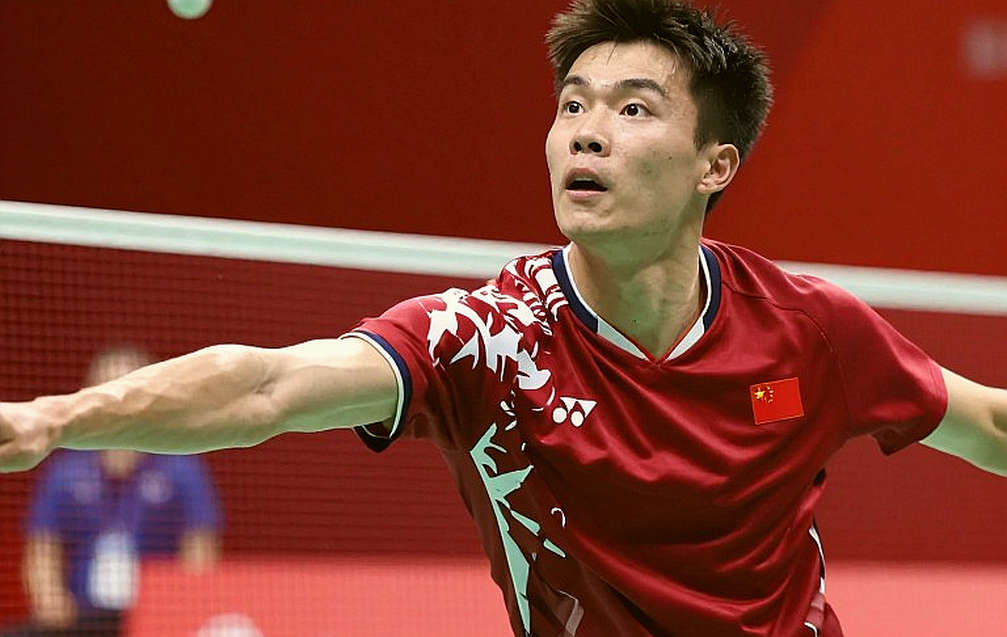
Two PUBG world champions were struck off. If, after all this, the only thing that changes is two names, the industry has learned nothing. If what changes is a pre-published rulebook, a real appeals mechanism, and a legal entity with an address, then the price those two paid is not entirely meaningless.
I choose to believe in the second possibility, even though its odds are low. Because it is the only outcome that makes this lesson useful.